
Seabed Warfare
Part V — The Silent Checkmate
Series Finale · March 2026 · The unprotected umbilical cord (P1), 200-drone arsenal (P2), global sensor network (P3), dress rehearsal (P4). Now the synthesis: how the pieces fit into the definitive checkmate to the Western financial system without firing a single shot.
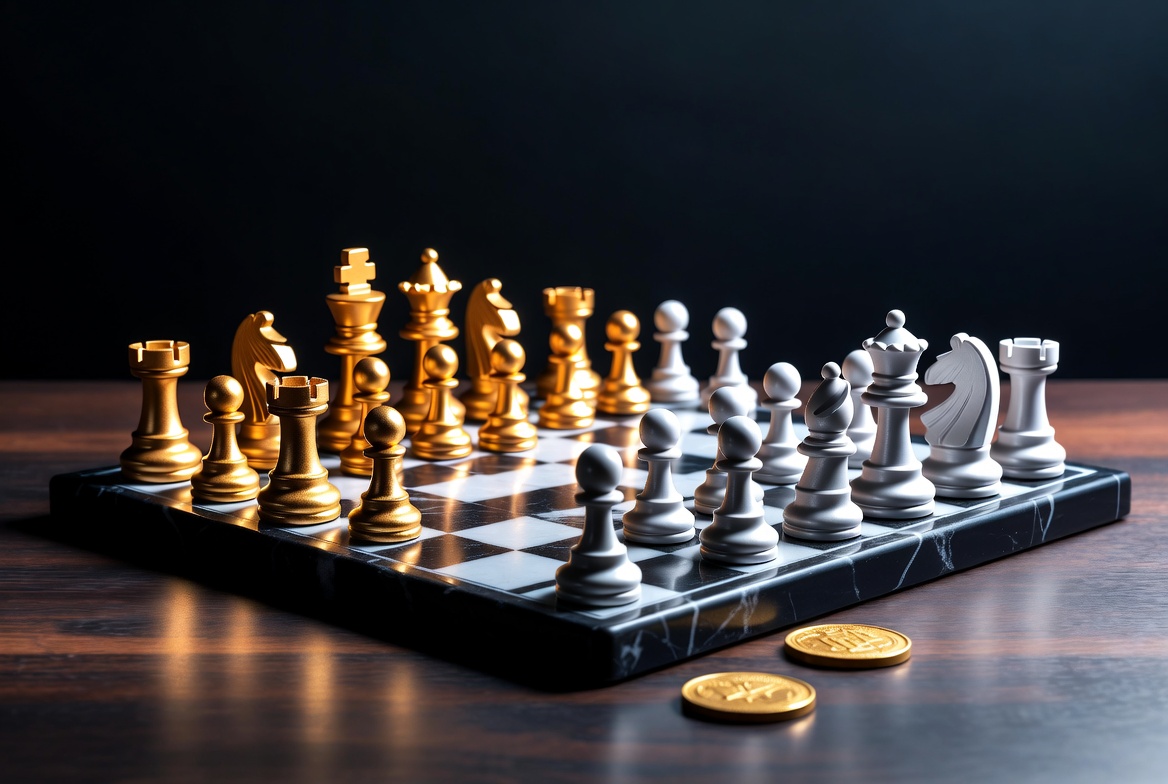
THE WAR ALREADY HAPPENED — AND YOU DIDN'T NOTICE
While the world waited for missiles and aircraft carriers, China executed a systemic stranglehold maneuver: cables, ports, petro-yuan, satellites. The 21st century war will not be won by destroying cities. It will be won by owning the world's infrastructure.
From Byzantium to Washington: Debt as a Tool of Systemic Collapse
In 1453, Byzantium fell not because the Turks had an unbeatable army, but because the Empire could no longer pay its soldiers. Debt was the tool. Paralysis was the objective. Washington, 2026: US Treasury bonds have as their main creditors China ($760B), Japan ($1.1T) and OPEC. The US borrows to fund the army it is trying to use to contain those who lend to it. History rhyming.
The parallel is not metaphorical. It is structural. The Byzantine Empire took two centuries to collapse from when debt exceeded its capacity to pay. The US has been accumulating debt for four decades. The difference from Byzantium: in the 15th century there was no alternative power that knew how to operate the Mediterranean commercial system. In 2026, China has spent twenty years building the parallel system. It does not need the US to collapse. It just needs to be ready when it does.
The data point nobody wants to discuss in Congressional hearings: with interest rates at 4.5%, US debt service exceeds the Department of Defense budget. For the first time in history, the US spends more on paying interest on its debt than on its military. The most important creditor of that military is the adversary that military is designed to contain.
The Paradigm Shift: From Police to Owners
For a century, the world operated under an unwritten truth: global prosperity depended on stability guaranteed by US military and financial power. The Pax Americana presented Washington as the 'benevolent Guardian of Order'. But the architecture of that order began to crack exactly when China started rebuilding it from the foundations, with better materials.
DEFINITION: Silent Checkmate
The 'Silent Checkmate' is the strategic denomination of the scenario where a dominant power loses control over global infrastructure — energy, communications, transport, finance — without any conventional armed conflict having taken place. In the context of Chinese geopolitics in 2026, it materializes in four simultaneous vectors: (1) Control of global communication physical infrastructure (submarine cables + Guowang satellites); (2) Control of global trade logistical nodes (String of Pearls: ports, special economic zones); (3) Erosion of dollar privilege as energy reserve currency (Petro-yuan + BRICS+); (4) Informational superiority in the submarine domain (Transparent Ocean). The 'checkmate' is not a declaration of military victory; it is the moment when the adversary discovers that all squares on their chessboard are controlled.
China has understood that the transition from US hegemony to its own doesn't require war: it requires changing the architecture of the global system. And it has done so in the most elegant way possible: by becoming indispensable to the system it wants to replace.
The 3 Checkmate Vectors
Vector 1: The Infrastructure Collar (More Than Ports)
Places like the port of Chancay (Peru), Piraeus (Greece) or Hambantota (Sri Lanka) are not just logistical nodes. By controlling port management software, China controls the flow in the broadest sense. In a conflict 'Day Zero', Beijing doesn't need to sink ships: it can simply 'digitally switch off' Western access to its own supply points, paralyzing world trade within hours.
DEFINITION: String of Pearls
The 'String of Pearls' is the strategic name Pentagon analysts gave to the network of Chinese naval and commercial facilities along Indo-Pacific maritime routes, from the South China Sea to the Indian Ocean and Arabian Sea. The 'pearl' is not necessarily a declared military base — most are dual-use ports, special economic zones or logistics facilities under Chinese management. Their defining characteristic: each 'pearl' is a strategically positioned facility that, in conflict, can become an access denial or power projection point without additional military investment. As of 2026, the collar includes at least 12 operational facilities from Gwadar (Pakistan) to Djibouti, including Hambantota (Sri Lanka), Kyaukpyu (Myanmar), Port Moresby (Papua New Guinea) and Chancay (Peru).
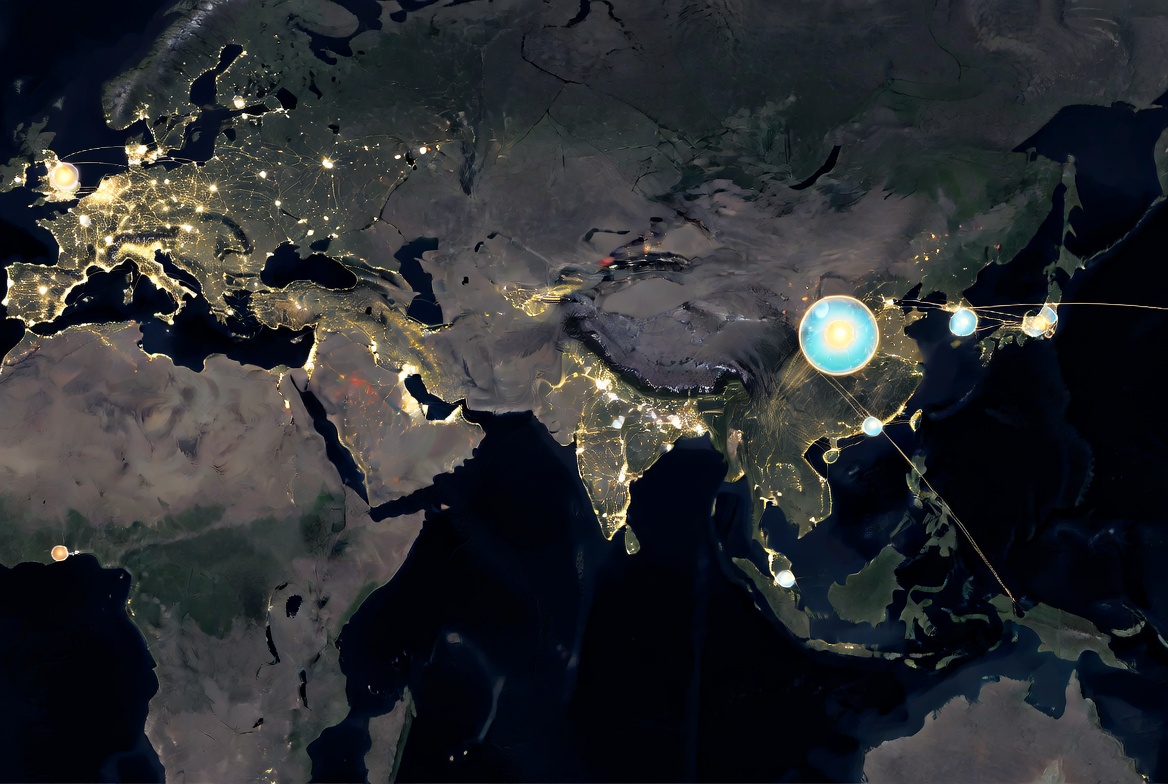
Each Pearl Is a Switch: The Global Maritime Control Map
The 'String of Pearls' is not a geographical metaphor. It is a chain of operational dependencies. Each node — Djibouti, Gwadar, Hambantota, Ream, Kyaukpyu, Chancay — has an obvious logistical function and a hidden strategic function. Djibouti controls the Bab-el-Mandeb, the strait connecting the Red Sea to the Indian Ocean. Gwadar gives access to the Persian Gulf without passing through the Strait of Malacca.
Hambantota watches over central Indian Ocean routes. Each pearl is a switch. Together, they are a control panel for the world's maritime routes. It is no coincidence that each Pearl node coincides exactly with the chokepoints that US naval strategists identified in the 1980s as the 'bottlenecks' of global trade. China did not need its own strategic study. It just needed to read the ones the US published.
The acquisition process is slow but inexorable: first the infrastructure loan, then the technical port management, then Chinese security personnel, then — if the country cannot pay — the long-term concession. Hambantota took 10 years from the first loan to the 99-year concession. Chancay took 8. Next on the list: a port in the central Caribbean whose name will not appear in any report until the concession is already signed.
🗺 STRATEGIC MAP — String of Pearls: Ports & Chokepoints
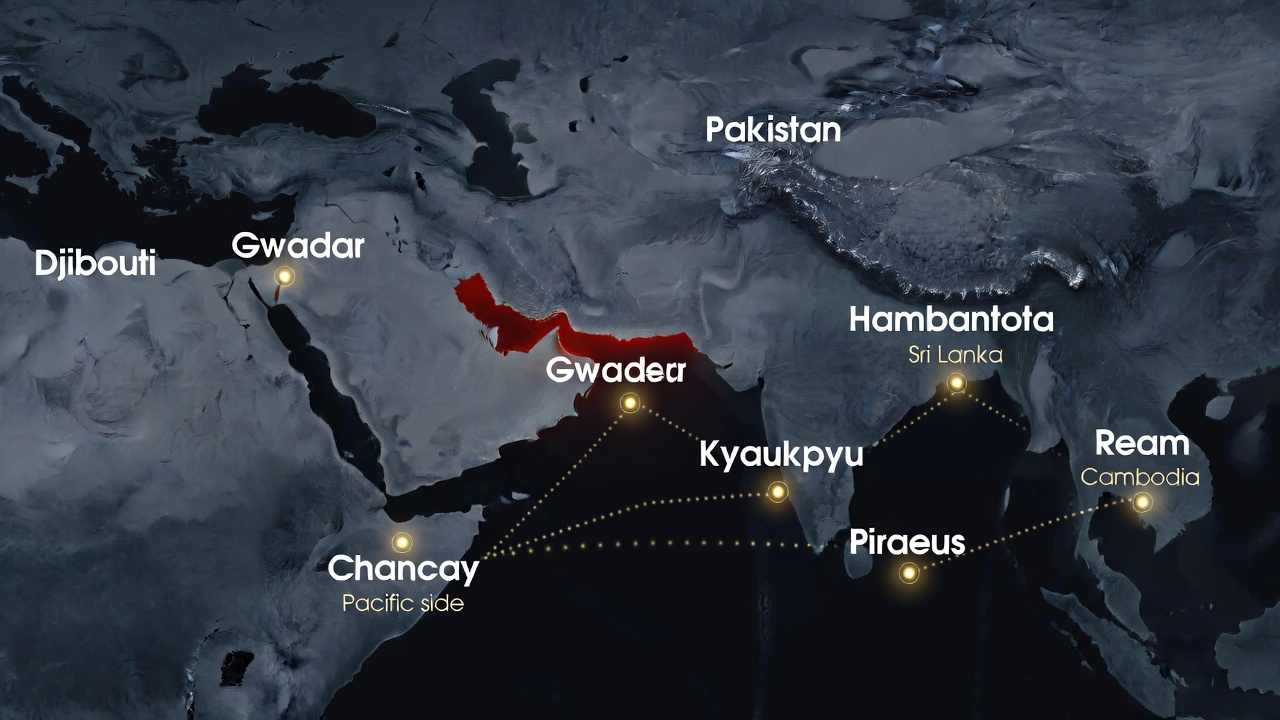 The String of Pearls: 7 port nodes + 68 countries with active BRI loans = 68 potential switches. Source: CSIS: China's New String of Pearls.
Vector 2: The Petro-yuan — The Financial Meteorite
The mountain of US debt is only sustainable if the dollar is the sole reserve currency for energy. By convincing Saudi Arabia, Iran and the BRICS+ to accept the Petro-yuan, China directly attacks the engine financing the US military. Without the global need to recycle dollars into Treasury bonds, interest rates in Washington become unsustainable. The 'Paper Empire' collapses under the weight of its own debt. China didn't fire: it simply stopped buying 'US paper' and started buying 'real crude' in its own currency.
The Petrodollar: 50 Years of Monopoly, 5 Years of Demolition
The Petro-yuan is not a financial innovation. It is the controlled demolition of a monopoly that has lasted 50 years. When Nixon abandoned the gold standard in 1971 and reached the agreement with Saudi Arabia to invoice oil in dollars, the Petrodollar was born. Every country that wanted to import oil needed to accumulate dollar reserves. To do so, it bought US Treasury bonds.
The cycle was self-reinforcing: the US printed dollars → bought oil → producer countries recycled those dollars into Treasury bonds → the US could print more dollars. When the Petro-yuan reaches 50% of oil trade, that cycle breaks. Not in decades. In years. The BIS estimates that each percentage point of oil trade that migrates from dollar to yuan reduces structural demand for Treasury bonds by approximately $18 billion. At the current 41%, we are talking about $738 billion in demand already evaporated.
Saudi Arabia is the point of no return. When the Kingdom accepts 50% of its exports to China in yuan — a data point anticipated for 2027 according to Shanghai International Energy Exchange sources — the Petrodollar ceases to be the de facto standard of global trade. There is no formal agreement. There is no announcement. Just BIS data that, read three months later, will confirm the change had already happened.
DEFINITION: Petro-yuan
The Petro-yuan describes the settlement of oil and gas contracts in Chinese renminbi (yuan) instead of the US dollar (petrodollar). Its consolidation in 2025-2026, through agreements of the Shanghai International Energy Exchange (INE) with Saudi Arabia, UAE, Iraq, Iran, Russia and Venezuela, attacks the foundation of the dollar's exorbitant privilege: the structural need for all world countries to hold dollar reserves to pay for energy imports. If that need disappears, so does the structural demand for US Treasury bonds that finances the US deficit. Without bond buyers, the Federal Reserve must raise rates or monetize debt — both options lead to inflation or collapse of the Western financial system. The petro-yuan is not the end of the dollar; it is the beginning of its demotion.
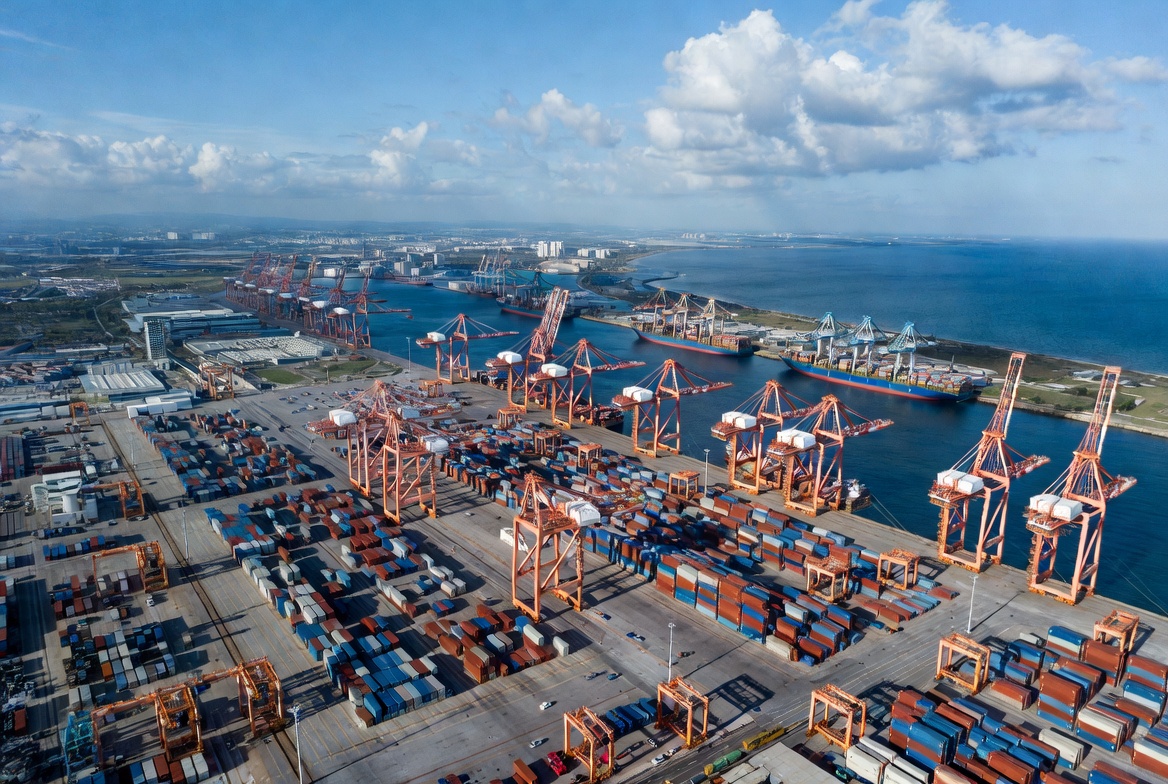
The Port as Weapon: COSCO and the Control of Trade Nodes
The port of Chancay, inaugurated in 2024, is the first String of Pearls node in the Western Hemisphere. The detail that did not appear in the media coverage of the inauguration: the port management software is Chinese. The same software controls Piraeus (Greece), the largest port in the Mediterranean, operated by COSCO since 2016.
One day, if China decides, that software can slow processing times at Chancay and Piraeus simultaneously. Without firing. Without invoking any treaty. Just... a technical glitch. And while the IT teams at Piraeus and Chancay search for the bug, containers do not move. And while containers do not move, the supply chains of half Europe and half South America are paralyzed. 72 hours of 'scheduled maintenance' equate, in economic impact terms, to the 2021 Suez Canal closure.
COSCO Shipping is not a company. It is an instrument. As HUAWEI is an instrument of the intelligence network. As Guowang satellites are the communication nodes of the AJX-002 swarm. The distinction between private sector and state sector in China is not a legal distinction. It is a narrative fiction designed for Western consumption.
Vector 3: The Debt Paradox
The US borrows money from China to finance weapons supposed to defend it from China. This paradox, which in 2015 seemed an academic curiosity, in 2026 is the axis of China's long-term strategy. While the US accumulates debt of +$35 trillion (and growing), China has been steadily divesting from Treasury bonds, moving that capital to physical gold and real infrastructure — ports, lithium mines, cables, rail lines. They are trading 'paper' for 'tangible assets' before the debt system collapses.
68 Countries, 68 Switches: The Geography of Strategic Debt
The Chinese debt trap works because it exploits an information asymmetry. A country like Sri Lanka or Zambia knows it needs infrastructure. It does not know that the infrastructure comes with non-disclosure clauses, Shanghai arbitration, and strategic asset clauses as collateral. When it cannot pay, it discovers it has ceded sovereignty over its most strategic asset — a port, a mine, a power plant — in exchange for a road.
China does not buy ports. China buys the right to flip switches. The $62 billion of CPEC in Pakistan is not a development investment. It is the purchase price for Gwadar and Indian Ocean access without passing through the Strait of Malacca. The $1.4 billion Hambantota loan was not to build a competitive port. It was to acquire use rights to a central Indian Ocean port for 99 years.
The pattern has a name in Washington think-tanks: Debt Trap Diplomacy. It has 68 affected countries. And it has a characteristic that makes it almost impossible to reverse: once the asset is conceded, recovering it would require the recipient country to resolve the debt that generated the concession. Which would require borrowing more. From whoever. Which is typically also China or some creditor that bought Chinese debt in the secondary market.
The Complete Board: The Day Zero Scenario
If China decided tomorrow to close the Strait of Hormuz (via Iran) and cut submarine cables simultaneously, the Western economy would collapse within 72 hours. The US would have the world's best tanks, but would have no fuel to move them and no banking system to pay its soldiers.
Table: Day Zero Scenario — 72 Hours Without Cables + Without Hormuz
| Hour | Civil Impact | Financial Impact | Military Impact |
|---|---|---|---|
| H+0 → H+2 | Slow internet. Cloud 90% degraded. | SWIFT on emergency protocol. Exchanges close. | Unencrypted comms cut. Emergency satellites. |
| H+2 → H+24 | ATMs inoperative. Gas stations without payment. | European and Asian markets suspended. Debt collapse. | Pacific bases (Guam, Okinawa) isolated. |
| H+24 → H+72 | Supply chain collapse. Supermarket shortages. | Dollar freefall. Commodities in digital barter. | US cannot finance operations. Forced partial withdrawal. |
The New Order: The Obstacle Was the Narrative
For decades, the Western narrative presented American hegemony as the necessary condition for global prosperity. 'Without Pax Americana, chaos.' But that narrative began to crumble exactly when its defenders needed it to be more true than ever. Today, in the Global South, the US is increasingly seen as the obstacle to prosperity, not its guarantor. And China offers the most pragmatic alternative available: infrastructure without moral lectures.
Master Table: The Silent Checkmate — The 4 Attack Points
| Attack Point | Chinese Tool | Result for the Western System |
|---|---|---|
| Physical / Submarine | AJX-002 drones + diamond disc | Cable cuts: military bases cut off and abandoned |
| Financial | Petro-yuan + Treasury bond sales | Dollar collapse: unsustainable deficit, army without pay |
| Logistical | String of Pearls: 12+ ports under Chinese control | 'Digital shutdown' of Western trade at its own nodes |
| Narrative / Informational | Guowang Network + Digital Silk Road + AI | Global South changes narrative: from defending China to adopting its system |
Guowang: The Command Infrastructure of the Submarine Swarm
The Guowang constellation has 13,000 planned satellites. In March 2026, more than 1,000 are active. The Western narrative frames them as the 'Chinese Starlink' — a connectivity or espionage threat. The Chinese narrative presents them as 'digital space sovereignty'. Both are partially true.
The function no spokesperson mentions: Guowang satellites are the communication nodes for the AJX-002 drone network deployed on the seabed. The blue-green laser emitted by the satellite and received by the drone functions as the fiber optic cable the operator no longer needs. The submarine swarm and the orbital swarm are a single integrated system. China has built a communication system for its submarine arsenal that does not depend on any cable that the West can cut or intercept.
Guowang satellites are not a response to Starlink. They are the command and control infrastructure for the next phase of seabed dominance. If in an active war scenario the West tried to cut China's communication cables — a move symmetric to what China would do with its drones — it would discover that China no longer needs those cables. The orbital swarm is the substitute cable. And satellites in low orbit at 550 km altitude cannot be cut with a depth drone.
DEFINITION: BRICS+ and CIPS — The Alternative Financial System
BRICS+ (Brazil, Russia, India, China, South Africa + 6 new full members in 2024): Saudi Arabia, UAE, Iran, Ethiopia, Egypt, Argentina. As of 2026, the BRICS+ bloc represents: 45% of global GDP (PPP); 42% of world population; 60% of oil and gas reserves; 40% of global trade. Strategic key: with Saudi Arabia inside, the Petro-yuan has backing from the world's largest oil exporter.
CIPS (Cross-Border Interbank Payment System): China's alternative to SWIFT. Processed $12.3 trillion in 2024. In 2026, covers 110+ countries. Not a SWIFT replacement but a parallel system operating in yuan. Its strategic importance: in cable collapse scenarios, CIPS can operate via Guowang satellites and Digital Silk Road terrestrial networks, while SWIFT depends on the same submarine cables vulnerable to AJX-002.
DEFINITION: Exorbitant Privilege
The 'exorbitant privilege' is the term coined by French finance minister Valéry Giscard d'Estaing in the 1960s to describe the advantage the US has from issuing the world reserve currency. In practice it means: (1) the US can pay its imports and debts in its own currency, which it can always print; (2) the entire world must maintain dollar reserves, creating permanent structural demand for dollars and Treasury bonds; (3) the US can finance its deficit indefinitely as long as the global system continues trusting the dollar. The petro-yuan directly attacks point 2: if the dollar is no longer needed to buy energy, structural demand collapses, the 'privilege' disappears and with it the ability to finance the world's largest army with debt.
From 'Order Police' to 'Obstacle to Prosperity': The Global South Picks a Side
In the Global South, the narrative about the US has changed. Not dramatically, not in a day, but drop by drop over twenty years. In 2003, the Iraq invasion without a UN resolution. In 2008, the financial crisis exported globally. In 2022, the Russia sanctions that froze sovereign dollar reserves — and that made every central bank in the world review how many assets it held denominated in a currency that could be unilaterally confiscated.
For an analyst in Lagos, Jakarta or Buenos Aires, the question is no longer 'do we want China as an alternative hegemon?' but 'can the current system survive another cycle of unipolar dominance?' The difference between the two questions is not semantic. It is strategic. The first is an ideological choice. The second is a risk management analysis. And the central banks, sovereign funds and finance ministries of the Global South are doing risk management analysis.
The result: in the last 3 years, central banks worldwide have bought more gold than in any other period since abandoning the gold standard. Reserve diversification away from the dollar is not an ideological move. It is the same move any portfolio manager makes when an asset that had the 'risk-free' category starts showing counterparty risk signals. Dollar reserves are assets the US can confiscate. Central banks learned that by watching what happened to Russia.
Fifty Years, Five Vectors: The Complete Checkmate Map
The silent checkmate is the sum of everything we have seen: unprotected cables (Part I), asymmetric arsenal of 200+ drones (Part II), oceanic sensor network that eliminates submarine stealth (Part III), real rehearsal with full impunity (Part IV). The Petro-yuan as financial alternative, the String of Pearls as a chain of operational dependencies, debt as an instrument of sovereignty cession (Part V).
It is not a conspiracy. It is a fifty-year strategy executed with engineering discipline. Each piece was placed while the West debated whether it was a real threat or not. When the debate ended — when the Matsu and Estonia cables were already cut, when Chancay was already inaugurated, when the Petro-yuan already exceeded 40% of oil trade — the question had shifted from 'is it a threat?' to 'how do we respond?'
The checkmate is not announced. It is discovered when there are no squares left to move the king. The great strategic question of the next decade is not whether China will try to close the board. It is whether the West has the time, political will and resources to build the counter-board before the game ends. The 2026 indicators are not encouraging. But the game has not ended. The best chess players do not win by never making mistakes. They win by seeing threats before they materialize and acting while squares are still available.
SERIES CONCLUSION: THE SYNTHESIS
Part I taught us the world's umbilical cord is unprotected. Part II showed us the scissors. Part III revealed the sensor network that makes the enemy navigate blind. Part IV demonstrated the dress rehearsal already happened. And this Part V gives us the synthesis: Seabed Warfare is not the war. It is the preparation for the post-American world.
The true obstacle to prosperity has been identified. And it is being dismantled, cable by cable, port by port, yuan by yuan. What emerges is a multipolar order, imperfect perhaps, but built on tangible infrastructure and not on paper debt of a declining empire.
The Silent Checkmate Has Immediate Financial Consequences
The erosion of the dollar's exorbitant privilege, the collapse of the American narrative in the Global South, and China's superiority in submarine infrastructure translate to: structural dollar weakness, pressure on Treasury bonds and systemic market volatility. The Full Market MeltDown portfolio was designed for this environment.
Complete Series: Seabed Warfare
The Silent Checkmate