
Seabed Warfare
Part IV — February 2026: The Digital Apocalypse Simulation
Military Intelligence · March 2026 · On February 8, 2026, cables in Taiwan and the Baltic were cut simultaneously. It was not an accident. It was the dress rehearsal. Forensic timeline of the first 72 hours.
FEBRUARY 8, 2026 — The Day the West Didn't See Coming
Two theaters of operations. Two simultaneous 'accidents'. 45-day wait for the first repair ship. 60 days for Taiwan. And 347 million euros from the EU admitting nobody was prepared. Welcome to the first seabed D-Day.
The Arithmetic of Impunity
Two theaters. Nine minutes apart. The decisive statistical data point: the probability that two cables on opposite sides of the world fail simultaneously by natural causes within a 9-minute window is 1 in 10 to the 8th. Less than the probability of lightning striking you while reading these lines. Western analysts who labeled it an 'incident' had access to that statistic. They dismissed it anyway.
That is what the doctrine of Plausible Deniability does: it does not convince you it was an accident. It gives you bureaucratic cover to act as if it were. The distance between 'we believe it was China' and 'we can prove it under international law within a useful timeframe' is not epistemic. It is legal. And in that distance lives the entire strategy.
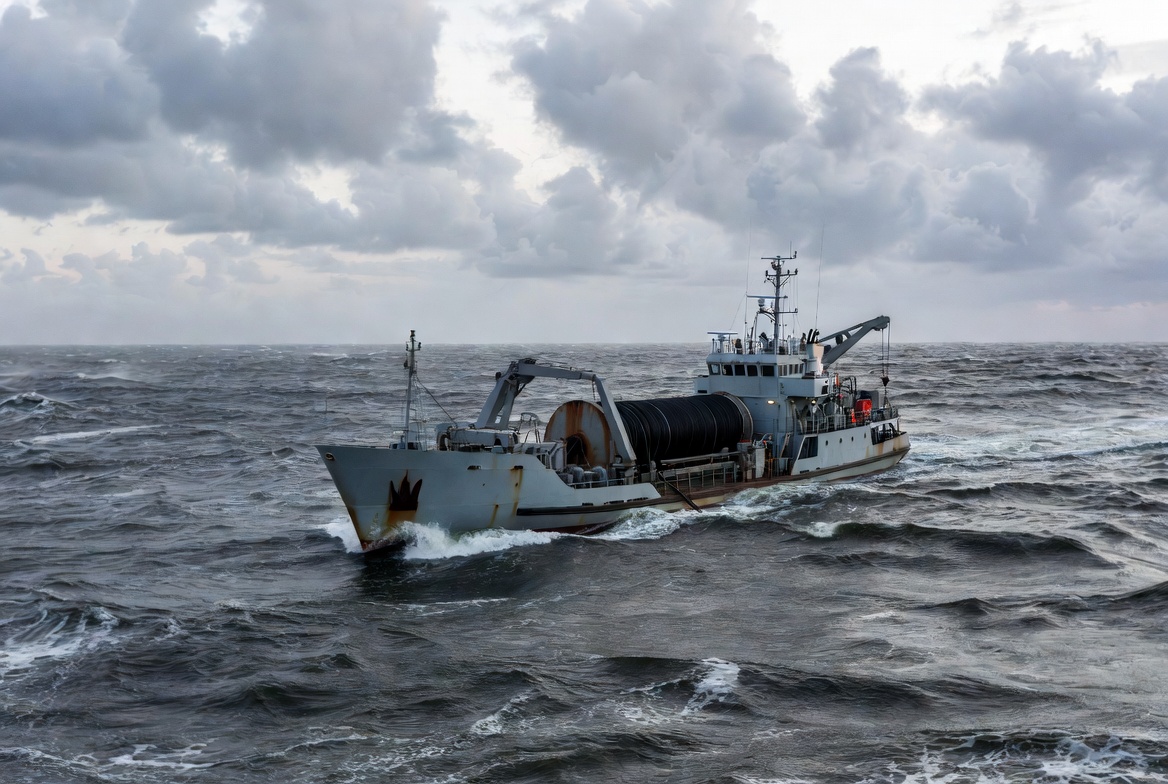
Chronicle of the Simulation: The Two Theaters
DEFINITION: 'Digital Blockade Simulation'
A 'Digital Blockade Simulation' is a coordinated submarine sabotage operation whose primary objective is to test the adversary's response capacity, not produce definitive collapse. Unlike a real attack, the simulation uses 'minimum necessary violence' — it damages enough cables to create a real crisis, but leaves most infrastructure intact. The result: the adversary reveals its emergency protocols, repair vessel inventory, response times and alternative communication channels. All first-order tactical intelligence for planning the definitive attack.
Theater A: Taiwan Strait — TPKM Cables
A Chinese-flagged cargo vessel performed 'zigzag' maneuvers over the cable route connecting the main island to the Penghu and Matsu islands. Unlike 2023 incidents (conventional anchors), February 2026 saw use of deep-tow cutting devices — possibly the Lishui University prototype — that cleanly cut cables, avoiding the prolonged dragging that seismic sensors in cables detect. Impact: Total isolation of military garrisons on peripheral islands. Taiwan activated its LEO satellite network (Starlink/Project Kuiper) for the first time at massive scale.
The Ghost Ship: How Maritime Impunity Operates
The suspect vessel in the Baltic — the 'Xi Yue', Cameroonian flag, offshore owner in Shanghai — was not difficult to identify. What was difficult was acting. The ship had abandoned the area before the Finnish patrol vessel reached the location. Under international maritime law, a vessel in international waters that has committed no visible act cannot be detained. China knows this.
It has built its sabotage doctrine around that legal vacuum exactly as it built its South Sea claim doctrine around 'facts on the ground'. The pattern is the same: act, withdraw, deny. The legal-diplomatic world needs at least 72 hours to begin processing attribution. By then, the mission is complete, the vessel is 200 nautical miles away and the cable has been dark for hours.
Theater B: Baltic Sea — North-South Connectivity
Almost simultaneously, vessels linked to Chinese state companies 'lost propulsion' over critical nodes connecting Germany to Finland and Sweden to Lithuania. The speed of cuts evidenced prior intelligence coordination: the chosen cut points coincided exactly with segments where rocky seabed prevents cables from being buried deeply enough to protect them.
The EEZ as Theater: The Geopolitics of Fait Accompli
The Taiwan case was different in one important sense: bolder. The PLA research vessel was in Taiwan's exclusive economic zone. Not in international waters. It was there because it knew Taiwan would not shoot. Not at a moment without active crisis. Not without provoking a geopolitical response that Taipei did not want to manage.
The exclusive economic zone became an operations zone. Impunity was demonstrated not once but twice the same day. The implicit message: in the China Sea, the rules of maritime law are whatever Beijing decides they are. The Taiwan Strait is no longer a neutral space. It is a theater of operations with a free field for the actor that says so.
Table: Timeline — February 2026 Incidents
| Date/Time | Theater | Event | Immediate Impact | Response |
|---|---|---|---|---|
| 08-Feb-2026 ~02:30 UTC | Taiwán | First TPKM cable cut (deep-tow) | Penghu and Matsu Islands isolated | Massive Starlink activation |
| 08-Feb-2026 ~08:15 UTC | Báltico | 'Propulsion failure' — vessel over DE-FI node | Latency +800ms in North Europe traffic | NATO activates MAINSAIL |
| 08-Feb-2026 ~14:00 UTC | Báltico | Second incident SE-LT | Sweden-Lithuania 60% degraded | NATO frigates escort suspect vessels |
| 10-Feb-2026 | Global | EU convenes emergency Cable Security meeting | Markets: maritime insurance premiums +15% | Cable Security Toolbox announced |
| 15-Feb-2026 | Taiwán | First repair ship arrives — 7 days later | Chinese maritime militia harassment: 19 days repair | US sends escort destroyers |
| March 2026 | EU | EU Cable Security Toolbox — €347M | Public recognition of vulnerability | European repair vessel tender |
🗺 FORENSIC MAP — February 8, 2026 Incidents
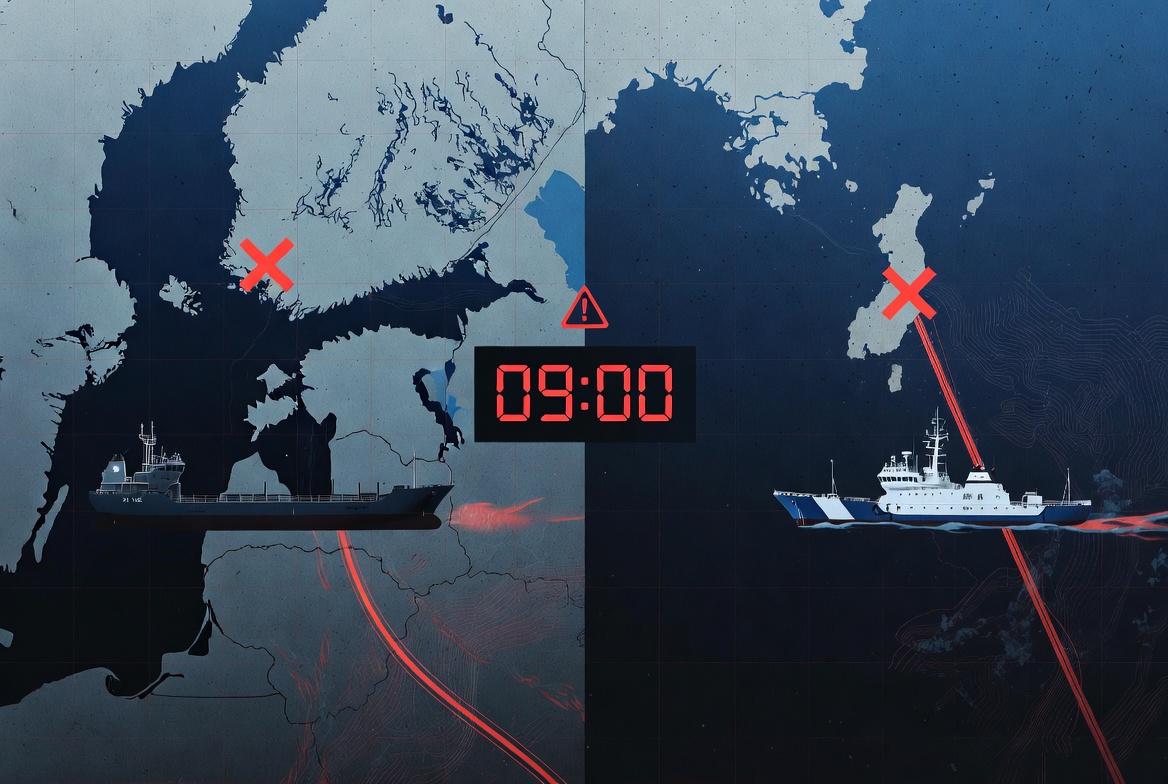 Two theaters. Nine minutes apart. Probability of natural simultaneity: 1 in 10⁸. Source: Reuters Baltic + Reuters Taiwan.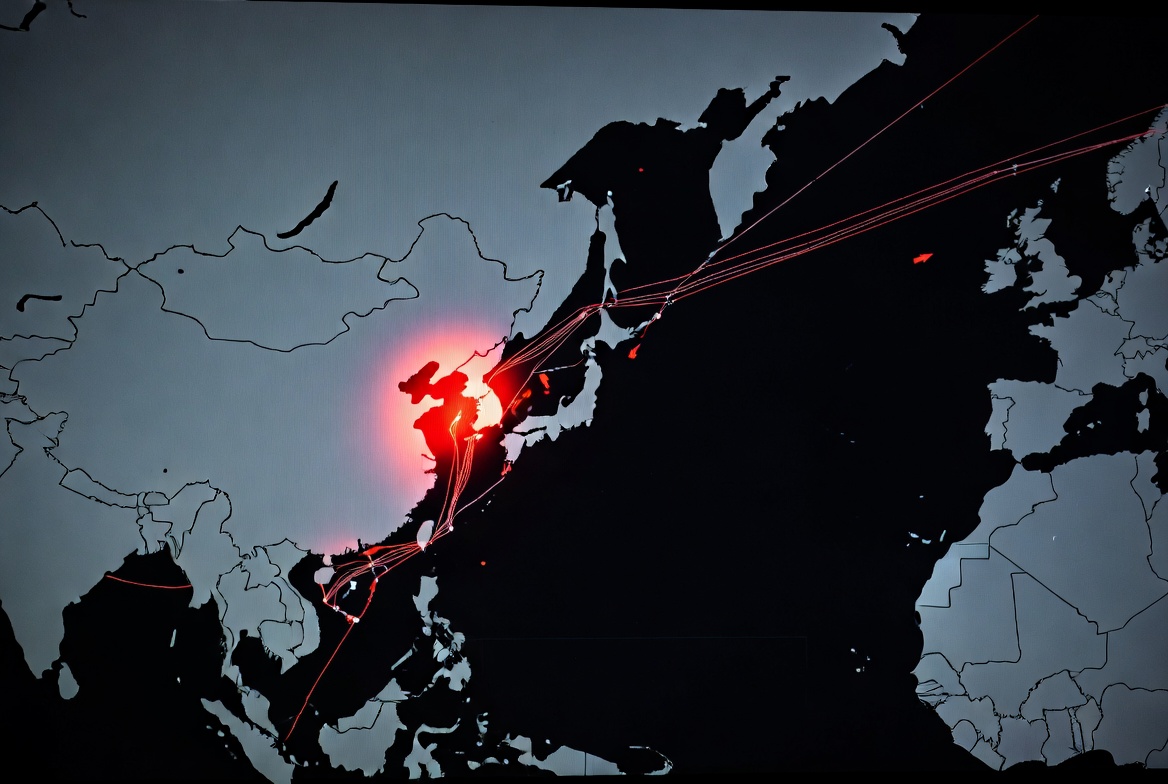
The Bottleneck: The Repair Ship Deficit
The most revealing aspect of the February 2026 simulation was not the sophistication of the attack. It was the demonstration that the West lacks the physical capacity to respond at scale. The number of cable repair ships in the world is so small that even the most modest attack produces systemic capacity deficit.
~60
Total world repair ships45 days
Wait for Baltic (Feb 2026)60+ days
Wait for Taiwan60 Ships, 500 Cables: The Vulnerability Equation
The most revealing data point in the entire series: across the entire world there are 60-62 ships capable of repairing submarine cables. In all of naval history, humanity has never built more. It is the most ignored bottleneck in global critical infrastructure.
When maritime insurance covers the cost of repair but not the urgency, when maintenance contracts are negotiated in peaceful periods, when no government wants to pay the political cost of militarizing what until now was private infrastructure — the result is exactly this: 60 ships for 500 cables, on a planet where a hostile actor can cut 20 simultaneously. An AJX-002 swarm of 20 cuts in 24 hours saturates the global repair system indefinitely. You do not need to cut all cables. You just need to cut more than can be repaired simultaneously.
DEFINITION: EU Cable Security Toolbox
The EU Submarine Cable Security Toolbox, adopted in February 2026 following Baltic and Taiwan incidents, is the EU's first legal-operational framework specifically designed to protect submarine cable infrastructure as a defense asset. It includes: (1) 347 million euros to create spare cable reserves and finance new European-flagged repair ships; (2) SMART sensor integration into repeaters of new EU cables (vibration/pressure detection before cutting); (3) obligation for private operators to notify government in real time of any anomaly; (4) NATO-EU intelligence sharing protocol to identify suspicious vessels in advance. The toolbox implicitly acknowledges prior failure: no protection mechanism existed for assets moving 100% of European SWIFT.
Official source: EU Submarine Cable Security Toolbox (Feb 2026)
€347 Million: A 2031-Scale Response for a 2026 Problem
The European Union responded to the February 2026 incidents with the EU Submarine Cable Security Toolbox: 347 million euros, new European-flagged repair ships, SMART sensors in repeaters, mandatory notification protocols. It is the first serious institutional response in 150 years of submarine cable history.
The problem is the time scale: new ships will take 5-7 years to become operational. New sensors require updating existing infrastructure. Meanwhile, the current 62 ships remain the only available resource. The EU Cable Security Toolbox is, in strategic terms, a budget for the 2031 elections with a problem that started in 2019. The gap between the speed of building Western defensive infrastructure and the speed of deploying the Chinese offensive arsenal does not close. It widens.
DEFINITION: SMART Cable (Science Monitoring And Reliable Telecommunications)
SMART cables are the next generation of submarine cables incorporating sensors integrated directly into repeaters (signal amplifiers, placed every 60-80 km). These sensors measure: (1) water temperature, (2) hydrostatic pressure, (3) seismic acceleration, (4) electromagnetic anomalies. A SMART cable detects an approaching AJX-002 drone by recording pressure anomaly and motor electromagnetic disturbance — and can alert operations center up to 30 minutes in advance before the cut occurs.
Critical limitation: SMART cables can only be installed in new cables. Upgrading the ~500 existing cables would require lifting all of them (impossible in wartime). The 2026 EU Cable Security Toolbox includes funding for SMART cables on only 12 priority routes — the rest of the network remains blind.
Table: Countermeasures and Real Effectiveness · March 2026
| Countermeasure | Cost | Effectiveness vs AJX-002 | Vulnerability |
|---|---|---|---|
| Cables SMART | Very High | High — detect drone before attack | Only works for NEW cables; existing ones remain blind |
| DARPA Manta Ray | High | Very High — can intercept intruders | < 10 units available worldwide |
| OTAN MAINSAIL (IA) | Medium | Medium — identifies sabotage behavior | Only works in dense NATO coverage zones (Baltic, NOT Pacific) |
| Arctic Redundancy | Extreme | Medium — if Pacific cut, use Arctic | Arctic routes also vulnerable to Russian drones |
| Quantum Encryption (QKD) | Medium | ZERO against physical cutting | Protects data if cable 'tapped', not if cut |
The Great Data Migration (GDM): Back to the 90s
The question emergency planners avoid answering in public is: what happens if all cables are cut at once? The technical answer is brutal and contradicts the 'satellite redundancy' narrative sold by Silicon Valley.
THE CAPACITY ABYSS: CABLE VS. SATELLITE
15.000 Tbps
Global cable capacity (estimated)
15-20 Tbps
Total Starlink 2026 capacity (~10,000 sats)
0,1%
World traffic absorbable by satellites in total cut
DEFINITION: NMCSCUI / Operation MAINSAIL
The NMCSCUI (NATO Military Committee Standing Committee on Undersea Infrastructure, pronounced 'MAINSAIL') is NATO's undersea infrastructure defense coordinating body, created in 2024 following the RAND report on submarine cable vulnerabilities. Its three key competencies: (1) identify and catalog critical undersea infrastructure of member states; (2) coordinate incident response with 62 civilian repair ships under NATO-CABLE agreements; (3) develop forensic attribution protocol for attacks using sensor analysis, AIS data and OSINT sources.
Operational limitations identified in February 2026 incidents: (1) attribution protocol requires minimum 72 hours — attack already complete by then; (2) MAINSAIL coverage is dense in Baltic but sparse in Pacific and Indo-Pacific; (3) 62 repair ships are privately owned — availability depends on commercial contracts.
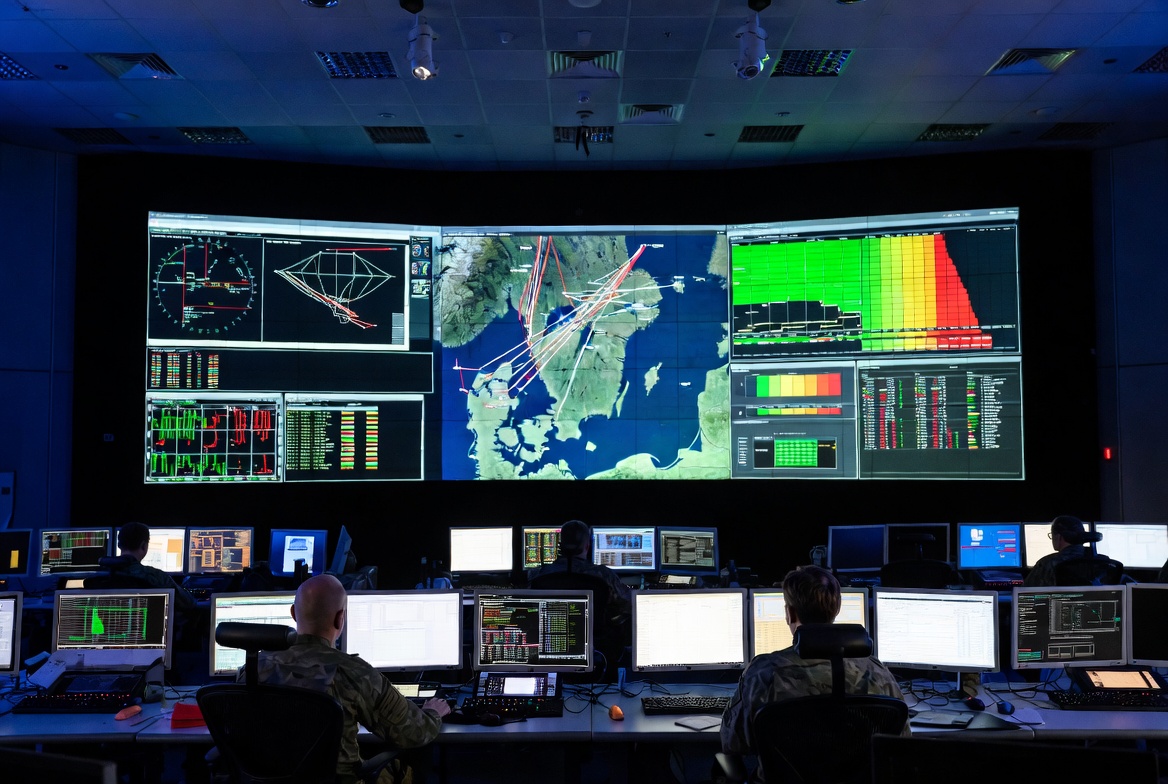
MAINSAIL: The Coordinator Without Requisition Authority
NATO created the NMCSCUI — pronounced 'Mainsail' in Alliance parlance — in 2024. It is the first coordinating body dedicated specifically to undersea infrastructure defense. What its very existence reveals: until 2024, nobody was responsible for coordinating the defense of cables that carry 97% of internet and 100% of SWIFT.
For 30 years of commercial internet, cyberattacks, growing geopolitical tension, the world's most critical infrastructure had no institutional defender. The NMCSCUI was born two years too late. Its central operational limitation is not technical but legal: the 62 repair ships under NATO-CABLE agreement are privately owned. The moment active war scenarios make the mission 'unacceptably dangerous' per insurance protocols, shipowners can deny use. NATO can coordinate. It cannot compel. The submarine battlefield is fought with commercial assets regulated by commercial law.
In case of total cable cut, the European citizen would return to 1990s connectivity: text only, no video, no social media, with latencies over 600ms (GEO satellites) or 50ms (LEO). ATMs would stop working. Cloud services would go offline. International supply chains would enter logistical collapse.
DEFINITION: Great Data Migration (GDM) — The Digital Winter
The Great Data Migration (GDM) is the emergency scenario where massive submarine cable failure forces global traffic migration to low-orbit satellites (Starlink, Amazon Kuiper, IRIS²), with a 99.9% reduction in total capacity. In crisis planners' jargon, this state is called the 'Digital Winter': global communications fall to 1994 levels, text and essential data only. Immediate consequences: (1) cloud services (AWS, Azure, Google) collapse without sufficient bandwidth; (2) SWIFT banking system operates only for emergency central bank transactions; (3) citizen internet access is equivalent to a 56 kbps connection. Recovery requires deploying new cables — a process taking 2-5 years.
DEFINITION: 'Data Triage' Protocol
The Data Triage protocol is the US and EU emergency plan for partial or total collapse of submarine cable infrastructure. When activated, available satellites (Starlink, Amazon Kuiper, European IRIS²) are reserved exclusively for: (1) military command and control communications, (2) critical liquidity banking transactions between central banks, and (3) emergency service coordination. The average citizen loses access to high-speed internet, cloud, streaming and social media. The remaining 'Low-Resolution Internet' is functionally equivalent to the 1997 web: text-only, asynchronous access and extreme latencies.
The Digital Winter: When Satellites Are Not Enough
RAND Corporation analysts have a name for the scenario that follows massive cable collapse: the Great Data Migration. The name is euphemistic. The reality is: world traffic would attempt to migrate to LEO satellites like Starlink and OneWeb. A modern cable like Amitie has capacity of 400 Tbps. The entire Starlink fleet has 500 Gbps total capacity. One cable equals all of Starlink multiplied by 800.
The migration would not be an orderly transition. It would be a 99.9% collapse of available capacity. What would survive: maximum-priority military communications and little else. Financial services dependent on sub-10 millisecond latencies — all algorithmic trading, all real-time payment processing — would stop functioning not because servers are down, but because the communication channel between them would have disappeared.
Silicon Valley has spent a decade selling the 'satellite redundancy' narrative. Satellite redundancy exists for 0.1% of the load. The remaining 99.9% has no backup. There is no Plan B for cables. There are only triage plans to choose which 0.1% survives.
DEFINITION: Submarine Area Denial (Seabed Area Denial)
Submarine Area Denial (SAD) is the ability to prevent the adversary from operating their naval forces in a specific geographic area of the seabed, without needing to directly destroy them. China has achieved this capability in the South China Sea, Taiwan Strait and parts of the western Indo-Pacific through the combination of: NARAS sensor network (omnidirectional detection); AJX-002 swarm (infrastructure neutralization and mining); String of Pearls forward bases (logistical support and communications). In practice, this means any Western repair ship attempting to repair a cable in an Area Denial zone faces an actively hostile environment where submarine drones, smart mines and maritime militia harassment make the mission 'unacceptably dangerous' per maritime insurance protocols.
Erosion as Strategy: The Matsu Cable as Operations Manual
The 'Submarine Area Denial' sounds like a technical term. In practice it means this: if China cuts the Matsu cable during a Taiwan crisis, repair ships need 8 to 22 days to arrive. If the Chinese maritime militia harasses the repair ship — as it has the right to do in 'disputed waters' according to Beijing — the repair can take 2 months.
2 months of 35% degradation in Taiwan's communications with the world. 2 months for markets to process the implication. That is the weapon. Not the cut. The wait. The Matsu cable was first cut in 2023. Repaired in 49 days. Cut again in 2024. Repaired in 52 days. The average time between cut and repair is greater than the average time between cuts. Taiwan has been living for two years in a state of chronic degradation of its communications with the world.
The strategic objective is not total blackout — that would be an act of war too obvious for the plausible deniability doctrine. The objective is continuous erosion: turning Taiwan's communications into something always partially degraded, always partially repaired, always costly to maintain. Until the political cost of existing as a separate entity from the People's Republic of China exceeds the cost of reintegration. Without firing a missile.
THE LESSON OF FEBRUARY 2026
China has achieved 'Submarine Area Denial'. They don't need to sink ships to win. They just need to saturate the West's repair capacity. While a drone cuts in 5 minutes, the repair ship takes 2 weeks to arrive. And if harassed by China's maritime militia, it can take 2 months.
And what is the endpoint of all this architecture? Where does the combination of an unprotected umbilical cord + 200-drone arsenal + global sensor network + February 8 rehearsal lead? The answer in Part V — The Silent Checkmate.
February 2026 Incidents Are Already Priced In — Is Your Portfolio?
Maritime insurance premiums rose 15% in 48 hours. Cable repair contracts are scarce. Starlink hit record highs. Markets are already reading the script. The Full Market MeltDown portfolio was designed to capture exactly these movements.

Series: Seabed Warfare
February 2026: The Simulation
OFFICIAL SOURCES & OPEN INTELLIGENCE
EU & NATO
• EU Submarine Cable Security Toolbox (European Commission, Feb 2026)
• Official Release: €347M Investment (Feb 2026)
• NATO MAINSAIL — Allied Command Transformation
• NATO: NMCSCUI Mediterranean (Nov 2025)
Forensic Timeline
• Wikipedia: 2024 Baltic Sea cable disruptions (full timeline)
• Reuters: Suspected Baltic underwater sabotage (Jan 2026)
• gCaptain: Baltic sabotage timeline (Jan 2026)
• Reuters: Taiwan detains Chinese vessel — Penghu cable (Feb 2025)
Think Tanks & Analysis
• ISW: China-Taiwan Update Feb 6, 2026
• ISW: China-Taiwan Update Feb 13, 2026
• Global Taiwan Institute: Deterrence over Disruption (Oct 2025)
• Global Taiwan Institute: Taiwan's Digital Vulnerabilities (Jun 2025)
• Global Taiwan Institute: Countering China's Subsea Sabotage (Mar 2025)
• CSIS AMTI: Seabed Infrastructure Protection (May 2025)
• RUSI: Stalking the Seabed (2023/2025)