
Seabed Warfare
Part II — The Arsenal of the Abyss
Military Intelligence · March 2026 · AJX-002, 200+ drone swarm, Blue Whale, 40-meter XXLUUV, Yulin underground base. The complete inventory of China's autonomous submarine arsenal and comparison with the Boeing Orca.
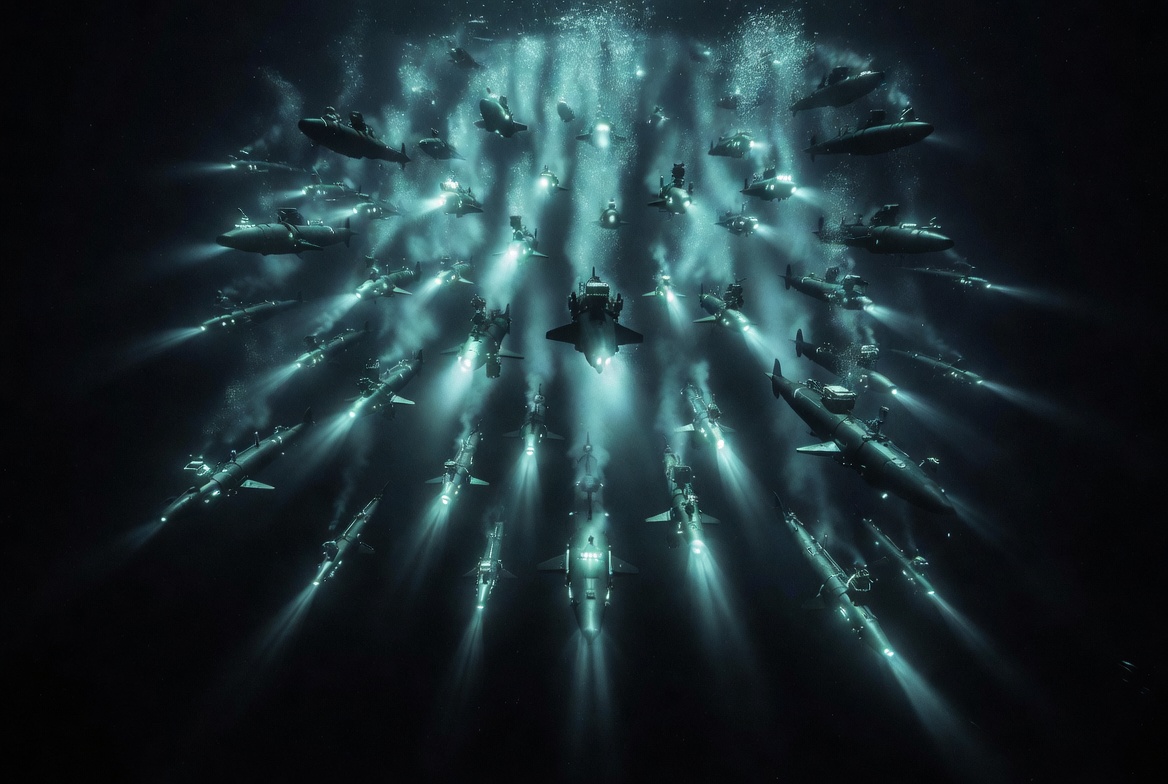
THE ARMS RACE YOU DON'T SEE
The US has 3 Orca drones at $100M each. China has 200+ drones at $1.5-3M each. In a saturation scenario, China can sacrifice 50 drones to cut 50 cables simultaneously. The West doesn't have 50 repair ships. This is not an arms race. The race is over.
The race is over. Not because the US lacks engineering talent. But because the PLA converted cost asymmetry into State doctrine. When a country decides that each drone it loses in combat is, statistically, an operational success, it has changed the rules of the game. The Orca is a Ferrari; the AJX-002 is an army of electric scooters that can block every street in the city simultaneously. In warfare, geometry matters more than elegance.
The AJX-002: The Shadow Sower
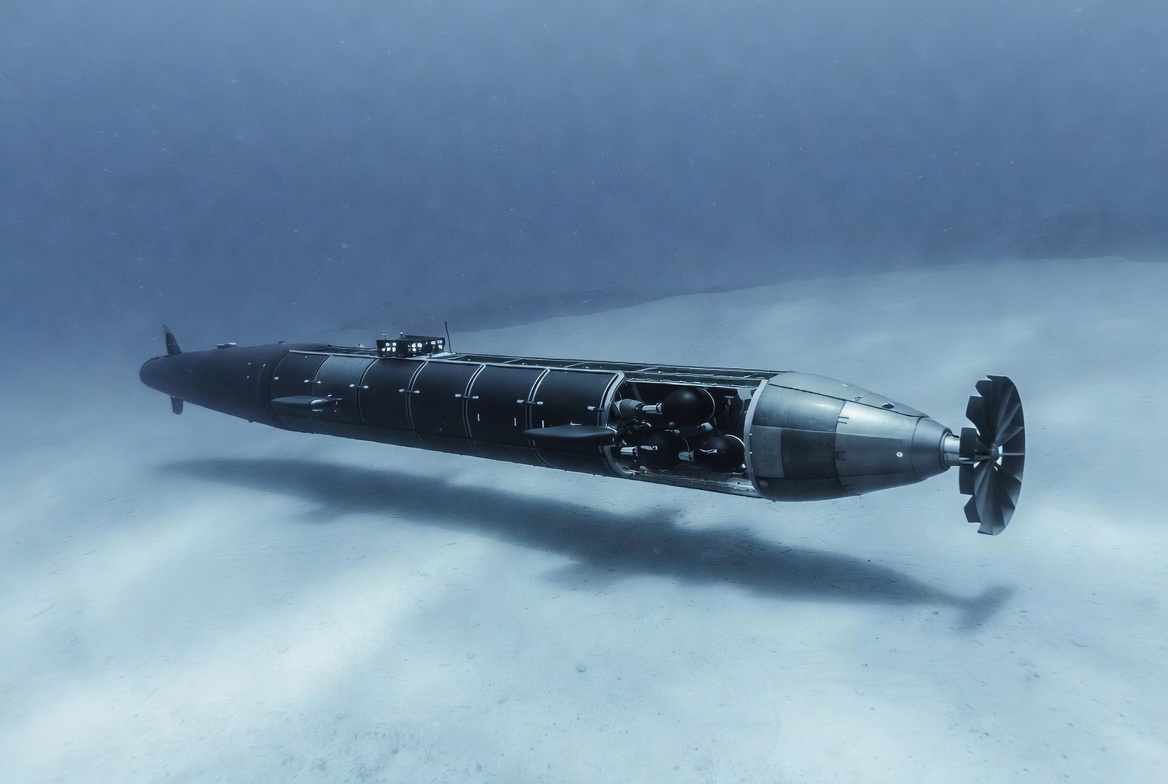
If Part I described the vulnerability, Part II describes the tool. The AJX-002 is the code name of the large-format submarine drone that stars in China's seabed warfare arsenal as of March 2026. It is not a torpedo. It is not a conventional mini-submarine. It is a long-range, modular, economical and lethal autonomous vehicle — a completely new category in naval warfare.
DEFINITION: AJX-002 — The Shadow Sower
Type: XLUUV (Extra Large Unmanned Underwater Vehicle)
Length: 12–18 meters (basic version)
Main function: Smart mining and infrastructure sabotage
Payload: Modular ventral bay: up to 4 bottom mines or 12 micro-mines
Range: ~1,000 nautical miles operational (estimated)
Estimated cost: $1.5–3M per unit
Propulsion: Silent pump-jet (minimal acoustic signature)
Special mode: Low-power seabed mode (weeks of waiting)
Evidence: Variants detected at Jiangnan shipyard with interchangeable stern configurations
Source: H.I. Sutton / Covert Shores OSINT
The most relevant tactical feature: the AJX-002 can 'sit' on the ocean floor in low-power mode for weeks, waiting for a target to pass overhead to release its payload. The hunter becomes a smart mine.
🗺 SCHEMATIC MAP — AJX-002 / XXLUUV Operational Zones
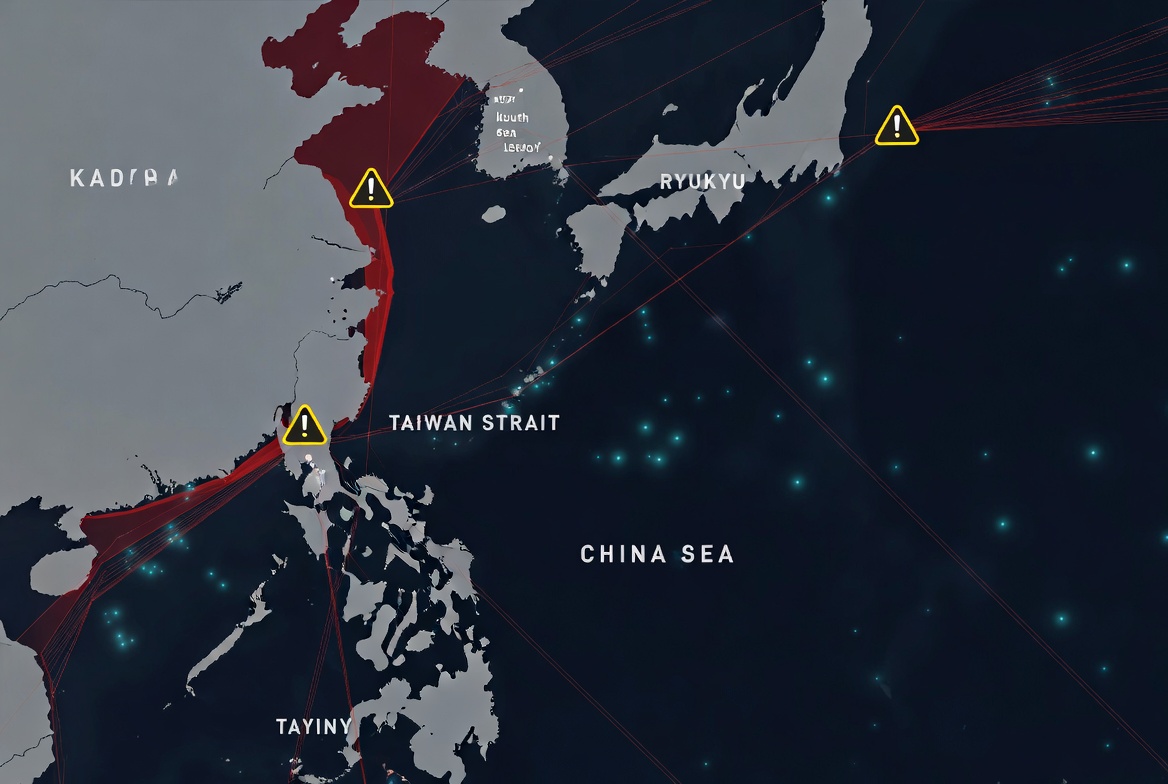 Estimated AJX-002 operational zones based on OSINT. The region's critical cables carry 22% of global data traffic. Source: CSIS AMTI 2025.
DEFINITION: Torpedo Drones — Submarine Loitering Munitions
Chinese torpedo drones (derived from the Yu-7 and Yu-10 series) are a hybrid between torpedoes and autonomous drones. They function as submarine «loitering munitions»: instead of going directly to the target after launch, the torpedo drone navigates at low speed to a specific area, shuts off its motor and passively listens. When its acoustic recognition system detects the pre-programmed signature of an enemy ship, it activates and accelerates to more than 50 knots for impact. The definitive tactical advantage: the launching submarine can be 100 km away when the explosion occurs, making immediate counter-attack impossible.
The AJX-002 has a feature that appears in no public datasheet but that defines its doctrine: it can 'sit' on the ocean floor for weeks, waiting. It does not search for cables. It knows them by memory. Routes are preloaded from a bathymetric database that the Dong Fang Hong 3 spent years building — the same 'oceanographic research' missions we analyzed in our series The Kraken of Malacca. The drone does not improvise. It executes a script written years in advance.
The Prototype Swarm: The 2026 Cornerstone
The concept of the 'Prototype Swarm' is the cornerstone of China's naval strategy for 2026. Unlike the West, which tends to develop a single perfect and expensive platform, China launches dozens of cheap variants to saturate the operational environment and learn from error in real time.
DEFINITION: Prototype Swarm
The Prototype Swarm is the weapons development doctrine by which China simultaneously deploys multiple low-cost variants of a weapons system to: (1) learn from failures in real conditions, (2) saturate enemy defense systems with tactical diversity, and (3) replace losses quickly at industrial scale. Applied to submarine drones, it implies no individual platform is critical — if the AJX-002 is detected and destroyed, the XXLUUV or HSU-001 continues the mission. This philosophy is opposite to the American doctrine of high-tech single platforms (the Orca), which makes each loss a strategically unacceptable blow.
Table: The Swarm Ecosystem — Roles and Models · Mar 2026
| Category | Model / Example | Swarm Function | Est. Cost |
|---|---|---|---|
| Scouts (Gliders) | Haiyi (Sea Wing) | Map temperature and salinity for months. Create the 'map' where other drones hide from sonar. | $50K-100K |
| Sentinels | HSU-001 | The 'eyes'. Detect enemy submarines and send coded acoustic signal to the swarm. | $300K-800K |
| Decoys | Low-cost mimics | Emit large nuclear submarine noise to make enemy spend torpedoes on false targets. | $50K-200K |
| Interceptors | Torpedo Drones Yu-7/10 | Fast attack units. Activate only when Sentinel confirms target. | $500K-1M |
| Mothers / Hubs | AJX-002 / Blue Whale | Coordinate the swarm, recharge smaller drones, act as communication repeaters to satellite. | $1,5M-7M |
DEFINITION: XXLUUV — The Unmanned Submarine
The XXLUUV (Extra-Extra Large Unmanned Underwater Vehicle) is the largest-scale submarine drone category currently in development by the Chinese PLA. At 30 to 42 meters in length — comparable to a Russian Kilo-class attack submarine — the XXLUUV represents the next frontier of submarine warfare: autonomous platforms with destructive capability equivalent to a crewed submarine, at a fraction of the human and logistical cost.
Confirmed characteristics (OSINT + CSIS AMTI sources):
• Length: 30-42 meters
• Propulsion: diesel-electric + hydrogen (range >10,000 nautical miles)
• Operational depth: up to 600 meters
• Payload: heavy torpedoes (equiv. Yu-6) + mines + CSSRC sabotage modules
• Communication: acoustic + blue-green laser + Lanhai beacons
• Estimated cost: $15-30M/unit (vs $3.5B per Virginia class nuclear submarine)
Units confirmed in testing at Yulin (Hainan): 2-3 prototypes (March 2026).
If the AJX-002 is the scalpel of the seabed, the XXLUUV is the steamroller. 30-40 meters in length, transoceanic range of 3,000 nautical miles. It is not designed to cut delicate cables. It is designed to destroy the nodes where they converge: repeater platforms on continental shelves, port repair facilities, even the cable repair ships themselves. Where the AJX-002 performs surgery, the XXLUUV performs demolition. They are the two faces of the same doctrine: saturate, degrade, destroy.
The Blue Whale Duel: Israel vs. China
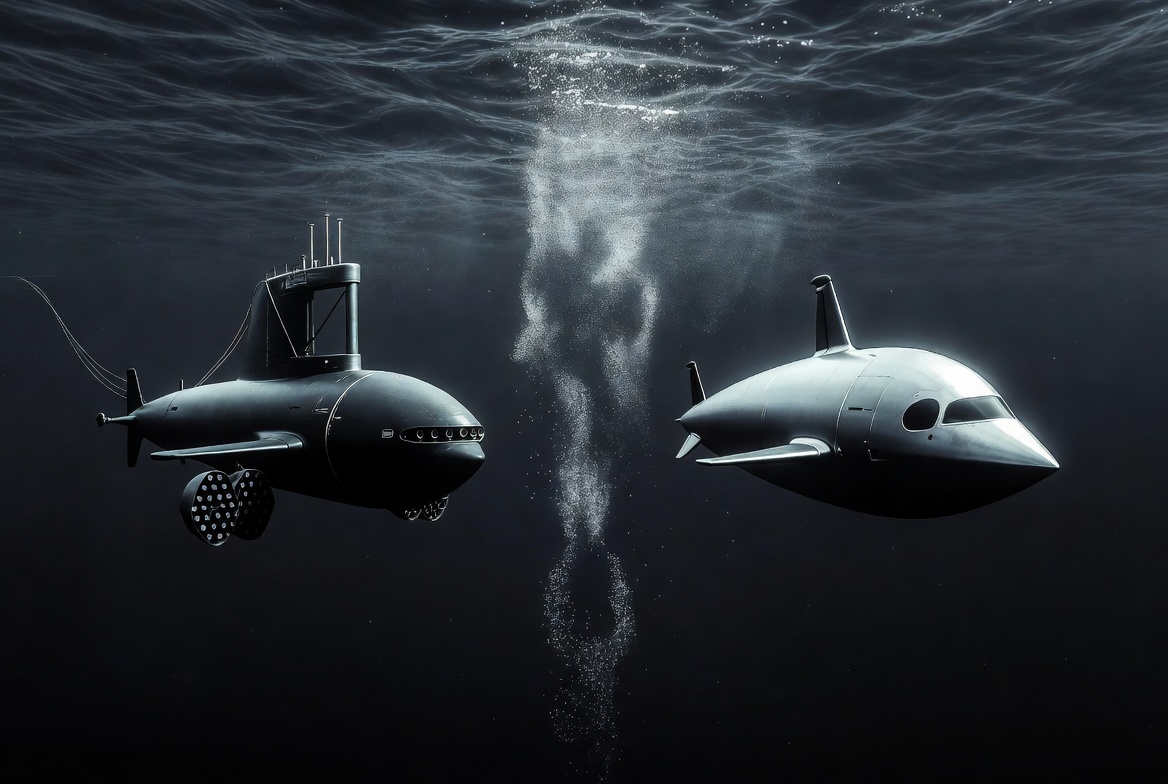
In 2025-2026, two platforms shared the name 'Blue Whale' and represented two radically opposite philosophies of autonomous submarine warfare. Their comparison is the best way to understand the technological gap between the two approaches.
DEFINITION: BlueWhale IAI-ELTA (Israel)
Israel Aerospace Industries' BlueWhale is the technologically most sophisticated LUUV (Large Unmanned Underwater Vehicle) on the Western market. Designed for extreme stealth operations in A2/AD zones, it incorporates: telescopic mast with radar + electro-optic sensors + SIGINT, towed array sonar of several dozen meters for submarine hunting, and 10 to 30 days submerged autonomy. Its concept is the 'naval Swiss Army knife': a platform that replaces multiple frigates in ISR missions. Estimated unit price: 5-15 million USD. Operating units: 3-8 (Israel, Germany, unconfirmed Asian client).
Official source: IAI BlueWhale ELI-3325
DEFINITION: Blue Whale China (2025)
The Chinese Blue Whale was presented in April 2025 as a 'high-speed research submersible'. Unlike its Israeli namesake, it is a boat/submarine hybrid: it can operate on surface at 36-40 knots (frigate speed) and submerge to 60 meters for tactical operation. Its modular payload includes more than 20 payload types. Tactical key: it acts as a mother ship — positions itself kilometers from the target and launches micro-drones that adhere to enemy ship hulls to place trackers or charges. Estimated price: 3-7 million USD. Units confirmed in testing: 2-4.
Source: CGTN - China reveals Blue Whale
Israel and China named their most sophisticated weapon the same name. Coincidence? Probably not. The most ambiguous name in 21st-century military lexicon is also the most convenient for Chinese intelligence: any reference to 'Blue Whale' in intercepted communications can be attributed to either. It is plausible deniability built into the naming. In the world of dual-use assets and false flag operations, semantic ambiguity is, in itself, a strategic asset.
Master Table: Boeing Orca vs AJX-002 / XXLUUV · March 2026
| Feature | Boeing Orca (EE.UU.) | AJX-002 (China) | XXLUUV China |
|---|---|---|---|
| Length | 26m (con módulo) | 12–18m | 40–42m |
| Range | ~6.500 nm | ~1.000 nm | +10.000 nm |
| Payload | 8 t (bahía modular) | 4 minas / 12 micro-minas | +12 t (8+ torpedos pesados) |
| Units 2026 | 3 delivered | 200+ | 2 prototypes in Hainan |
| Unit cost | $100M+ | $1,5–3M | $15–30M (est.) |
| Philosophy | Precision Swiss Army Knife | Saturation and specialization | 'Orca Killer': unmanned submarine |
3 Orcas at $100M each. 200+ AJX-002 at $2M each. The math is devastating: China can lose 49 drones for each Orca it destroys and still come out ahead financially. The West does not have that margin. Every lost Orca is a budget scandal and a parliamentary debate; every destroyed AJX-002 is a production line that tomorrow morning delivers three new units to inventory. This is the operational definition of asymmetric warfare: not winning every battle, but making every battle unsustainably costly for the adversary.
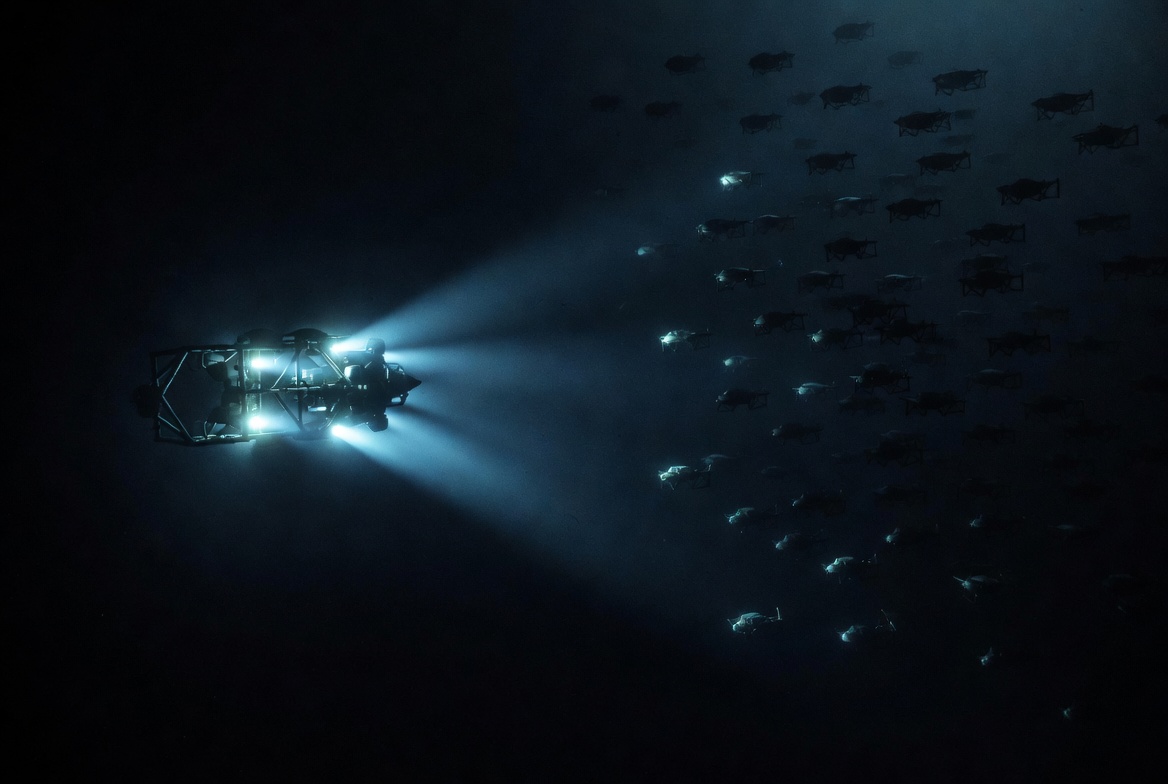
VERDICT: Technical Draw — Chinese Operational Advantage
US wins in single-platform technology: the Orca is the most sophisticated drone ever built. China wins in real warfare capability: by the time the US has 10 Orcas, China will have 50 drones of 5 different classes. At sea, as in history, quantity is a quality in itself.
The Inventory: Submarines, Drones and Hidden Bases
As of March 2026, China has for the first time surpassed Russia in nuclear submarine fleet, with ~32 units. The drone fleet adds capacity to deploy more than 1,000 micro-drones and 200 medium-class drones in a single theater of operations.
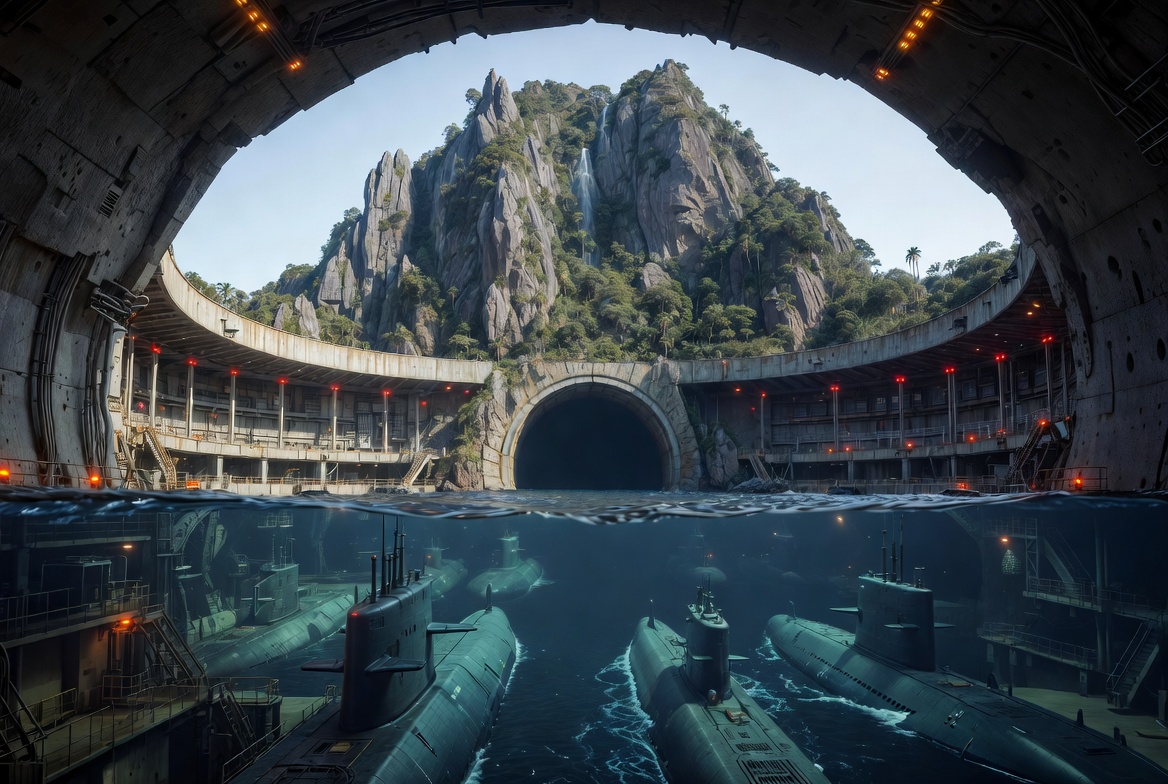
DEFINITION: Yulin Naval Base (Hainan) — The Submarine Pentagon
Yulin Naval Base, on Hainan Island (southern China), is the most strategically important submarine installation of the People's Liberation Army. Unlike any conventional naval base, Yulin includes tunnels excavated directly into the mountain where submarines enter from the sea without being visible to surveillance satellites or radar. In 2025, capacity was expanded to 12 simultaneous docks. Additionally, Huludao shipyard (BSHIC), expanded with a second hall in 2025, allows building 2-3 nuclear submarines in parallel. Port Gangmen is the testing center for the XXLUUV drone fleet. This infrastructure collectively makes Hainan the impenetrable 'bastion' from which China can project submarine power throughout the Indo-Pacific without any activity visible on the surface.
Table: Strategic Infrastructure Compared — China vs India · March 2026
| Category | China (Transparent Ecosystem) | India (Denial Ecosystem) |
|---|---|---|
| Underground Base | Yulin (Hainan) — Operativa / 12 muelles | INS Varsha (Rambilli) — Commissioned 2026 |
| Drone Capacity | XXLUUV Transoceánicos (40m) + 200+ XLUUV | AUV Portátiles y Prof. (6km) · Proyecto Abhimanyu |
| Sensor Network | Blue Ocean Info Network (Global) | Red Costera + Gliders Índico |
| Charging Nodes | Nodos submarinos en arrecifes artificiales | In development (mother ships) |
| Submarine Comms | Air-Water Metasurfaces (field-tested) | Cables SCNX3 + Seguridad con EE.UU. |
A Lanhai beacon is the size of an armchair. It is dropped onto the ocean floor and stays there for years. It does not transmit. It only listens. Every time a NATO submarine passes overhead, the beacon records its unique acoustic signature — like a fingerprint — and stores it until the AJX-002 passes to collect the data on its next patrol round. It is passive surveillance at oceanic scale: no signal, no cable, no satellite. Invisible to all electromagnetic detection systems. The ocean has been converted into a permanent intelligence archive.
The Yulin naval base is the real base of the arsenal we have analyzed in these pages. In our intelligence fiction series The Kraken of Malacca, the characters of Chen Wei and Admiral Song Zhiming operate from exactly these underground facilities. The fiction follows reality so closely that the technical details are practically interchangeable.
THE CHEAPEST AND MOST EFFECTIVE WEAPON OF THE 21ST CENTURY
The 'Exhaustion' tactic: the goal is not to destroy the enemy fleet. It is to force the US and India to use million-dollar-per-shot defense systems against drones that cost as much as a luxury car. While the West spends missiles, China produces 200 more drones.
But the arsenal is only the first level. The second level is the infrastructure that connects it — the global network of sensors, covert ports and satellites that turns these individual drones into a coherent organism. That is the story of Part III: The Great Submarine Wall.
The Chinese 'exhaustion tactic' is not new. It is the submarine version of Mao's guerrilla warfare: saturate the adversary's response capacity until the adversary chooses not to respond. If China can cut 20 cables simultaneously and the West can only repair 8-10 at a time, the arithmetic favors the attacker. It is not about permanently destroying the infrastructure — it is about keeping the adversary perpetually in repair mode, draining resources, degrading confidence in systems and eroding the political will to respond with escalation.
India is not a passive spectator. With 15 national AUVs, the AUV-150 program and the INS Varsha submarine base in Rambilli, New Delhi is trying to build its own shield in the Indian Ocean. The problem is scale: 15 vs 200+. India builds the wall; China is already on the other side. But the strategic intent is clear: the Modi government has identified seabed warfare as a national defense priority, and the Deep Ocean Mission budget — ₹4,077 crore through 2026 — reflects that urgency. The question is not whether India will respond, but whether it can respond in time.
200 Drones vs 3 Orcas. Does Your Portfolio Have the Right Geometry?
The cost asymmetry of China's submarine arsenal creates structural pressure on Western defense budgets, naval infrastructure spending and SWIFT financial system stability. The Full Market MeltDown portfolio is designed for systemic volatility environments exactly like this.
Series: Seabed Warfare
The Arsenal of the Abyss
OFFICIAL SOURCES & OPEN INTELLIGENCE
Platforms & Technology
• IAI BlueWhale ELI-3325 (Official)
• H.I. Sutton — World Guide XLUUVs (OSINT)
• Naval News: Boeing Orca XLUUV Analysis 2026
• CGTN — China Blue Whale 2025
• USNI News: Chinese XLUUV Operations 2025-2026
Infrastructure & Inventory
• CSIS AMTI: Seabed Critical Infrastructure Protection
• Andrew Erickson (USNI): Blue Ocean Network Analysis
• TeleGeography: Submarine Cable Data
• DARPA Manta Ray Program
• PLA Daily: XXLUUV Fleet Updates 2025-2026