
No Silicon Brains
Part II — The Checkmate
The night the world knew it had lost its damned silicon brains
Institutional intelligence takes weeks to process what sailors see in real time. And what sailors see in the ports of the Persian Gulf in the winter of 2025-26 doesn't need to be classified. It just needs someone to listen.
Read the Captain's Story Offline
Download the complete No Silicon Brains EPUB for free — both parts in a single file. Captain Roger Macaraeg, the MV Dragon Jade, and 76,800 drone components. Read it on your e-reader, tablet or phone, without ads and offline.
Includes Part I and Part II · EPUB format · Compatible with Kindle, Kobo, Apple Books and moreRead the Full Series Offline
Download the complete Hormuz Theorem EPUB for free — both parts in a single file. Read it on your e-reader, tablet or phone, without ads and offline.
Includes Part I and Part II · EPUB format · Compatible with Kindle, Kobo, Apple Books and more«Sailors' bars are the best intelligence agencies in the world. They never need SECRET/NOFORN classification. They only need cheap beer, a reliable Greek, and an Indian who doesn't mistake a container ship for a bulk carrier.»
Continued from: Part I — The Weight of Water. Roger Macaraeg has spent forty years listening. And what he hears in Bandar Abbas's nameless bar in January 2026, over warm Efes and the smell of the Arabian Sea, would change the way he understands the world he has sailed.
🎬 ACT V — The Port Network · Jebel Ali / Bandar Abbas
Jebel Ali — The City of Opaque Money
Jebel Ali Port, United Arab Emirates. 36-hour stopover.Jebel Ali Port is not a port. It is a city that orbits around commerce. The world's largest artificial port: 135 berths, 85 km², 22 million containers a year. The nexus where what cannot travel via SWIFT or be declared at First World ports changes hands without too many questions.
Roger spends 36 hours here unloading the legal containers. Hold 4 does not open here. During the 36 hours in port, he receives three calls. The third, from a number not in his contacts, with the shortest audio message he has received in years:
«Bandar Abbas. Kostas's bar. We'll talk later.»
— Chen Wei's voice. Unknown number.Roger pockets the phone without answering. He has received instructions from Wei before — always brief, always in Tagalog, always with the double layer of meaning they both know. But this is the first time Wei has called from an unknown number. That changes the weight of the message.
Bandar Abbas — The Nameless Bar
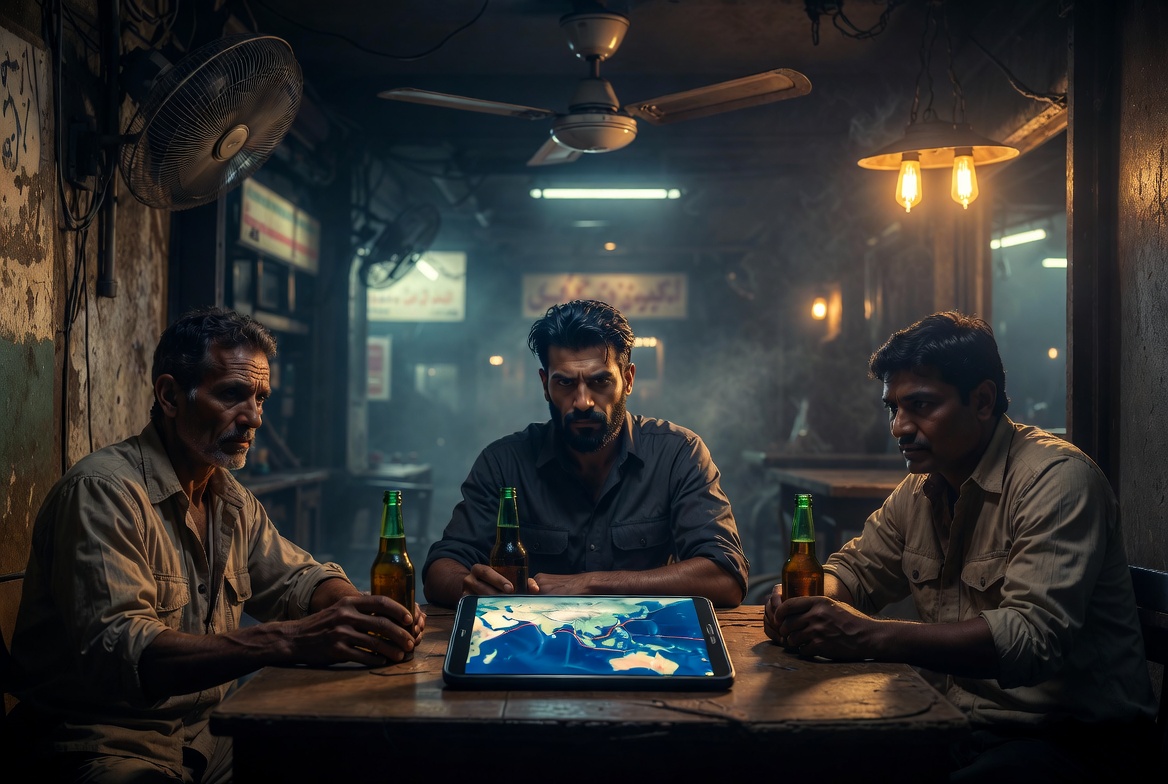
Captain Kostas's bar is in an alley perpendicular to dock 7 at Port Shahid Rajaee, behind a spare parts shop for naval machinery that never seems to be open. The signal: a flickering incandescent bulb above a peeling green door.
Inside: Virginia tobacco, frying oil, warm Efes and the specific salt of the Arabian Sea — denser, more mineral than the Atlantic or the Mediterranean.
Kostas Papadimitriou. 58 years old, Piraeus accent he hasn't lost although he hasn't set foot there in twenty years, the belly of a man who eats well when he can and better when he can do better. The MV Thessalóniki Star, Panamax bulk carrier, Gulf routes. Three years since they last met. They embrace with the back-pat specific to sailors who are fond of each other: two dry slaps, no sentiment.
Sanjay Mehta arrives twenty minutes later. Indian from Tamil Nadu, 54 years old, captain of MV Chennai Horizon, Aframax tanker, Gulf routes for fifteen years. Always slightly tired — as if world news reaches him a day late and his body feels the lag. Always right when he says something is going to happen.
The three of them order Efes.
What Sailors Know
The conversation starts as always: ports, bunker prices. Fuel quality at Fujairah versus Jebel Ali. The new stevedores in Bandar Abbas who wear radio earpieces and copy container numbers into Chinese phones. Sailor things.
Kostas gets to the point before the second drink.
Roger looks at him.
—All of them?
—All of them.
Sanjay nods and takes out his phone. He puts a satellite image on the screen.
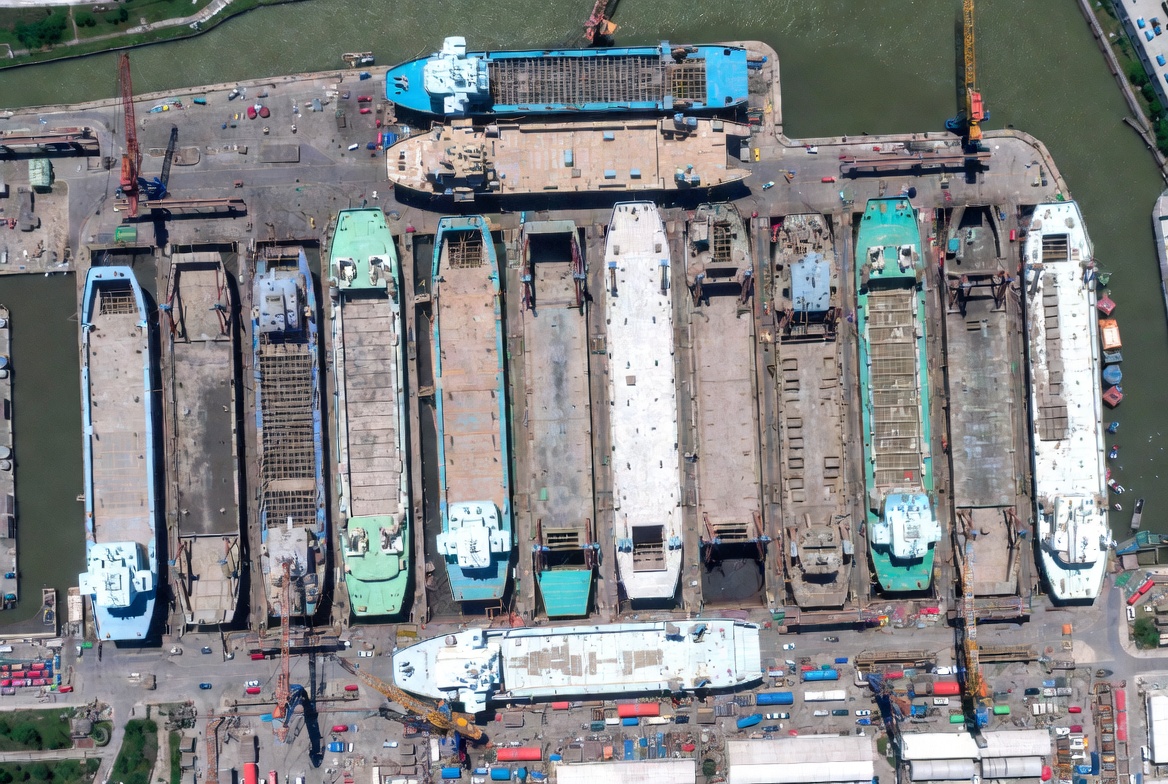
—I saw it in Busan. The same pattern. And this. Guangzhou, October 2025.
Roger looks at the image. Pontoon barges, long and low, with articulated bow ramps.
—The Shuiqiao —he says under his breath.
—The Shuiqiao. Landing barges. No keel, no self-propulsion. Ninety meters long, twelve-meter bow ramp. Capacity for twenty armored vehicles or three hundred tonnes of supplies. October 2025: six. Today: twenty-three. And building four more.
Roger has transported cement to build the String of Pearls ports. He has taken electrical infrastructure to Gwadar. He has watched Iranian ports modernize with Chinese engineers who asked no questions and were paid in yuan. But he had never seen the next step: the tools for crossing water. The twelve-meter bow ramps. The floating bridges that need no dock to land. Now he sees it. Forty years of puzzle pieces that, finally, fit together.
—And the Iranians? —Roger asks without looking up.
Sanjay speaks with the dry precision of the man who has been waiting for this conversation.
—They just received an air defense system we have never seen operate. Not the S-300. Not the Bavar-373. Something new. My first officer has a cousin in the Iranian Coast Guard. Says what they installed blinds all X-band radars within 80 miles.
—Active or passive radar?
—Hybrid system. Detects active radar emissions and triangulates the emitter's position. If the American destroyer activates its SPY-1D, the Iranian system sees it before the American sees anything.
Roger takes a sip of warm beer. Makes the mental map.
Hold 4: 76,800 drone components with artificial vision modules. Guangzhou shipyards multiplying landing barges. The Iranian radar system blinding X-band. Lina's conversations with Maryam. The yuan insurance consortium.
«They are walling off the Strait of Hormuz.»
Not a question. Kostas and Sanjay exchange glances.
—They've been at it for three years —says Sanjay—. We're only seeing it now.
Roger pays for the beers. Steps out into the narrow, smelly alley next to dock 7. The Arabian Sea is two hundred meters away. The ship's radio has been picking up unusual traffic on China Sea military frequencies for hours. What remains now is to cast off. And wait for the board to make its next move.
Sanjay's Hands
Sanjay Mehta has the habit of speaking with data first and conclusions second. In fifteen years of Gulf routes, he has learned that opinions without data are more dangerous at sea than summer storms in the Indian Ocean — because storms you can see coming on radar. Opinions, you cannot.
He spreads the phone out on the table full of glasses. Two satellite images taken weeks apart. First: the Port of Bandar Imam Khomeini, December 2025. Dock 4: standard 40-ton cranes, normal civilian cargo configuration. Second: January 2026. Dock 4: new cranes, taller structures, different beam configuration that only makes sense if you are going to lift 120-ton air defense modules.
—The system they installed —Sanjay says, lowering his voice even though there is no one within five meters— does not match the parameters of any S-300 or Bavar I have seen in Jane's reports. My cousin in the Coast Guard says the technicians who installed it were speaking Mandarin. Not Farsi. Not Russian. Mandarin.
Kostas, who has been listening without interrupting, sets the glass on the table with the sharp thud of someone who has spent half an hour reaching the same conclusion.
—The southern Taiwan shipyards. The new radar system at Bandar Imam. The Shuiqiao barges. Roger's hold 4. —He pauses—. Everything has the same date: the twelve months before 'Justice Mission 2025'.
Roger has been listening for ten minutes without drinking. 'Justice Mission 2025' — the December military exercises around Taiwan that ISW analysts described as the largest in PLA history — was not a deterrence exercise. It was an examination of what they had built. And what they had built were the pieces of the game board that Roger has been transporting, installing, facilitating for the past year.
—And Taiwan? —Roger asks. The question all three have been avoiding.
Sanjay looks at the phone. He opens another image: Taipei International Port Terminal, January 2026. Normal cranes, ordinary civilian operations. Seventeen ships at dock, three waiting at anchor. All normal. All so normal that it produces the same unsettling strangeness as a chess board when the strong player has just made a move the weak player has not yet understood.
—Taiwan doesn't know yet about the Kaohsiung shipyards —Sanjay says—. Or if it knows, it hasn't published it. Lai Ching-te's government has spent three months absorbing the December exercises and managing the 'crackdown' rhetoric that came out of the Two Sessions. In Washington, the $11.1 billion arms package announced in December is the largest in history. But the missiles arrive in eighteen months. The barges are already here.
In December 2025, the US approved the largest Taiwan arms package: $11.1 billion. Simultaneously, China launched 'Justice Mission 2025' (130+ aircraft, 7 maritime zones). CBS News documented the US-Japan alliance escalation.
Roger pays for all three rounds. He goes out of the bar into the alley by dock 7. The Arabian Sea is two hundred meters away. The salt water reaches this far. Kostas and Sanjay follow. The three of them stand for a moment looking at the black water of Bandar Abbas port. Then, without anyone proposing it, they separate toward their ships without saying anything more. There are conversations that end when everything that can be said has been said. This is one of them.
📚 Definition: The 'Malacca Dilemma' — Why Hormuz precedes Taiwan
The Malacca Dilemma is China's greatest strategic fear. The Strait of Malacca — between the Malay Peninsula and Sumatra — is the channel through which 80% of China's oil imports pass. Its minimum width: 2.8 kilometers.
In the event of a Taiwan conflict, the US Navy could blockade Malacca in 72 hours, cutting off China's energy supply. China's strategic response: three escape routes built over 15 years:
Myanmar-Yunnan Pipeline: Oil from Bay of Bengal to Yunnan bypassing Malacca (22M tonnes/year)
Gwadar-Xinjiang Corridor (CPEC): Oil from the Persian Gulf to Xinjiang through Pakistan
Indian Ocean String of Pearls: Gwadar, Djibouti, Sri Lanka, Iranian ports — redistribution if Malacca closes
Verified Sources — Act V
Dawn (Pakistán): Gwadar Port Authority and Chinese firm expand investments (2025)
BISI Intelligence: The geopolitics of Chinese-owned ports
CBS News (dic. 2025): China holds war games; US-Japan alliance escalation (Dec. 2025)
🎬 ACT VI — The Checkmate · Singapore / Beijing / Arabian Sea · 14-19 March 2026
Thread A — Singapore: The Theorem Executes
Marina Bay Sands Conference Center. March 18, 2026.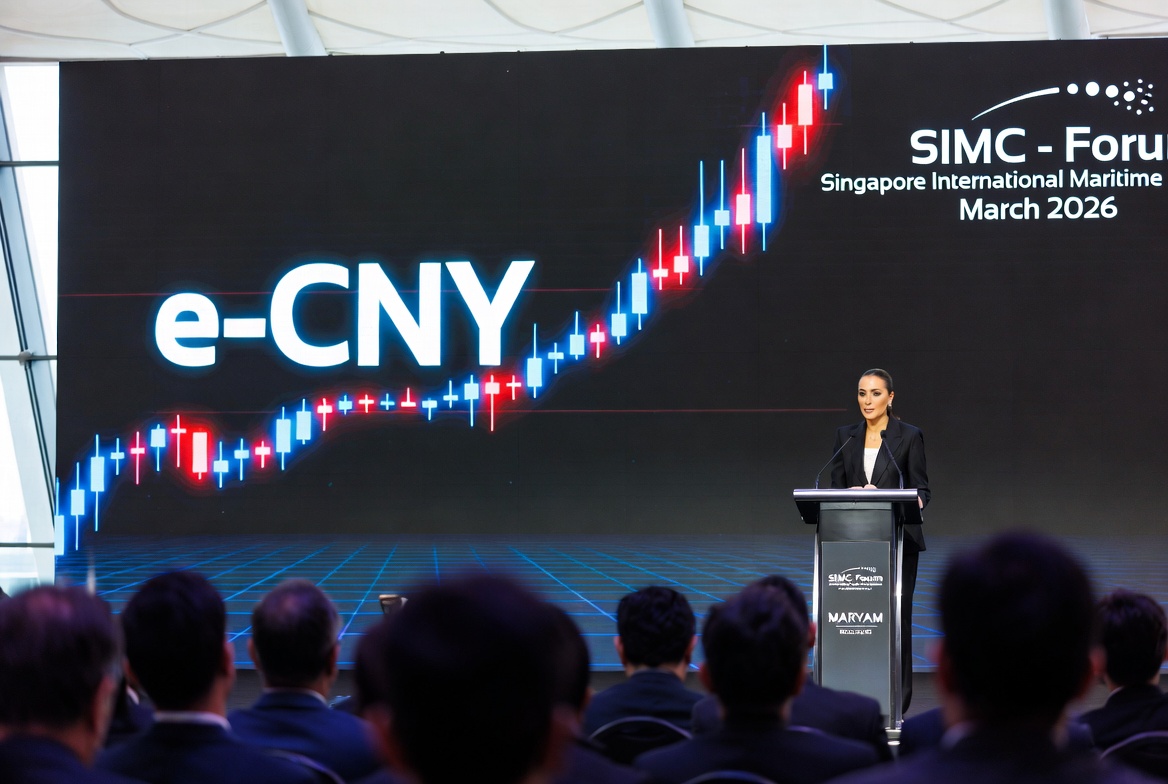
The SIMC Insurance & Reinsurance Forum is Asia's largest annual maritime insurance event. Two thousand attendees. Sixty-four countries. Maryam arrived at 9:45, ten minutes before the opening panel. Lina was in the second row.
—Are you on the program? —Lina asked.
—I am the opening panel —Maryam said.
And she was. Maryam spoke for twenty-two minutes without notes. She presented the model: the Indo-Pacific Maritime Insurance Consortium, headquartered in Shanghai, listed on the Shanghai International Energy Exchange, guaranteed by the People's Bank of China, with the Abu Dhabi Sovereign Wealth Fund as anchor investor. She announced ARAMCO as the first insured client with a signed policy. The system could cover 40% of Lloyd's current market volume in Asia and the Middle East within 90 days.
The Hormuz Theorem executes. Not with a missile. With a PowerPoint presentation.
At the back of the room, the Lloyd's Market Association representative was pressing buttons on his phone with the speed of someone who had been waiting two hours for that moment to sound the alarm.
There is a paradox Lina has spent years unable to fully articulate: she worked to build a risk assessment system that, at its core, is also a system of political control. The war premium Lloyd's applies to vessels crossing Hormuz is not just actuarial. It is foreign policy. And now that someone has built the alternative, Lina doesn't know whether what she feels is relief or vertigo.
Lina did not applaud. Her hands were cold. When Maryam stepped down from the podium and looked for her in the audience, Lina gave her a slow nod.
I see it. I understand it all now.
Thread B — Beijing: The 'Two Sessions' Change the Verb
Great Hall of the People, Beijing. March 15-18, 2026.The 'Two Sessions' — the annual National People's Congress — vote on the defense budget: +7%. 278 billion dollars. The largest increase since 2016.
The government work report changes the language. From 'firmly opposing Taiwan independence' to 'suppressing (镇压, zhènyā) Taiwan independence'.
📚 Definition: The 'Two Sessions' (两会, Liǎng Huì) — The Parliament that moves markets
The 'Two Sessions' are the annual meetings of the Chinese parliamentary system: the National People's Congress (NPC) and the Chinese People's Political Consultative Conference (CPPCC). Held each March for ~10 days, they constitute China's largest political event of the year and the main official signal on foreign policy, economy and defense.
Government work report: Sets the official language. Global markets analyze it line by line looking for tone changes on Taiwan, defense and monetary policy.
2026 defense budget: +7%, to $278B. Equals 47% of the US defense budget. In purchasing power parity, some analysts equate it to 80%.
Key verb change: From 'firmly oppose' (反对, fǎnduì) to 'suppress' (镇压, zhènyā) Taiwan independence. A two-character change with military implications that NSA analysts code within hours.
Chen Wei is in the room. Not as a delegate — as a technical observer for the Ministry of State Security, 9th Bureau. The same bureau that, according to CIA declassified documents published in 2025, coordinates intelligence operations in the Middle East with the Islamic Revolutionary Guard Corps.
📚 Definition: MSS 9th Bureau — Chinese Intelligence in the Middle East
The Ministry of State Security (MSS, 国家安全部) is China's civilian intelligence agency, equivalent to a fusion of the CIA and FBI. Its 9th Bureau — Counterintelligence and Overseas Operations — coordinates intelligence operations in the Middle East.
Technical recruitment: Engineers and telecommunications technicians working as 'business consultants' in String of Pearls countries. Profile designed for unrestricted access to port and communications facilities.
Coordination with IRGC: Documented by CIA (2025): the 9th Bureau shares operational intelligence with the Islamic Revolutionary Guard Corps on US 5th Fleet movements.
Modern Diplomacy, Feb. 2026: Documented how the 9th Bureau counters Mossad operations in the Middle East using front company networks and agents with dual commercial cover.
When the president announces the new formulation, Wei looks at his phone under the table and types in Tagalog:
Papá. Now.
Thread C — The Arabian Sea: The Shortwave Radio
Deck of MV Dragon Jade. Arabian Sea, March 19, 2026.Dragon Jade departs Bandar Abbas with Iranian crude under the new yuan insurance consortium protection. The letter of credit is denominated in digital CNY, cleared through the mBridge system, settled in Shanghai. No SWIFT. No dollars.
Nobody stops the ship.
📚 Definition: mBridge and the digital yuan — Trade without dollars, without SWIFT
mBridge is the first operational central bank digital currency (CBDC) system enabling instant international settlements without Western financial system intermediation. When Dragon Jade departs with Iranian crude under Maryam's consortium protection, the complete financial cycle occurs outside US Treasury visibility.
Sanctions bypass: OFAC sanctions block dollar transactions and freeze assets in American correspondent banks. A digital CNY transaction through mBridge passes through none of these checkpoints.
Speed: Settlement in seconds, without SWIFT's 3-5 business days. The first time in history that a merchant vessel can obtain passage guarantee through Hormuz via a non-Western financial mechanism.
Real scale in 2026: 22 central bank observers. Saudi Arabia full member. Iran exports 11M barrels/month to China in digital CNY. Maryam's insurance consortium uses mBridge as guarantee structure.
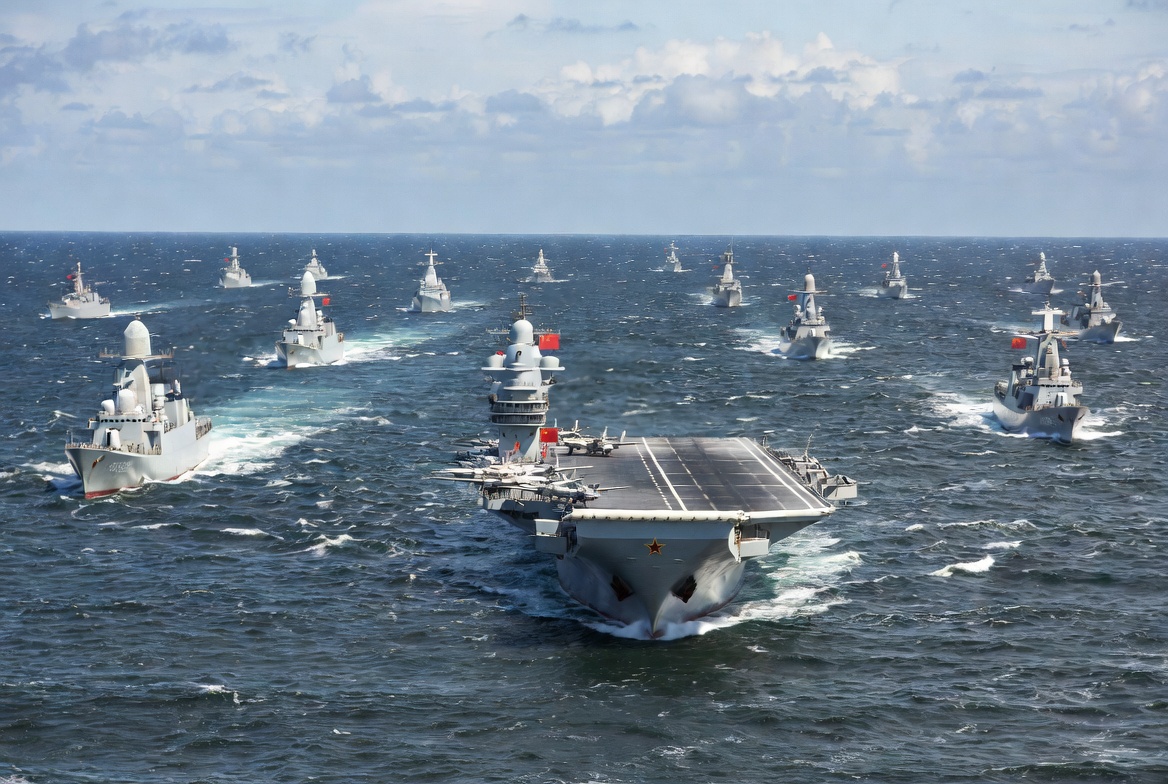
Roger is on deck when the sun begins to set over the Arabian Sea. He has his glass of water, the afternoon cigarette, and the shortwave radio. The three elements of the ritual he has repeated for forty years when the sea turns contemplative.
«...USNI confirms PLA Eastern Theater Command has concluded 'Justice Mission 2025' joint exercises, with more than 130 aircraft and 17 naval vessels participating in blockade simulation drills around Taiwan. Taiwanese Defense Ministry reports ballistic missile launches into adjacent waters...»
Roger turns off the radio.
He looks east. He thinks of hold 4, now empty. Of the 76,800 components already in the underground warehouses in the Zagros mountains. Of TSMC, the two factories in Hsinchu and Tainan.
He thinks of what Bloomberg Economics calculated: 10 trillion dollars. 10% of world GDP. More than COVID-19 and the 2008 crisis combined. No AI chips for years. No electric cars, no medical scanners, no next-generation aircraft. The Western world will take a decade to recover.
No silicon brains, thinks Roger. No silicon brains, the Romans cannot maintain the Empire.
Lina's Report
Lina leaves the SIMC Forum before the Q&A round ends. She does not need to hear the questions. She knows them. She has spent ten years in maritime insurance and knows exactly what those who do not want to understand the answer ask: questions about regulation, about timelines, about guarantee mechanisms. Questions that seek the detail to avoid seeing the full picture.
She calls her father from the taxi toward Orchard Road. Roger picks up on the second ring, which is his code for 'I can talk but not much'.
—Dad. Maryam's consortium is real. It has real anchors. She presented it this morning to the full SIMC.
—I know —Roger says.
Pause. The noise of Singapore traffic in the background of the call. Lina feels the weight of that 'I know' — the difference between a father who deduces and one who knows.
—How much do you know? —Lina asks.
—Enough to know you should not ask me more questions now —Roger says—. When I get to Singapore in three weeks, if I get there, we have coffee and I tell you everything.
Lina ends the call. 'If I get there.' Her father has been at sea for forty years and has never used that phrase.
Chen Wei comes home at seven in the evening with the face of someone who has spent the day in meetings that will not end any time soon. He serves rice from the wok Lina has prepared and eats without talking. Then, when the dishes are cleared, he says:
—Biden's arms package to Taiwan. The eleven billion.
Lina waits. Wei continues in Tagalog — the signal that the conversation is for the two of them alone.
—The Patriot missiles arrive in eighteen months. The F-16s in twenty-four. —Pause—. Maryam's consortium starts operating in ninety days. You know what comes first.
Lina does not answer. She puts the cup in the sink. She looks out the window at the Marina Bay skyscrapers with the evening lights on. The external world of Singapore maintains its indifferent rhythm: twenty-one million containers a year through the port, the largest Asian financial hub, the node where all Indo-Pacific flows converge.
From this window you cannot see Taiwan. It is 2,600 kilometers away. But from this window you can see the indicator of every container ship passing through the Malacca Strait toward the South China Sea, in real time, on Lina's laptop screen still open on the dining room table. The AIS system does not lie. Papers do. The sea does not.
📚 Definition: TSMC and the 'Silicon Brains'
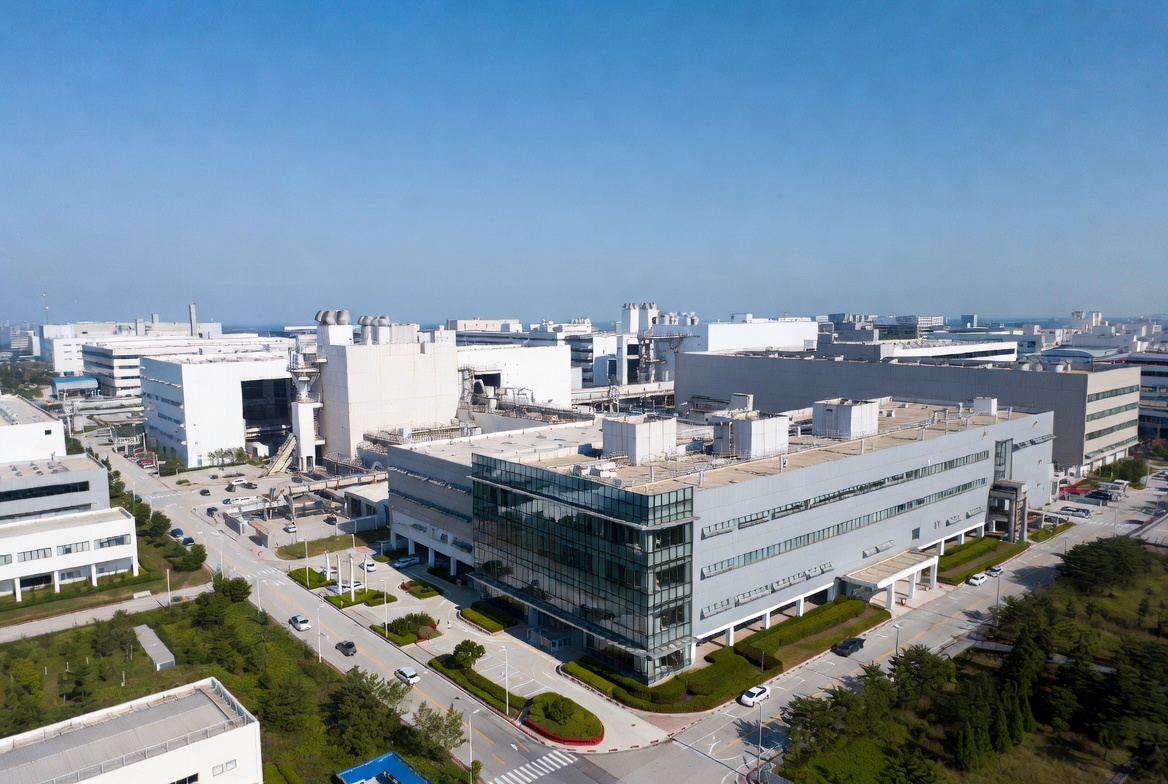
TSMC (Taiwan Semiconductor Manufacturing Company) is the most important factory in human history that has never appeared on newspaper front pages. Founded in 1987 by Morris Chang, TSMC manufactures today:
>90% of advanced chips worldwide (below 10 nanometers)
100% of next-generation AI accelerators: Nvidia A100/H100/H200 GPUs; Apple M-series chips; Google TPUs
Processors for all premium smartphones: Qualcomm Snapdragon, Apple A-series, MediaTek Dimensity
The Scorched Earth Protocol — unofficial but documented by Hoover Institution researchers — establishes that in the event of a successful invasion, the US and Taiwan would destroy TSMC's facilities to prevent the technology from falling into PLA hands. The result: the entire world without silicon brains.
Epilogue — What the World Won't See
Roger smokes the last cigarette from the pack on deck. The Arabian Sea is 2.3 million square kilometers. Too much space for a Roman to control alone.
He thinks of forty years at sea. Of the VLCC tankers that crossed the Gulf during the 1980s wars, when missiles crossed over the decks. Of the years when the dollar was the only language spoken in every port in the world. Of the days when American inspections were the law and nobody disputed the law.
That is ending. Not with a bang. With the silent accumulation of misdeclared containers, landing barges multiplying in Guangzhou shipyards, letters of credit in digital yuan that no SWIFT algorithm processes because they never pass through it.
The great wars of our century do not begin with a missile. They begin with a misdeclared container and a captain who notices his ship sits 2.3 meters lower in the water than declared.
Roger stubs out the last cigarette against the steel railing. He looks east, where the March 2026 sky begins to turn the color of bronze — the same color Gulf horizons turn during the weeks that precede the changes nobody sees coming.
«The Romans have been expelled from our sea... and tomorrow, the entire world will be left without its damned silicon brains.»
— Captain Roger 'Ro' Macaraeg, deck of MV Dragon Jade, Arabian Sea, March 19, 2026Verified Sources — Act VI
ISW (mar. 2026): ISW: China Taiwan rhetoric — from 'oppose' to 'suppress' (Mar. 2026)
Modern Diplomacy (feb. 2026): How China's 9th Bureau counters Mossad operations in the Middle East
CNBC (mar. 2026): Iran ships 11M barrels via Hormuz — ships go dark in Gulf of Oman
Modern Diplomacy (mar. 2026): The petroyuan: Saudi Arabia and mBridge reshape global energy trade
🎬 ACT VII — The Silicon Shield · Singapore / Hsinchu · March 2026
What TSMC Knows That the World Does Not
Marina Bay, Singapore · Hsinchu Science Park, Taiwan · March 15, 2026The call comes at six in the morning Singapore time. Lina picks up the phone without fully opening her eyes. The calling number is Taiwanese.
It is a former Lloyd's colleague: she now works in the strategic risk department of a semiconductor technology insurance company based in Taipei. Her job: modeling the risk of chip supply chain disruption in the event of conflict in the Strait. She has been doing it for eighteen months. She calls because at yesterday's SIMC Forum she saw Lina's name in the program.
—Lina. I need to tell you something. About the 100 billion.
The $100 billion that TSMC announced in 2025 for its US expansion — five factories in Arizona, 2-nanometer chip production planned for 2028 — is not just a business decision. It is a response to a risk that TSMC executives have been trying to calibrate for years: the risk that a conflict in the Taiwan Strait paralyzes the production on which 92% of the world depends for its artificial intelligence chips.
In 2025, TSMC announced over $100B investment to expand US production (Arizona). DW documented this decision generated 'security anxiety' in Taiwan: if the most advanced technology is produced elsewhere, the 'Silicon Shield' as invasion deterrent weakens.
The Shield Paradox
The former colleague explains the paradox in ten minutes. Taiwan's 'Silicon Shield' — the theory that global dependence on Taiwanese chips acts as an invasion deterrent because nobody can afford TSMC to stop functioning — has a crack. And the crack is precisely that hundred-billion investment.
If TSMC builds in Arizona, and Arizona starts producing 2nm chips in 2028, the world becomes less dependent on Taiwan. The shield thins. It does not disappear — installed capacity at Hsinchu and Tainan will still be 70% of the total for years — but the argument 'you cannot afford to touch Taiwan' becomes less absolute every quarter that Arizona construction advances.
—What worries me most —the former colleague says— is the window. If they want to act before Arizona is operational, the timeframe is 2026-2028. Now.
Lina listens in silence. She thinks about her father's ship radar: the echoes of Chinese frigates in diamond formation. She thinks about Chen Wei saying 'you know what comes first' the previous evening. The window. The window that everyone has been watching from different angles — her father from the bridge of a freighter, herself from insurance risk models, Wei from State Security Ministry meetings — is the same window.
—Do you have the updated loss models? —Lina asks.
—Bloomberg Economics published in 2024: ten trillion dollars of global loss in the first year of conflict or blockade. More than the COVID-19 pandemic and the 2008 financial crisis combined. Without AI chips for at least twenty-four months. No Apple. No Nvidia. No electric cars. No next-generation medical scanners. No new-generation aircraft.
—And the 'Scorched Earth Protocol' —Lina adds. It is not a question.
The protocol — unofficial but documented by Hoover Institution researchers and described in the context of Pentagon contingency planning — establishes that in the event of a successful invasion, the US and Taiwan would destroy TSMC facilities to prevent the world's most advanced technology from falling into PLA hands. The result: the entire world without silicon brains. Regardless of who has won the conflict.
Lina ends the call. She sits in front of the laptop. The AIS radar keeps showing the Malacca Strait: twenty-seven ships in transit, four of them container ships over 400 meters long loaded with electronic components coming from Shenzhen factories and going to Mediterranean ports. All normal. All so normal.
She looks at the photo of her father on the shelf. Roger Macaraeg, sixty-two years old, photo from Manila port twenty years ago, captain's uniform, the sea behind him. The man who has spent forty years transporting the world that the world thinks works on its own.
Verified Sources — Act VII
DW (ene. 2025): TSMC in US: security fears in Taiwan
Etonomics (mar. 2025): TSMC and Chinese invasion of Taiwan: global cost analysis (10% of world GDP)
Chatham House (mar. 2025): China serious about forceful reunification — the strategic cost of silicon
Aero News Journal (mar. 2026): Taiwan Strait tensions flare — Chinese fighters reappear (Mar. 2026)
🎬 ACT VIII — The Last Message · Arabian Sea · March 19, 2026
The Complete Board
MV Dragon Jade Deck · Arabian Sea · March 19, 2026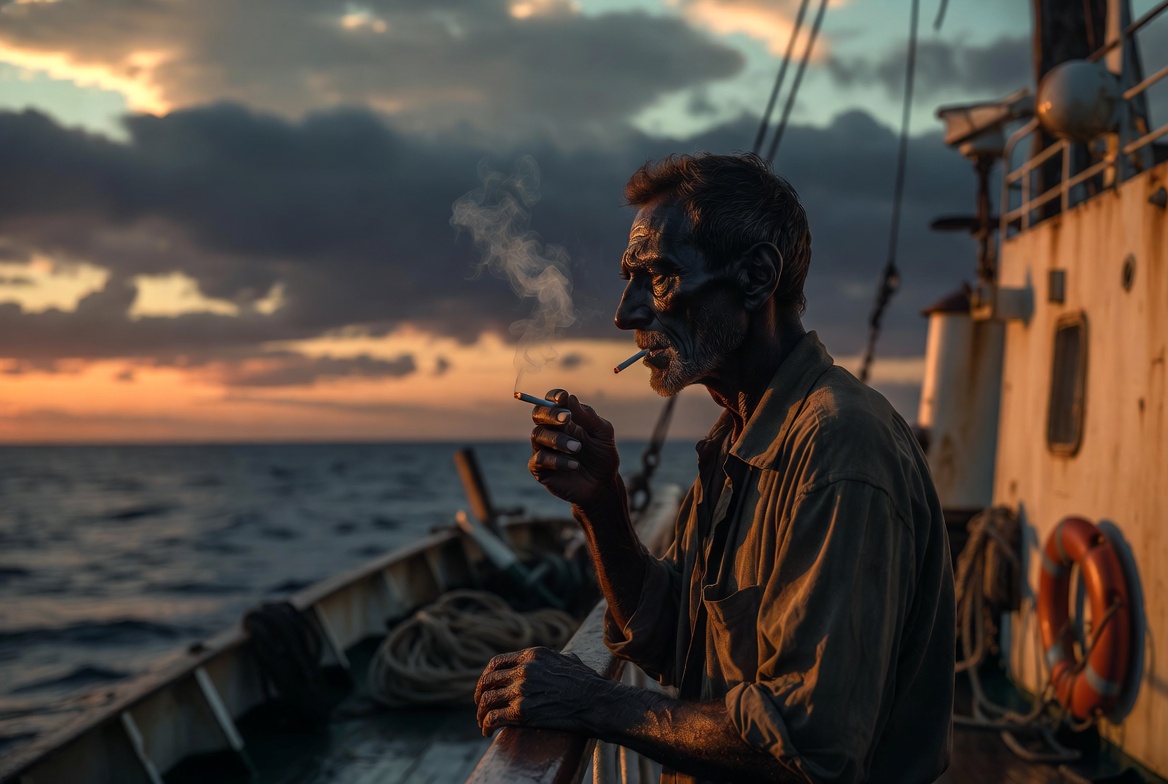
Chen Wei's last message arrives at 16:47, Gulf time. Roger is on deck with the five o'clock coffee, the cigarette and the radio. The usual. Except that today the sea has the bronze color of the afternoons that precede the big weather changes in the Indian Ocean, and the message in Tagalog is the longest Wei has sent in three years of encrypted communications.
He mentally translates as he reads: 'The Two Sessions are over. Defense budget: +7%. Language: crackdown. December exercises analyzed as success. The 23 barges in the south plus the four under construction in Yangshan are in the plan. Maryam's Consortium starts operating April 1. From that date, ships with mBridge letters of credit have explicit passage guarantee through Hormuz. This is what you needed to know, papá. The rest you already know better than anyone.'
Roger puts the phone in his pocket. He does not answer. There is nothing to add.
The Beijing 'Two Sessions' (March 2026) approved +7% defense budget ($278B) and shifted rhetoric from 'opposing' to 'suppressing' Taiwan independence. Aero News Journal documented increased military flights over the Strait (Mar. 2026).
What Forty Years Weigh
There is a question Roger has been carrying since Yangshan: what does a man do when he discovers he is a piece on a board he does not control? The honest answer — the one he has not given to anyone, not to Andrés, not to Lina, not in the calls with Kostas — is that he does nothing different. He keeps sailing. He fulfills the contract. He delivers the cargo at the right port. And in the evenings, when the sun sets over the Arabian Sea with that specific bronze color, he sits on deck with his coffee and cigarette and thinks about what he has seen.
Forty years at sea teach you that the great changes of the world do not arrive with announcement. They arrive with the ship's draft being 2.3 meters deeper than declared. With landing barges multiplying in docks that were empty three months ago. With a twenty-six-year-old officer who knows perfectly well what is in hold 4 but cannot prove it because the MARPOL Convention says he cannot enter. Great changes arrive when the pieces are already on the board and those who are going to lose have still not understood that they are playing.
The 2025 International Energy Agency report says 20% of global oil trade passes through the Strait of Hormuz. Bloomberg Economics says interrupting TSMC for a year would cost 10% of global GDP. Put the two data points together and you have the equation that the Arabian Sea has been whispering for months to those who know how to listen: whoever controls the oil controls the world's will to defend Taiwan. And whoever controls the chips controls the future of the world that will need to be defended.
Roger looks east. The air smells of salt and bunker fuel — the smell of his entire life. In Singapore, 2,800 miles away, Lina is looking at the AIS from the Marina Bay window. In Beijing, Chen Wei has put his phone away and is walking back to his ministry along the streets where the cherry trees are already in bloom. In the Guangzhou shipyards, the four Shuiqiao barges under construction will have advanced a meter of keel in the last twelve hours.
And Dragon Jade sails with Iranian crude in its tanks, the digital yuan letter of credit in the captain's folder, and hold 4 clean as a conscience that has chosen not to ask questions.
Without silicon brains, Roger thinks. Without silicon brains, the Empire cannot function. And nobody knows anymore which of the two empires — the one that is ending or the one that is beginning — needs more than the other to not have them.
Chronological Table — The Real Facts Behind the Fiction
| Date | Real Event | Act in the Saga |
|---|---|---|
| Jun 2024 | Saudi Arabia joins mBridge; first oil settlement in digital yuan | Maryam activates the 'Hormuz Theorem' |
| Jan 2024 | Navy SEALs board dhow in Arabian Sea; 2 SEALs killed | Roger knows the precedent before sailing |
| Feb 2024 | USCGC Sutphin Jr. seizes Houthi missile components | The boarding has a real model |
| Jul 2024 | US Treasury sanctions Iranian drone suppliers | Chen Wei's network already operational |
| Jan 2025 | China massively builds Shuiqiao landing barges | Kostas briefs Roger in Bandar Abbas |
| Feb 2025 | MSS 9th Bureau documented in Middle East | Chen Wei activates his contacts in the saga |
| Mar 2025 | FBI arrests Emily Liu, $15M drone network to Iran | Dragon Jade's network under pressure |
| Mar 2025 | FDD documents Chinese front companies (Zibo Shenbo) | Roger's containers have a real reference |
| Nov 2025 | Civilian-military RoRo drills in China confirmed | Invasion pieces on the table |
| Dec 2025 | US sanctions 29 Iran shadow fleet vessels | Dragon Jade evades the list |
| Dec 29 2025 | 'Justice Mission 2025': 130+ aircraft, Taiwan blockade simulation | Act IV climax; Roger on deck with radio |
| Mar 2026 | Beijing 'Two Sessions': +7% defense, 'suppress Taiwan' rhetoric | Wei at Act IV meeting |
Official Sources Block — Article II
🚢 Shadow Fleet and Chinese Intelligence
| Source | Data |
|---|---|
| CBS News | China uses dark fleet to buy Iranian oil and evade US sanctions |
| S&P Global Market Intelligence | Maritime shadow fleet: formation, operation and continuing risk (2025) |
| Kharon Analytics | Behind Iran's war chest: an oil 'lifeline' from China |
| Iran International | US sanctions 29 vessels in crackdown on Iran's shadow oil fleet |
| Modern Diplomacy (feb 2026) | How China's 9th Bureau counters Mossad operations in the Middle East |
⚓ Landing Barges and China-Taiwan Military Drills
| Source | Data |
|---|---|
| USNI News | China wraps 'Justice Mission' Taiwan blockade drills |
| Wikipedia | Justice Mission 2025: summary, participants, international reactions |
| Institute for the Study of War | Special report: surprise PRC military exercise around Taiwan |
| Xinhua (fuente oficial china) | Eastern Theater Command: joint drills |
| Army Recognition | US Intel: China civilian ferry expansion has military use |
| Naval News | China suddenly building fleet of special barges suitable for Taiwan landings |
| Asia Times | China's RoRo drills: a civilian-military mind game on Taiwan |
Real |
Taiwan Strait Tensions Flare — Chinese Fighters Reappear (Mar. 2026) |
Real |
China holds major war games — US-Japan alliance (Dec. 2025) |
Real |
TSMC chip plans in US fuel Taiwan security fears (Jan. 2025) |
Real |
TSMC and a Chinese invasion of Taiwan — global cost analysis (Mar. 2025) |
Real |
Chatham House: China serious about forceful reunification (Mar. 2025) |
Real |
Straits Times: China stages record drills to encircle Taiwan (Dec. 2025) |
Series and related articles
⚓ No Silicon Brains — Part I: The Weight of Water — Hold 4, the Arabian Sea boarding and the weight of water that never lies.
🕌 The Hormuz Theorem — Part I: The Journalist in the Garden of War — The same war, seen from Tehran and Madrid offices.
📊 The Deflationary Mirage — BEIR curve and Bear Steepener: the macroeconomic context that makes this scenario real.
⚡ The Thermodynamic Collapse of Hegemony — Why Hormuz is no longer just an oil choke point, but the AI switch of the 21st century.
Read the Captain's Story Offline
Download the complete No Silicon Brains EPUB for free — both parts in a single file. Captain Roger Macaraeg, the MV Dragon Jade, and 76,800 drone components. Read it on your e-reader, tablet or phone, without ads and offline.
Includes Part I and Part II · EPUB format · Compatible with Kindle, Kobo, Apple Books and moreRead the Full Series Offline
Download the complete Hormuz Theorem EPUB for free — both parts in a single file. Read it on your e-reader, tablet or phone, without ads and offline.
Includes Part I and Part II · EPUB format · Compatible with Kindle, Kobo, Apple Books and more