
No Silicon Brains
Part I — The Weight of Water
How a cargo ship with 'agricultural machinery' built the shield of Hormuz
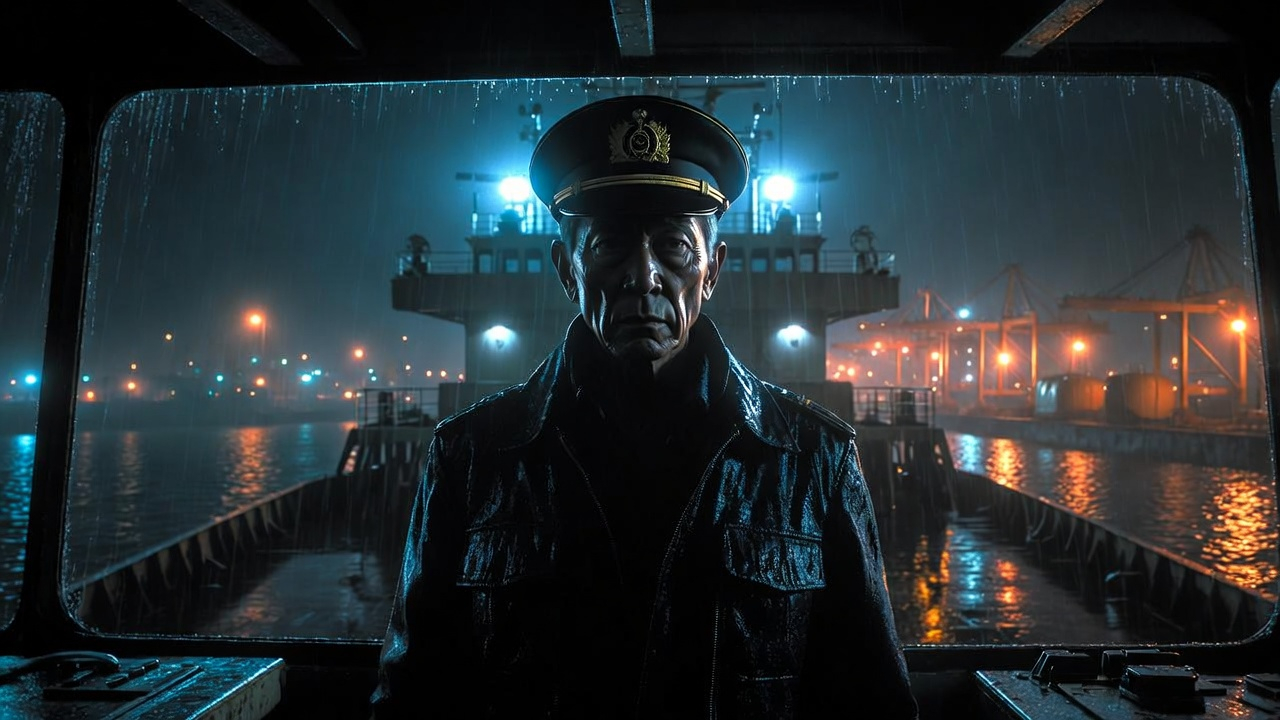
The great wars of our century do not begin with a missile. They begin with a misdeclared container, a waterline sitting two meters lower than the manifests say, and a 62-year-old captain who has learned to read the weight of water better than any desk analyst who studied at Oxford.
Read the Captain's Story Offline
Download the complete No Silicon Brains EPUB for free — both parts in a single file. Captain Roger Macaraeg, the MV Dragon Jade, and 76,800 drone components. Read it on your e-reader, tablet or phone, without ads and offline.
Includes Part I and Part II · EPUB format · Compatible with Kindle, Kobo, Apple Books and moreRead the Full Series Offline
Download the complete Hormuz Theorem EPUB for free — both parts in a single file. Read it on your e-reader, tablet or phone, without ads and offline.
Includes Part I and Part II · EPUB format · Compatible with Kindle, Kobo, Apple Books and more«Forty years at sea teach you that ships don't lie. Papers do.»
The great wars of our century do not begin with a missile. They begin with a misdeclared container, a waterline sitting two meters lower than the manifests say, and a captain who has learned to read the weight of water better than any desk analyst.
Roger 'Ro' Macaraeg, 62 years old, from Iloilo in the Philippines. Forty years navigating the Persian Gulf. Skin the color of old teak — the wood of hulls that rust gracefully, not shamefully. Hands marked by brine and mooring lines. The eyes of someone who has seen too much to be surprised by anything that floats. Son of Visayas fishermen who signed up for the merchant navy at twenty-two and never looked back. He captains the MV Dragon Jade: 186 meters long, Panamanian flag, owned — on paper — by a holding company based in the British Virgin Islands. In practice, the ship and its debt belong to the Chinese state, brokered through China Merchants Port Holdings.
This is the story of what he found in hold 4.
🎬 ACT I — The Draft Anomaly · Yangshan Port, Shanghai · 03:47h
The Terminal That Never Sleeps
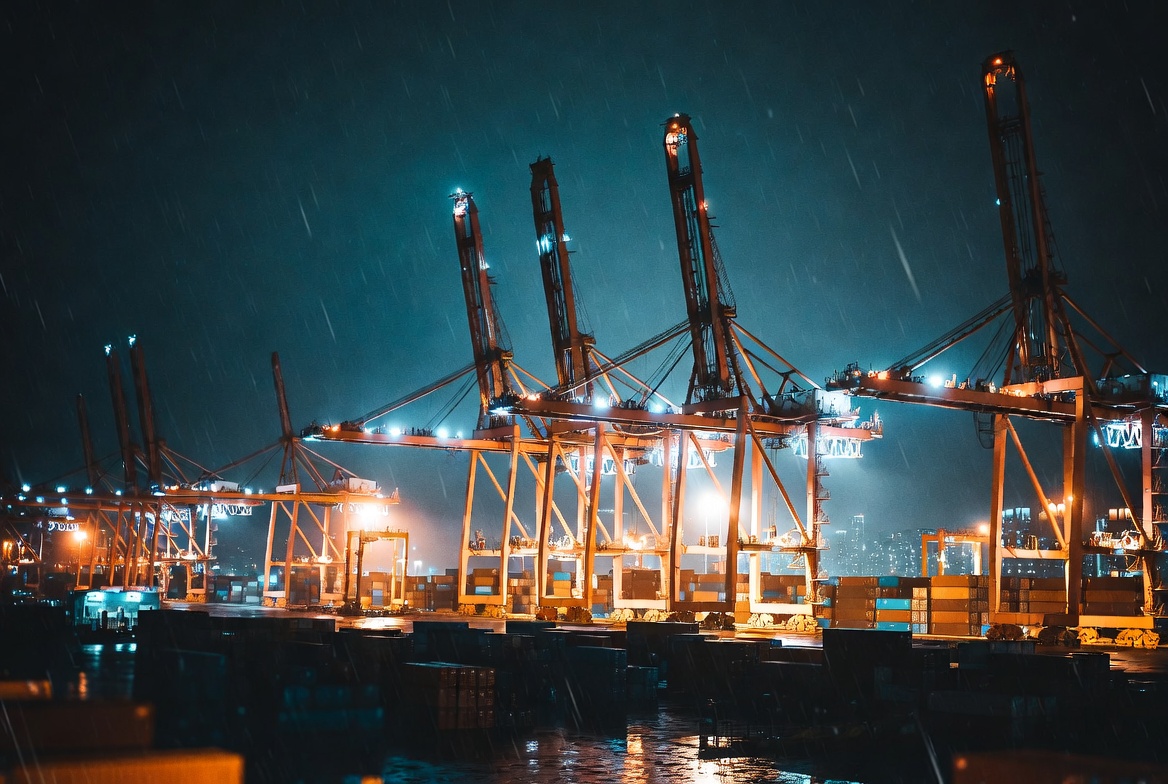
Yangshan Container Port, 32 km south of Shanghai. January 2025.Yangshan Container Terminal never sleeps. The 80-meter-tall gantry cranes move 40-foot containers as if they were playing cards, under an industrial orange light that turns January rain into toxic fog. At 03:47 on a Tuesday, the Dragon Jade is half loaded.
Roger is on the bridge with the cold coffee not worth reheating, reviewing the manifests: thirty-two containers of 'agricultural machinery'. Sixteen of '5G telecommunications equipment'. Declared weight: 1,840 tonnes. Destinations: Bandar Abbas (Iran) and Jebel Ali (United Arab Emirates).
He looks at the waterline. Something is wrong.
The captain of a VLCC — a Very Large Crude Carrier, the vessel that carries two million barrels of crude — develops over the years an almost physical relationship with the weight of water. The ship speaks. Not in words: through the angle of the list, through the creak of the frames, through the exact height of the Plimsoll line above the sea surface.
The draft mark Roger sees now does not correspond to 1,840 tonnes of agricultural machinery. It corresponds to something closer to 4,500.
Roger has spent decades knowing that manifests lie. He sailed through the 80s wars with cargoes nobody asked about. But a veteran's body knows the difference between the usual administrative lie and the lie that can sink you. This is the second kind.
The discrepancy could be instrumental, could be a stevedore error. But forty years at sea also teach you that the errors it pays to ignore are always the most expensive.
Roger takes the flashlight, the portable radio, and goes below.
Hold 4
The first thing he notices is the smell. Not the typical smell of steel and oil in an empty hold. It is the smell of new polymers — high-density plastic, epoxy resins — mixed with something metallic that is not rust. The smell of what is manufactured in Shenzhen industrial plants when orders are urgent and manifests are creative.
With the screwdriver on his belt — the most honest tool aboard — he forces the metal cable seal. The seal is intact: the container hasn't been opened since it left the factory.
Packages packed in industrial polystyrene. Each package, the size of a large fruit crate, contains components that Roger takes a moment to identify. But he has been a captain for forty years. He has seen too many things in the ports of Bandar Abbas and Aden.
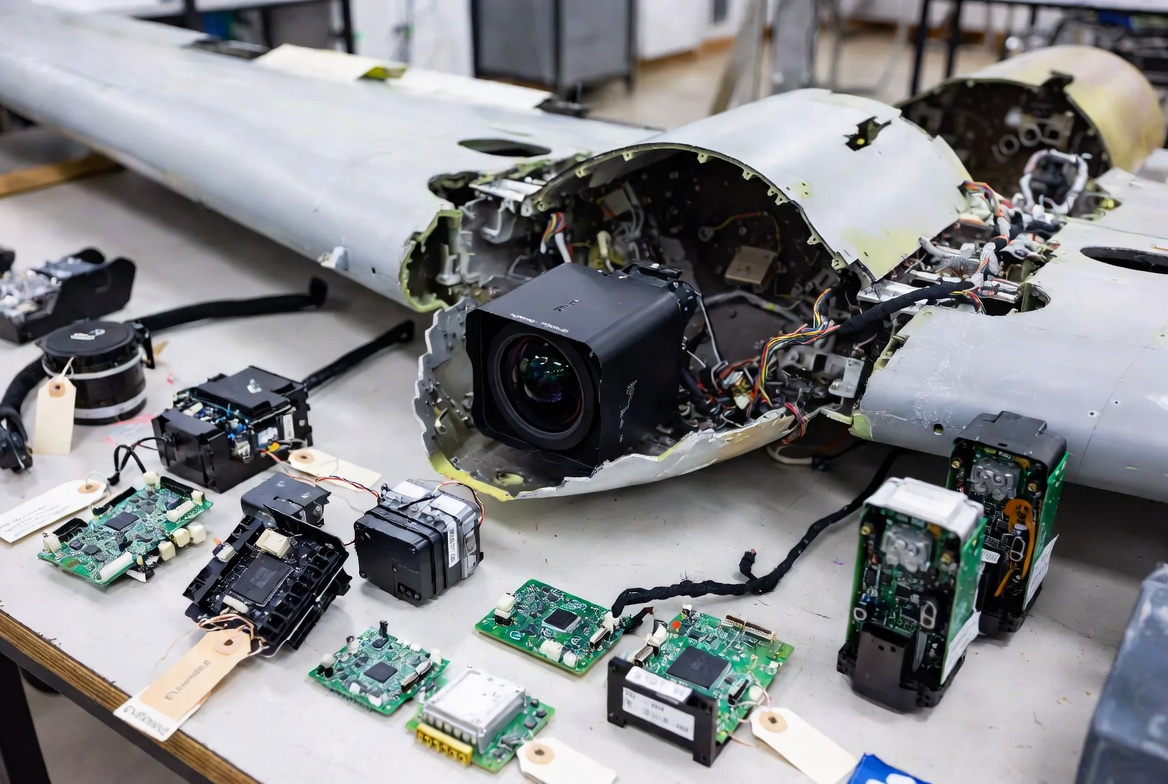
Optical flight stabilization controllers. The ones that allow a drone to fly at 200 km/h at 3 meters above the water without being affected by turbulence.
Thermal guidance modules. The ones that distinguish the heat of a destroyer from the heat of the sea.
125cc piston engines from Zibo, Shandong. The ones the US Treasury has been tracking for two years because they appear in Shahed drones shot down over Ukraine.
Carbon fiber for fuselage. 2,400 tonnes. Declared in the manifests as 'high-strength construction material'.
Roger closes the container doors. He replaces the broken seal — as best he can — and goes back up on deck. He needs a cigarette. Not because he smokes much, but because his hands are trembling slightly, and forty years at sea also teach you that when your hands tremble, the best thing is to do something physical and simple until they stop.
While lighting the cigarette, he does the math: if this single container has 80 packages of 20 kg each, and there are 48 containers... That's 76,800 components for upgraded suicide drones. Enough to equip thousands of Shahed-136s with artificial vision modules. The drone that Ukrainian military intelligence documented with the recovered wreckage in hand.
He now knows. Knowing, at sea, has consequences. He can call the port authorities — and disappear into a Chinese judicial system he won't leave easily. He can do nothing — and become complicit. He can call his son-in-law — and bind his daughter to something there's no coming back from. All three options are bad. Forty years of pragmatism tell him only one will leave him alive with his family intact.
Roger looks at the waterline from the railing. Now he understands the weight. The question he doesn't ask aloud — because forty years at sea teach you when not to ask questions aloud — is: where are they really going?
The 04:23 Call
It is 04:23 when he calls Singapore. The excuse is trivial: to find out if his granddaughter did well in her school exam. Lina answers with the sleepy voice of someone who has been asleep for two hours.
—Dad. Are you okay?
—I'm fine, sweetheart. How's the little one?
—Dad, it's four in the morning.
—I know. Tell Wei I love him.
A pause. Then Chen Wei's voice on the phone. In Tagalog — the language of family intimacy, the only one the two of them use when the phone might be monitored. Wei learned Tagalog to win Roger over. In the early years, Roger distrusted the gesture — too calculated, too efficient. But over time he understood that Wei learned it also for Lina: to be able to speak to her in the language where important things are truly said. Tonight, that Tagalog is armor.
«Papá. The weather is going to be rough in the Indian Ocean next week. Don't stop for inspections. If you see the Romans in the Arabian Sea, tell them you're carrying supplies for the Gwadar hospital. Don't open hold 4.»
— Chen Wei, 04:23h. In Tagalog.A silence. Understood, papá? Roger looks at the black horizon of Yangshan port.
—Understood —he says. And hangs up.
The Price of Knowing
Roger is not a sentimental man. Forty years at sea cure you of that. But there is a moment — when the brain finishes processing what the eyes have seen — when the body takes a few seconds to catch up. Those seconds, on the deck of Dragon Jade at 04:05, with Yangshan Port blazing orange on the horizon and 76,800 Iranian drone components three meters below his feet, are the longest he can remember.
He knows what they are because he recognizes them. In 2024, the US Treasury Department published forensic analysis of Shahed-136 drones intercepted in Ukraine: high-resolution images of the thermal guidance modules manufactured in Zibo, Shandong. Same geometry, same military-green high-density plastic, same fourteen-pin connector. Roger is not an engineer. But he has spent four decades reading manifests and cargo, and the experienced mariner's visual memory does not forget what it is worth remembering.
The question he asks himself is that of the practical navigator: what does this imply? Not morally — that question he will answer later, or never answer at all, because forty years at sea also teach you that morality is a luxury you cannot always afford halfway between Shanghai and the Persian Gulf. The question is operational: what happens if the Americans search hold 4 in the Arabian Sea?
In 2024, the US Coast Guard confiscated a cargo of Iranian missile components destined for the Houthis in the Arabian Sea. The ship's captain — a Greek national, Marshall Islands flag — spent eighteen months in a federal judicial process in Miami before being released. The actual owner of the cargo, a shell company registered in Dubai, was never identified. Roger has read that case. He has read it three times, with the attention of a student who knows he may someday need what he learned.
76,800 components. The number has a specific texture in the mind of someone who has spent decades calculating the cargo capacity of twenty-thousand-ton vessels. If each modernized Shahed drone requires four modules of the type in hold 4, that is enough to equip 19,200 drones. The drones that, according to analysts at the Center for a New American Security, would allow the point defenses of the USS Abraham Lincoln and its escort ships to be saturated for ninety minutes. Enough time to close Hormuz.
This is not the first time Roger has transported things he would rather not know he is transporting. In the 1980s, during the Gulf Tanker War, he sailed with cargoes that no manifest described accurately and that no inspector from any country asked too many questions about. Then it was different: the world was bipolar, the rules were opaque, and survival took precedence over geopolitics. Now the world is something else: monopolar in decline, multipolar under construction, and what he carries in hold 4 is a piece in a game he does not fully understand but whose dimensions he is beginning to sense.
He thinks about the report published in January 2025 by the Foundation for Defense of Democracies: four hundred Chinese shell companies actively supplying dual-use components to Iran through third-country networks. None of them listed on Western exchanges. None with accounts in SWIFT. All billing in yuan through the CIPS system — China Interbank Payment System — leaving no trace in Western financial monitoring systems. Roger does not know the report by name. He knows its content because he lives in it.
At 04:28 he returns to the bridge. Andrés, the first officer, looks like he has not slept. He looks at Roger and asks nothing. He has been on board with Roger for eight months. He knows when not to ask questions. Roger pours the coffee — this time he does not care if it is cold — and writes in the ship's log: 'Routine hold inspection. No anomalies.' Then he closes the log, looks at the AIS screen, and begins planning the route to the Arabian Sea.
📚 Definition: What is AIS and the 'Shadow Fleet'?
AIS (Automatic Identification System) is the mandatory maritime GPS system: position, speed, heading, vessel name and identification. The 'Google Maps' of global maritime traffic.
The Shadow Fleet — or Dark Fleet — comprises between 600 and 1,000 ships operating outside the system:
Switching off AIS: The ship 'disappears' from the map. Invisible to MarineTraffic and GISIS.
Changing name and flag: Today's Oriental Venus is tomorrow's Pacific Star. Same keel, different passport.
STS (Ship-to-Ship) transfers: In open sea, the Iranian vessel transfers its cargo to the 'ghost' ship.
📚 Definition: The 'String of Pearls' — How China encircles Hormuz
The 'String of Pearls' is the Pentagon's strategic term for the network of port facilities, logistics bases and access agreements China has patiently built over two decades in the Indian Ocean and the Persian Gulf:
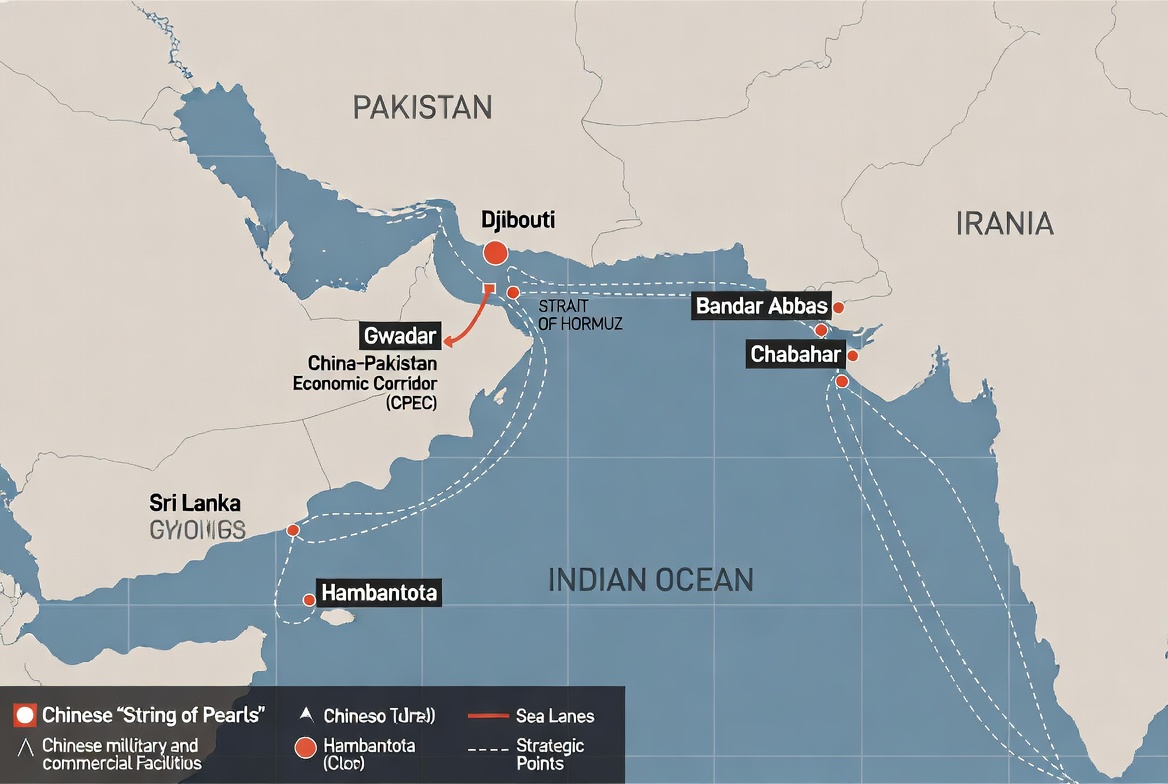
Gwadar, Pakistan: 72 km from the Strait of Hormuz. New agreement with Chinese company Xinning Enterprise (August 2025).
Djibouti: China's first foreign naval base since 1949. Controls the entrance to the Red Sea.
Iranian ports (Bandar Abbas, Chahbahar): 25-year investment agreements signed in 2021.
Sri Lanka (Hambantota): Leased for 99 years due to inability to repay debt.
📚 Definition: Shahed-136 Drone — The weapon that redesigned modern warfare
The Shahed-136 is a low-cost Iranian suicide drone (loitering munition) that changed the balance of modern aerial warfare. Made by the Shahed Aviation Industries Group, it weighs 200 kg, has a range of 2,500 km and carries a 50 kg warhead. Its piston engine — identical to that of an industrial chainsaw — allows it to fly for hours below conventional radar.
Production cost: ~$20,000. A fraction of defensive system costs: Patriot PAC-3 interceptor ($4M), THAAD ($8M). The asymmetry is devastating for the defender.
Artificial vision: Upgraded models (Shahed-136B) integrate AI-powered target recognition cameras. The modules in Dragon Jade's hold 4 include this optical guidance system — the difference between a blind drone and one that distinguishes a frigate from a freighter.
Defense saturation: Point defenses of a naval combat group (CIWS Phalanx, RAM) are designed for 40-60 simultaneous threats. 19,200 Shahed with AI vision, launched in waves, far exceed them. USS Abraham Lincoln and its escort: 90 minutes to defensive collapse.
📚 Definition: mBridge and the Petroyuan — The end of the dollar as global energy currency
mBridge (Multiple Central Bank Digital Currency Bridge) is the digital payment system developed by the BIS Innovation Hub with China, UAE, Hong Kong and Saudi Arabia. It enables instant settlements between central banks in digital currency, bypassing SWIFT and the dollar.
June 2024: Saudi Arabia joins mBridge. First oil settlement in digital yuan: practical end of Kissinger's 1974 petrodollar pact.
CIPS — China Interbank Payment System: The Chinese equivalent of SWIFT. 1,400 institutions in 112 countries. Chinese shell companies invoice in yuan without leaving a trace in Western monitoring systems.
The Petroyuan: When Iranian oil is settled in digital CNY via mBridge, US Treasury sanctions become technically unenforceable: no dollar transactions to freeze, no American correspondents to block.
Verified Sources — Act I
US Treasury OFAC: Sanctions against transnational Iranian drone acquisition network
GUR (Inteligencia Ucraniana): Upgraded Shahed-136: AI camera documented in intercepted models
🎬 ACT II — The Roman Empire at Hormuz · Singapore / Arabian Sea
Singapore, 14:30 — The Unexpected Visit
Marina Bay, Singapore. Simultaneous with Dragon Jade's departure.Lina Macaraeg-Chen, 32 years old, maritime insurance risk analysis. Former Lloyd's Market Association analyst. Today an independent advisor for Asian insurers seeking to understand whether the Shanghai market can be a real alternative to the Western model. She studied Economics and Risk Management at the London School of Economics. That is where she met Maryam.
She is drinking her second coffee when the intercom buzzes. Maryam enters before surprise has time to settle. Silver-grey suit, musk and sandalwood perfume, and the smile of someone who arrives knowing something you don't yet know. She has known her since the LSE: roommate, decades-long friend, architect of hypotheses that always turn out to be more than hypotheses.
—It's been a long time —Lina says.
—Too long. Is there coffee?
The Question That Is Not a Hypothesis
They sit facing each other at the small window table overlooking the port. Below, thirty cranes at Tanjong Pagar Container Terminal move in silence.
—Lina. Hypothetical. If a non-Western insurance consortium — listed on the Shanghai International Energy Exchange — insured vessels transiting Hormuz, with physical gold guarantees settled in digital yuan and backed by the People's Bank of China... would Lloyd's panic?
Lina looks at her coffee.
—With what capital base?
—The Abu Dhabi Sovereign Wealth Fund as anchor investor. ARAMCO as first insured client. The Central Bank of Iran as reinsurer for political risks in the strait.
—That's not a hypothesis. That's a business model.
Maryam smiles.
—Would Lloyd's panic?
Ten years of career built inside the Western maritime insurance system. A system Lina has always known has a second function: maintaining the dollar's hegemony as settlement currency. If what Maryam is proposing is real, answering honestly means already taking a side. There is no neutral position here.
Lina's right index finger traces circles around the edge of the cup. Ten seconds.
—Lloyd's wouldn't panic —she says at last—. The entire Western maritime insurance market would panic. Because if the political risk of Hormuz stops being a risk only the West can cover, the control premium the US charges for keeping the 5th Fleet in Bahrain... loses its market.
—Exactly —says Maryam.
Lina looks at her steadily.
—Maryam. What exactly do you have in your briefcase?
The Boarding — 06:47h, Latitude 23°N, Arabian Sea
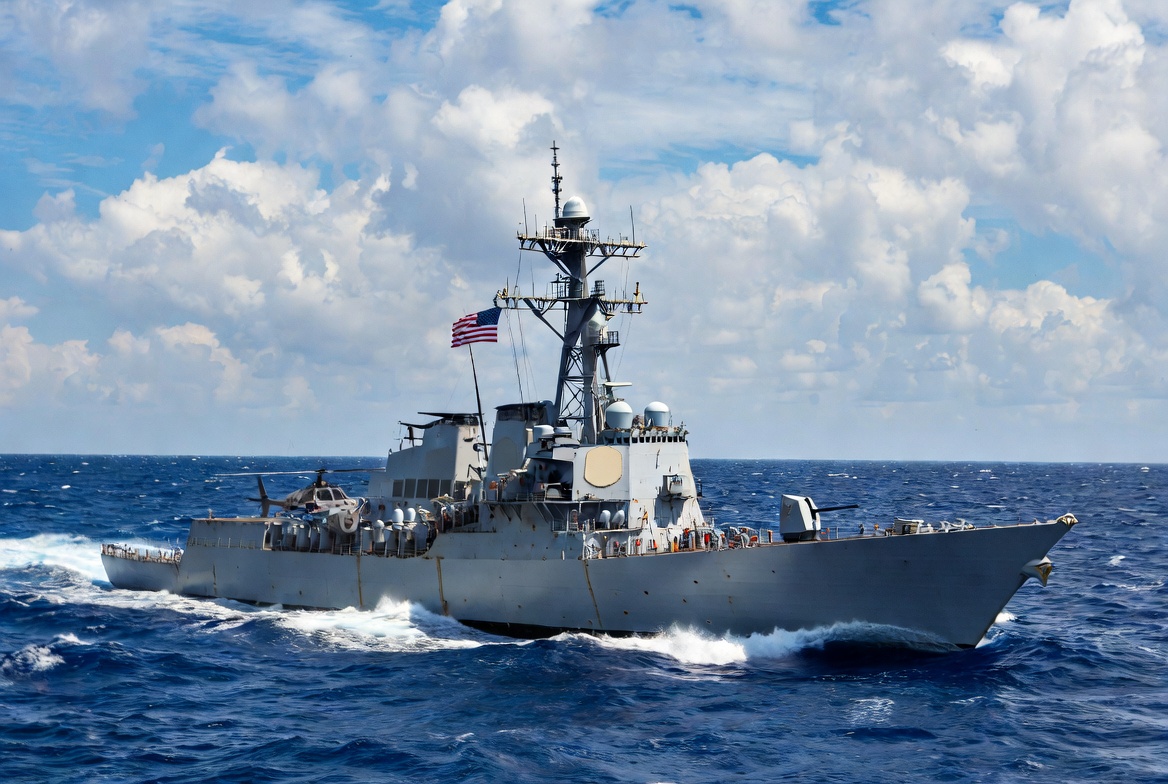
The destroyer appears on Dragon Jade's radar at 06:47. It comes from the south, from the 5th Fleet's side. An Arleigh Burke: 155 meters long, gas turbines, Tomahawk missiles, 360-degree SPY-1D radar. The most powerful navy in history reduced this morning to a highway patrolman with a flashlight.
«MV Dragon Jade, this is USS Arleigh Burke, US Navy Fifth Fleet. You are requested to heave to and prepare for boarding inspection under UN Security Council Resolution 2216. Respond on Channel 16.»
Roger picks up the microphone.
—USS Arleigh Burke, this is Captain Roger Macaraeg, MV Dragon Jade, flag Panama. We are a commercial cargo vessel in international waters. Preparing to receive your team.
He hangs up and calls the chief engineer.
—Andrés. The 'Gwadar procedure'. Now.
Ro's Ingenuity
Eight marines. Two dogs trained for explosives and weapons. A twenty-six-year-old Annapolis officer three years out of graduation. Roger receives them at the pilot ladder with Barako coffee — the strong, bitter coffee of the Philippine archipelago — and the harmless-grandfather smile he has perfected in forty years of inspections.
There is a paradox in the image: an elderly Filipino holding coffee receiving eight armed marines from the world's most powerful navy. The real power, at this moment, does not belong to the marines. It belongs to the old man who knows the MARPOL 73/78 Convention by heart. The Roman Empire patrols the seas. But it wrote the rules from an office. The navigator lives inside the rules.
The dogs go straight to holds 1, 2 and 3: potassium fertilizer, industrial refrigeration equipment, tire components. All perfectly declared, perfectly legal. Hold 4 is sealed with the official Chinese customs seal. The officer points to it.
—Captain, we need to inspect hold number four.
—Of course, Lieutenant. Only a moment.
Below, in the level-1 corridor between hold 3 and hold 4: two centimeters of oily water on the floor. The intense smell of motor oil mixed with saltwater. Andrés has done his work well.
—Captain, what is this?
—Lieutenant, I apologize. A minor oil-water separator issue in the bilge. Under MARPOL Annex I, Regulation 34, I cannot allow personnel — or animals — into the area until the Oil Record Book procedure is completed. We would be in violation of international maritime law.
—We can document it.
—You can document it, Lieutenant. And I will document that the US Navy forced entry into a MARPOL containment area against the explicit objection of the master of the vessel. Your JAG office will have a very interesting Monday morning.
Tactical analysis: The MARPOL paradox
The young officer has two options: insist and create a diplomatic-legal incident that will take months to resolve before the naval JAG, or withdraw and report 'incomplete inspection due to MARPOL Annex I Reg. 34 technical impediment'. With twenty-six years old and three since graduating from Annapolis, he chooses the second.
The marines return to the zodiac. Roger watches from the railing. The officer looks back once before disappearing into the destroyer. Not hostility. The professional acknowledgment between two people who know exactly what is happening and neither can prove it.
What Both Know
In Singapore, Lina waits by the window while Maryam finishes her second cup of coffee. Forty minutes have passed since Maryam arrived with the consortium proposal. Forty minutes that have been, in reality, Lina's ten years of career passing through her mind at accelerated speed.
—The Abu Dhabi Sovereign Fund is already committed —Maryam says—. Saudi Arabia signed accession to mBridge last June. First settlement of oil in digital yuan. The PBOC has the guarantee architecture ready. All that is missing are the second-tier Western insurers who want to jump first. Or the Asian ones who want to be first in the new model. You are the latter.
Lina understands the implications better than anyone. The Lloyd's system is not just an insurance market. It is the last mechanism by which the political risk of Hormuz is denominated in dollars, cleared in London, and managed from Anglo-Saxon jurisdiction. If the risk is denominated in digital yuan, cleared in Shanghai, and the jurisdiction is Chinese commercial law, Gulf oil stops passing through the Western financial system even though it physically keeps passing through the same strait.
—And does Chen Wei know about this meeting? —Lina asks directly.
Maryam does not answer. Which is an answer. Lina's index finger makes another circle around the edge of the cup. Then she nods once, very slowly. It is not approval. It is the gesture of someone who has just understood the full size of the board on which she has been playing for years without knowing it.
In the Arabian Sea, the marines' zodiac disappears into the belly of the destroyer. The USS Arleigh Burke — class name omitted for operational reasons — turns south and accelerates. Roger watches them until the destroyer's white wake merges with the horizon. There is no bitterness in that gesture. There is something harder to name: the professional recognition between two types of power that have learned, in different centuries, the same rules.
The young Annapolis officer will have already sent his report to the 5th Fleet: 'Incomplete inspection due to technical impediment, MARPOL Convention Annex I Reg. 34. Cooperative captain. Possible anomaly in hold 4 requires follow-up.' Roger knows what that report says because he calculated it while the officer hesitated. In three days, when Dragon Jade reaches Bandar Abbas, a DIA analyst will have cross-referenced the ship's name with the dual-use vessel database. But by then the container will be in a truck on the road through the Zagros mountains and the manifest will have passed through four different ports.
The shortwave radio brings, between static, a voice fragment Roger identifies as belonging to the frequencies of the joint China-Russia-Iran naval exercises announced in February by the Maritime Executive. 'Maritime Security Belt 2026', they call them. Four frigates of the People's Liberation Army Navy, two Russian Sovremenny-class destroyers, and IRGC naval units, practicing anti-piracy operations and maritime traffic control in the Gulf of Oman. Eighty miles to the south.
The same strait. The Romans patrolling it. And now, eighty miles away, those who want to inherit the strait doing their rehearsal maneuvers. Roger Macaraeg, captain of the MV Dragon Jade, navigates exactly at the inflection point between two worlds. And in hold 4 he carries the components that will decide who wins.
«Pompey's Romans had the largest ships in the world. But if you cut off Egypt's grain, Rome starves in a month. Today's grain is called oil. And I have just made sure it arrives.»
— Captain Roger Macaraeg, deck of MV Dragon Jade, Arabian SeaThe Horizon towards Bandar Abbas
Dragon Jade sails southwest. The Arabian Sea flattens with the afternoon. Roger is on the bridge with coffee that this time is actually hot, looking at the navigation chart. In the next 48 hours he will reach Jebel Ali. In 72, Bandar Abbas.
The shortwave radio brings, through static, a voice fragment:
«...Chinese Eastern Theater Command reports joint naval exercises in the Taiwan Strait...»
Roger turns it off.
The phone vibrates. It's Lina. A message:
Dad. What are you really carrying in hold 4?
Roger looks at the message. Looks at the horizon where the sun is already setting over the Arabian Sea.
He places the phone face-down on the bridge table.
Forty years at sea teach you when to keep silent.
Verified Sources — Act II
USCG/Stars & Stripes: USCG seizes Iranian missile components bound for Houthis (Feb. 2024)
Modern Diplomacy: Petroyuan born: Saudi Arabia joins mBridge (Jun. 2024)
🎬 ACT III — The Ghost Shipyard · Yangshan / Guangzhou · February 2026
The Dragon Jade Returns Home
Yangshan Port, Shanghai · Guangzhou Port · February 2026The Dragon Jade's second trip to Yangshan in eight weeks is not unusual for a VLCC on a circular Persian Gulf-East Asia route. What is unusual is what Roger finds when the pilot guides him through the entrance channel to the artificial port: where in September there were three dry docks under maintenance, now there are nine. And the ships inside are not what should be in a civilian maintenance shipyard.
The experienced sailor identifies ship types at three miles distance by silhouette. What Roger sees in docks 7, 8 and 9 of the port's southern sector are not freighters or tankers. They are large pontoons with articulated bow ramps that have no function in civilian maritime trade. They call them Shuiqiao in Mandarin — literally 'water bridge' — and Roger knows them because he has seen them before: in PLA Navy amphibious exercises he witnessed twenty years ago in the Yellow Sea, when the captain of the neighboring ship explained what they were for.
They are building more. Four in various stages of completion in dock 9. The noise of steel on steel — the unmistakable sound of riveting and cutting thick steel plates — reaches the Dragon Jade's bridge while it waits for mooring. Roger counts: four under construction. Nine in the docks. Kostas told him in November there were twenty-three in the south. Now there are more. There are always more.
Kostas' Call
Kostas Papadimitriou calls the next day. The Thessalóniki Star is loading granite in the Port of Guangzhou, 150 kilometers to the south. He has been in that port for three days and has the voice of a man who has slept little and thought a lot.
—Ro. Listen. The Kaohsiung shipyards. Do you know what they're doing in Kaohsiung?
Kaohsiung is Taiwan's largest port. The port that contains the island's largest shipyards. Roger has been there sixteen times in his career. The last time, two years ago.
—A colleague of mine —Kostas continues— just made a stop there. Says there are lease contracts in docks 3, 4 and 5 with COSCO subsidiaries. Nominally, 'port machinery maintenance'. But the cranes they're installing are not maintenance cranes. They're heavy-load cranes, the ones that move 40-foot containers horizontally on a ramp. The type of cranes you need when loading armored vehicles horizontally, not vertically.
Roger stays silent. Kaohsiung is on the south side of Taiwan. The side that looks toward the Taiwan Strait, the 180-kilometer strip of water between the island and the mainland that is the only natural passage between the South China Sea and the East China Sea. If the Kaohsiung shipyards are being repurposed — under civilian maintenance cover — to install cargo infrastructure compatible with amphibious operations, that is not preparation. That is the dress rehearsal.
—And your colleague is sure? —Roger asks.
—He's a harbor pilot. They've been letting him bring ships in for twenty years. He knows the difference between a maintenance crane and a tactical loading crane.
The conversation ends without either of them saying what both are thinking. In December 2025, the PLA Navy carried out the largest military exercises in its history around Taiwan: 'Justice Mission 2025', with more than 130 aircraft, warships in all seven maritime zones around the island and documented simulations of blockades of the ports of Keelung and Kaohsiung. ISW analysts — the Institute for the Study of War — published that same month that Beijing had changed the official language from 'opposing Taiwan independence' to 'cracking down on Taiwan independence'. Cracking down implies action. Opposing implies position.
Roger has been thinking about that language change for twelve hours. The words in official Chinese documents are not accidental. The words in official Chinese documents are the policy. And the policy is what he saw in dock 9 at Yangshan Port.
In December 2025, China executed 'Justice Mission 2025' — the largest military drills around Taiwan: more than 130 aircraft, 7 maritime zones, simulated port blockade. ISW documented the rhetoric shift: from 'opposing' to 'cracking down' on Taiwan independence.
The Weight of the Barges
That night, in the captain's cabin, Roger does the calculation he knows he should not do but cannot stop doing. A ninety-meter Shuiqiao barge can carry twenty ZTD-05 type armored amphibious vehicles — the PLA's most advanced — or three hundred tons of supplies. If there are already more than thirty in the southern shipyards, and they are building four more per week in Yangshan and Guangzhou, the number will reach one hundred before September. One hundred ninety-meter barges, in a strait with a minimum width of one hundred eighty kilometers.
China's defense budget for 2026 is $278 billion. The largest increase since 2016: 7%. Analysts at Chatham House, in a report published in March 2026, wrote that 'the magnitude and speed of Chinese naval procurement indicates that Beijing is serious about forceful reunification as a viable option'. Not a viable 'threat'. A viable option.
Roger turns off the cabin light. He looks at the ceiling. What he has seen in dock 9, what Kostas told him about Kaohsiung, what was in hold 4 — now empty, delivered to the warehouses on the Zagros mountain road — forms a picture that requires no specialist interpretation. It only requires having spent forty years at sea and knowing what you see.
Verified Sources — Act III
Army Recognition: US Intel: Chinese civilian ferry expansion has military use
CNBC (dic. 2025): Justice Mission 2025: China encircles Taiwan with 130+ aircraft
🎬 ACT IV — The Northern Current · Arabian Sea · March 2026
The Romans and Those Who Come After
Arabian Sea, 180 miles south of the Strait of Hormuz · March 8, 2026Dragon Jade's radar detects the naval group at 14:20. Six echoes, in diamond formation, moving northwest at eighteen knots. Roger picks up the binoculars from the bridge even before the AIS screen confirms what he suspects.
The four Chinese ships are Type 054A: guided missile frigates, 134 meters long, 76mm cannon at the bow, eight vertical launch modules for CJ-10 missiles. He identifies them by the square superstructure, the arrangement of surface sensors and the satellite communications antenna on the main mast that only PLA vessels carry in blue-water deployment configuration. Two more ships: one Russian — a Sovremenny destroyer from the nineties that Roger has seen before at Port Said — and an IRGC coast guard vessel with a yellow hull and the Iranian flag at the stern.
'Maritime Security Belt 2026'. He read it in the Maritime Executive last week: China, Russia and Iran announced joint naval exercises in the Gulf of Oman and the Arabian Sea for February-March. Anti-piracy, maritime traffic control, search and rescue. The part they didn't announce in the press release: the NOTAMs — Notices to Airmen — issued around the Gulf of Oman warn of anti-ship missile and drone tests within an 80-mile radius that coincides exactly with the 5th Fleet patrol zone.
In February 2026, China, Russia and Iran conducted joint naval exercises 'Maritime Security Belt 2026' at Hormuz and the Gulf of Oman. Chinese Type 054A frigates, Russian destroyers and IRGC units. Anti-ship missile test NOTAMs within 80-mile radius.
Two Fleets, Two Worlds
At 14:38, twenty miles northeast of the Chinese-Russian-Iranian naval group, three more echoes appear on radar. AIS identifies them immediately: USS Gravely (DDG-107), USS Cole (DDG-67), and USS Bataan (LHD-5). The 5th Fleet. The Romans. Two naval groups, each with enough firepower to change the balance of the Arabian Sea, sailing in parallel fifty kilometers apart. No visible provocation. No incident. Just the specific tension of two worlds that no longer avoid each other but have not yet decided whether they confront.
Roger has been sailing between these tensions for forty years. He remembers the days when the Arabian Sea was, in practice, an American lake: the 5th Fleet patrolled without competition, merchant ships paid the implicit security premium of the dollar order, and the only ones making challenging gestures were IRGC patrol boats — noisy, insistent, but so small in the context of American naval power that the gesture was more theatrical than strategic.
What is on the radar today is not theater. Four PLA guided missile frigates in combat formation, two Russian destroyers and IRGC naval units do not meet in the Arabian Sea for a search and rescue exercise. They meet so that a DIA analyst in Bahrain takes note of what happens when someone in Washington says they are going to block Iranian oil.
Since March 11, 2026, Iran has sent more than eleven million barrels of crude oil to China through the Strait of Hormuz, according to S&P Global Commodity Insights data published by CNBC. The ships go 'dark' — without active AIS — through the Gulf of Oman, and the signal reappears in the Indian Ocean when they are out of visual range of the 5th Fleet. Dragon Jade does not go dark. Dragon Jade has all systems on. Because Dragon Jade carries legal crude with a digital yuan mBridge letter of credit. It no longer needs to hide.
Since March 11, 2026, Iran sent over 11 million barrels crude to China via Hormuz, using AIS concealment tactics. Modern Diplomacy documented the strengthening of Chinese naval presence at Hormuz in the same period.
The Imperial Relay
Andrés, his first officer, has been looking at the radar for a while without saying anything. Finally he asks:
—Captain. Who are the good ones and who are the bad ones?
Roger thinks about the question for a moment. Andrés is twenty-seven and comes from a generation that grew up with the world organized in categories that the twenty-first century is patiently dismantling. Good and bad. Democracy and autocracy. Rules-based order and revision of the rules-based order.
—In the Arabian Sea —Roger says finally— there are no good ones and bad ones. There are those who have control now and those who will have control next. We happen to live in the moment when the first passes the relay to the second.
The shortwave radio confirms what Roger already knows: the USS Abraham Lincoln and its carrier strike group are operating three hundred miles to the south, in the Arabian Sea. The 'Maritime Security Belt 2026' exercises continue for two more days. And Dragon Jade navigates exactly between the two groups, with eleven million barrels of Iranian crude in the month's AIS history and hold 4 empty as proof that the system already works.
'Pompey's Romans had the biggest ships in the world. But if you cut their Egyptian wheat, Rome starves in a month.' Roger thinks it now with new precision: today's wheat is called oil. And there is a second wheat that no one has mentioned yet, which is in the shipyards of Hsinchu and the clean rooms of Tainan, and which is called silicon.
That is what waits for the world if the pattern he has seen on the radar, in dock 9, in the hold 4 manifests, ends the way forty years at sea tell him it is going to end. First the oil. Then the brains.
Verified Sources — Act IV
Nordic Times (feb. 2026): Maritime Security Belt 2026: China-Russia-Iran naval exercises at Hormuz
CNBC (mar. 2026): Iran ships 11M barrels crude to China via Hormuz despite tensions
Modern Diplomacy (mar. 2026): China bolsters naval presence at Hormuz amid US pressure on Iran
Chatham House (mar. 2026): Chatham House: China serious about forceful Taiwan reunification
Official Sources Block — Article I
📦 Drone Component Smuggling
| Source | Data |
|---|---|
| DronXL / FBI | Chinese national arrested: $15M drone component network for Iran (2025) |
| US Treasury OFAC jy2073 | Sanctions against transnational Iranian drone acquisition network |
| US Treasury OFAC sb0066 | Joint Treasury/Justice actions against Iranian drone programs |
| United24 Media | Why Russia's Shahed program cannot survive without China |
| GUR (Inteligencia Ucrania) | Upgraded Shahed-136 analysis: documented camera and AI vision |
| FDD (Foundation for Defense of Democracies) | Chinese front companies (Zibo Shenbo) acquiring components for Iran |
| Iran Primer / USIP | Iranian drone acquisition network: US sanctions map |
| DOJ / EDVA | US charges four mariners from Arabian Sea vessel (real boarding precedent) |
| Stars & Stripes / USCG | USCG seizes Iranian missile components bound for Houthis (2024) |
| Wilson Center | US/Houthi/Iran seizure history |
🛢️ Shadow Fleet, Petroyuan and String of Pearls
| Source | Data |
|---|---|
| Modern Diplomacy | Petroyuan born: Saudi Arabia joins mBridge (June 2024) |
| EconomyWatch | China and Saudi Arabia: first oil settlement in digital yuan |
| Russia Pivot to Asia | BRICS: petroyuan contracts to minimize dollar usage |
| S&P Global | Saudi-China ties and renminbi-based oil trade |
| House of Saud | Hormuz blockade: threat to petrodollar system and de-dollarization |
| Dawn (Pakistán) | Gwadar Port Authority and Chinese firm agree to expand investments (2025) |
| BISI Intelligence | The geopolitics of Chinese-owned ports |
| FDD | How China uses shipping for surveillance and control |
Real |
China encircles Taiwan — Justice Mission 2025 (Dec. 2025) |
Real |
ISW China-Taiwan Update: 'crackdown' independence rhetoric (Mar. 2026) |
Real |
Maritime Security Belt 2026: China-Russia-Iran naval exercises (Feb. 2026) |
Real |
Iran ships 11M barrels of crude to China via Hormuz (Mar. 2026) |
Real |
China bolsters naval presence at Hormuz (Mar. 2026) |
Real |
Chatham House: China serious about forceful reunification (Mar. 2026) |
Series and related articles
⚓ No Silicon Brains — Part II: The Checkmate — Bandar Abbas, the insurance theorem and the shortwave radio in the Arabian Sea.
🕌 The Hormuz Theorem — Part I — The same war, seen from Tehran and Madrid offices.
💰 The Deflationary Mirage — BEIR curve at 2.61%, Bear Steepener and why the Fed sang victory too soon.
Read the Captain's Story Offline
Download the complete No Silicon Brains EPUB for free — both parts in a single file. Captain Roger Macaraeg, the MV Dragon Jade, and 76,800 drone components. Read it on your e-reader, tablet or phone, without ads and offline.
Includes Part I and Part II · EPUB format · Compatible with Kindle, Kobo, Apple Books and moreRead the Full Series Offline
Download the complete Hormuz Theorem EPUB for free — both parts in a single file. Read it on your e-reader, tablet or phone, without ads and offline.
Includes Part I and Part II · EPUB format · Compatible with Kindle, Kobo, Apple Books and more