
The Hormuz Theorem
Part I — The Journalist in the Garden of War
How Iran demolished dollar hegemony without firing a nuclear missile
This is not the story you have been told. The Western press talks about missiles, centrifuges and nuclear threats. But on March 14, 2026, when Iran announced that transit through the Strait of Hormuz would only be settled in Chinese yuan, it didn't fire a missile. It launched an equation. This is the story of how I knew two days before. From the mouth of my father-in-law, under the orange trees of a garden in Tehran.
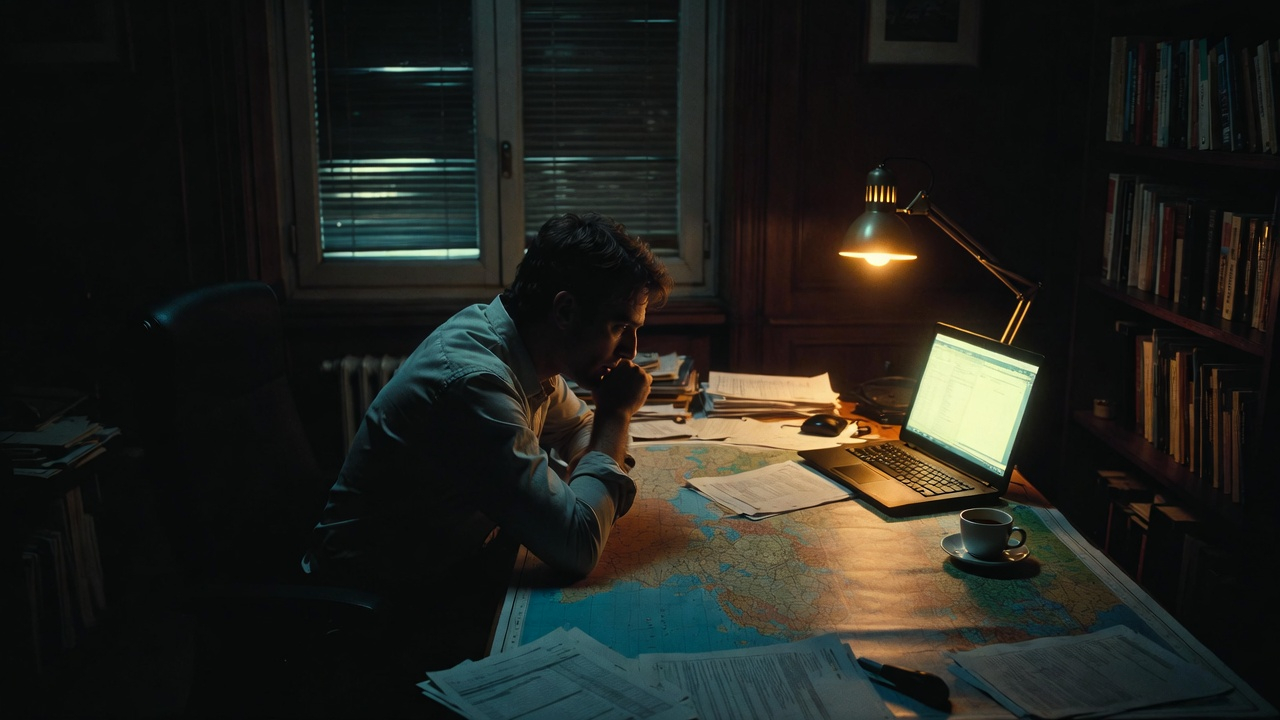
PROLOGUE: The Two Halves of My World
There is a type of journalism that cannot be taught at university. The kind you learn when your family is on both sides of the conflict line.
I have spent fifteen years covering the Middle East from my study in Madrid. Maps. Documents. Calls at impossible hours. A cup of espresso that never quite cools because there is always a new alert on my phone. But nothing prepared me for this: that the most intelligent and most dangerous man in this story would sit at my Christmas table every year, play with my children in the garden, and look at me with those eyes of a Persian poet and military strategist that still make the hair on my arms stand on end.
My father-in-law. Let's call him the General. Or simply Baba, as my wife calls him.
 The garden where this story begins. Tehran, March 2026.
Baba is a cultivated, elegant Iranian who speaks with equal ease about Rumi and differential equations. He designed bridges in his youth. Then he designed something else. I won't specify what. Not because I don't know, but because there are things one learns in this profession: that silence, sometimes, is the only way to remain seated at that Christmas table.
The Western press is lying. Not out of malice. Out of blindness.
What happened from March 10, 2026 onwards was not just another Middle East crisis. It was the chess move Iran had been preparing for decades. A theorem. A mathematical demonstration that the Empire can crumble without a single nuclear bomb. All you need is geography, patience and an intimate knowledge of the adversary's psychology.
«You are a historian, my son. Write it well. Tell them we are not monsters. Tell them it was necessary.»
— BabaBaba explained it to me in the garden, weeks before it happened. I, like any good Western journalist, took notes but didn't fully believe it. It was too clean, too elegant for the confused and brutal world I had spent fifteen years covering. The great movements of history, the books had taught me, are chaotic and accidental. Not theorems. Not demonstrations.
Now I am writing this, and I believe every word.
When Baba told me in the garden, I spent twenty minutes staring at my notebook without writing anything. The journalist in me wanted to call the editor. The other part — the one that sits at the Christmas table with this man every year — knew I couldn't publish a single line without independently verifying every fact. I imposed a rule on myself: nothing leaves that garden until I have cross-checked it with my own sources. I went to Bahrain. I went to Israel. I flew to Dubai. Everything you read here I saw with my own eyes or corroborated with sources in three different countries.
🎬 ACT 1 — The Warning in the Garden · Tehran, March 12, 2026
The Yuan Regulation: Check to the Dollar
Imagine spending fifty years playing chess with the same opponent. You know every move he will make. His gambits. His weaknesses. The way he clenches his teeth when he loses an important piece. You've been waiting fifty years for exactly the right moment. Not to win a game. To prove, once and for all, that you were never playing the same game. That is what Iran did on March 14, 2026.
 Baba's garden. The backgammon board where the theorem was announced.
The garden of Baba's house in northern Tehran smells of orange blossom and wet earth. I was losing at Takhteh Nard — Persian backgammon — against a man who never loses anything accidentally. Baba moved a piece with the calm of someone who already knows the result and looked at me with that expression that means exactly one thing: that what comes next is important.
«Son, in forty-eight hours we will change the rules of the water. Hormuz doesn't close. It regulates. Tell your friends in Madrid to buy yuan.»
— Baba, jardín familiar, Teherán, 12 de marzo de 2026I took a sip of tea. I smiled. I made a mental note. Then, back in my hotel room that same night, I opened my laptop and typed four words in a blank document: 'Verify. Cross-check. Don't publish yet.' I knew Baba. I knew he didn't play with words. But I also knew that no editor in the world would run this story based on a backgammon conversation with my father-in-law. I had to go and see with my own eyes what was happening at the American bases in the Gulf.
Two days later, in the Dubai press room, I felt the ground move beneath my feet.
The Announcement Nobody Expected
On March 14, 2026, at 09:17 local Gulf time, the Foreign Ministry of the Islamic Republic of Iran issued a three-page communiqué that changed the financial history of the century. It was not a declaration of war. It was not a nuclear threat. It was something infinitely more sophisticated.
«The payments corresponding to the transit fee must be settled exclusively in renminbi (Chinese yuan), according to the official exchange rate of the People's Bank of China.»
— Artículo 4, párrafo 3 / Article 4, paragraph 3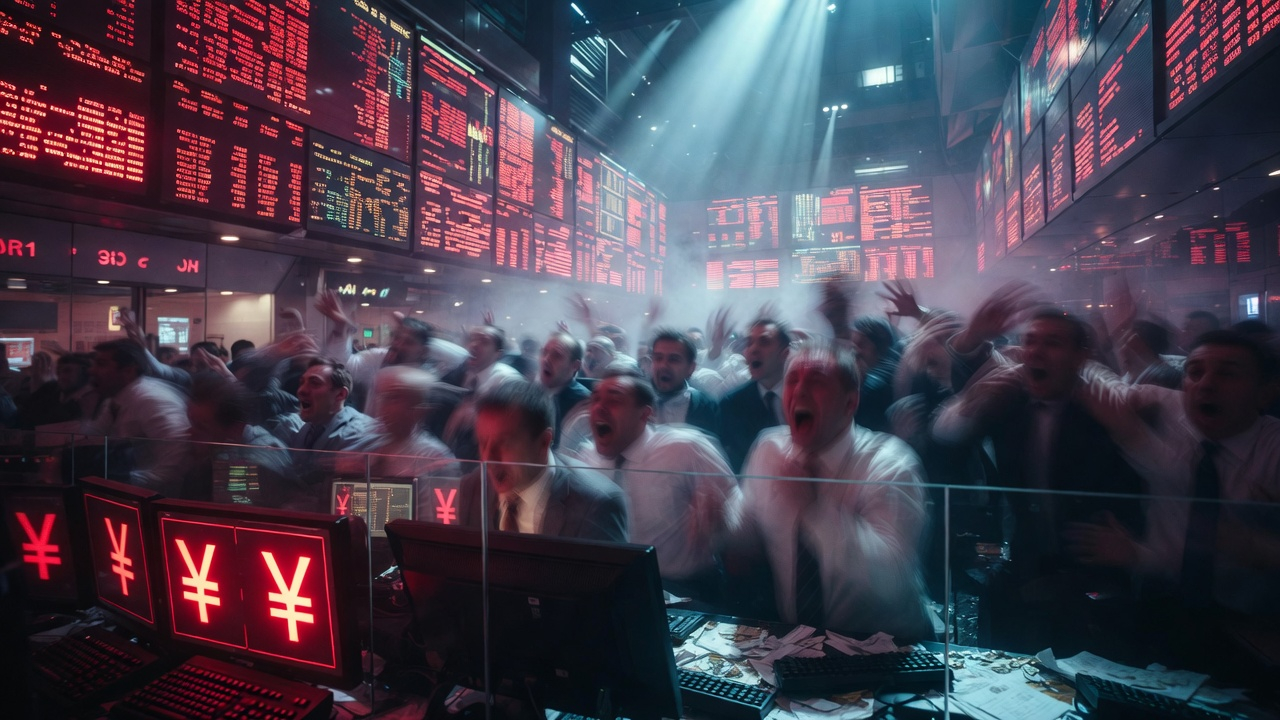 Dubai press room on March 14. The commodities brokers' panic was instantaneous.
What is the Petrodollar and Why Does It Matter?
Since 1974, there has been an unwritten but iron-clad pact between the United States and Saudi Arabia: oil is bought and sold exclusively in dollars. This agreement — the petrodollar system — has three brutal consequences: (1) Artificial dollar demand: any country that needs oil must first obtain dollars. (2) Seigniorage power: the US prints dollars and exchanges them for real goods and services. (3) Control of global flows: Washington controls who can buy energy and at what price.
The Hormuz Theorem attacks this system directly. By demanding yuan for transit, Iran doesn't close the strait. It monetizes it in the currency of the US rival. The dollar loses, for the first time in fifty years, its monopoly over the planet's jugular vein.
The Inflationary Shock the Market Had Already Seen Coming
The BEIR curve — the implied inflation curve measuring what the bond market really expects — had, on the morning of March 13, 2026, the shape of an accusation. To understand how the market arrived at that point, there is a longer analysis we published days earlier:
📊 Full BEIR curve and Bear Steepener analysis: The Deflationary Mirage →
Fed Funds at 3.7%. ECB at 2.2%. US real rates: +1.5% to +2%. Eurozone real rates: ~0%. The Eurozone had no buffer against the inflationary rebound. The asymmetry was brutal.
The Strait of Hormuz did not close on March 14, 2026. It became a customs post of the new world order. A toll charged in yuan. The dollar had just lost its monopoly over the planet's jugular vein.
🎬 ACT 2 — Blackout in the Control Room · Naval Support Activity, Bahrain, March 10, 2026
The Blindness of the Empire
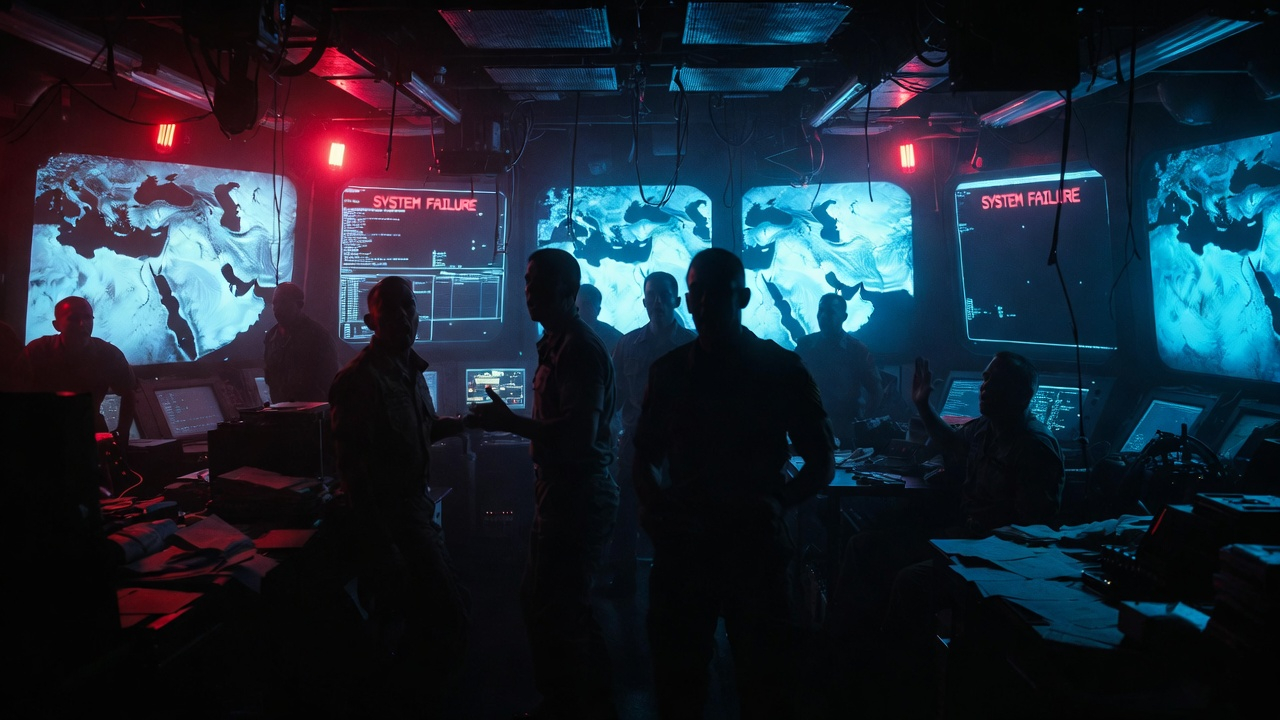 CENTCOM Bahrain at the moment of the blackout. The airspace screens went dark one by one.
I had spent two days at Naval Support Activity Bahrain, the home of the US Navy's Fifth Fleet. The briefing on the 10th was about the 'unbreakable' American air defense architecture in the region. Commander Wilkins had been explaining the radar system for half an hour when the emergency lights came on.
It was not dramatic. It was bureaucratic. First a flashing red light on the ceiling. Then the hum of emergency generators. Then the strangest silence I have ever heard in a military installation: the silence of screens going dark.
The operators looked at each other. Commander Wilkins stopped smiling.
«Members of the press, I ask you to calmly exit to the outer corridor.»
— Comandante Wilkins, NSA Bahrain, 10 de marzo de 2026We didn't leave. We stayed where we were, stunned, watching as the monitors showing Gulf airspace went black, one by one, like light bulbs blowing in sequence.
The Anatomy of the Blackout: The Eyes Destroyed
What happened that morning was not a cyberattack. It was not a technical failure. It was a surgical operation of millimetric precision that Iran had been planning for years and which it executed with an elegance that, in retrospect, strikes me as almost artistic.
The American air defense architecture in the Gulf rests on an invisible but vital backbone: a network of X-band early warning radars — the AN/TPY-2 systems — deployed in strategic positions from the Negev desert to Al Udeid base in Qatar and UAE installations. They are the system's eyes. The ones that detect an Iranian missile thirty seconds after leaving the silo and calculate its trajectory to within centimeters.
Without those eyes, the Iron Dome, the Patriot, the THAAD, the David's Sling are shields without guidance. Blind interceptors firing into the void.
In 72 hours, between March 9 and 11, Iranian low-flying cruise missiles and swarms of suicide drones had systematically decapitated the CENTCOM AN/TPY-2 radar network — the eyes of the American defense system in the Gulf. The radar stations in forward positions, those installations costing hundreds of millions of dollars and requiring two to four years to manufacture, calibrate and install, were burning in the desert.
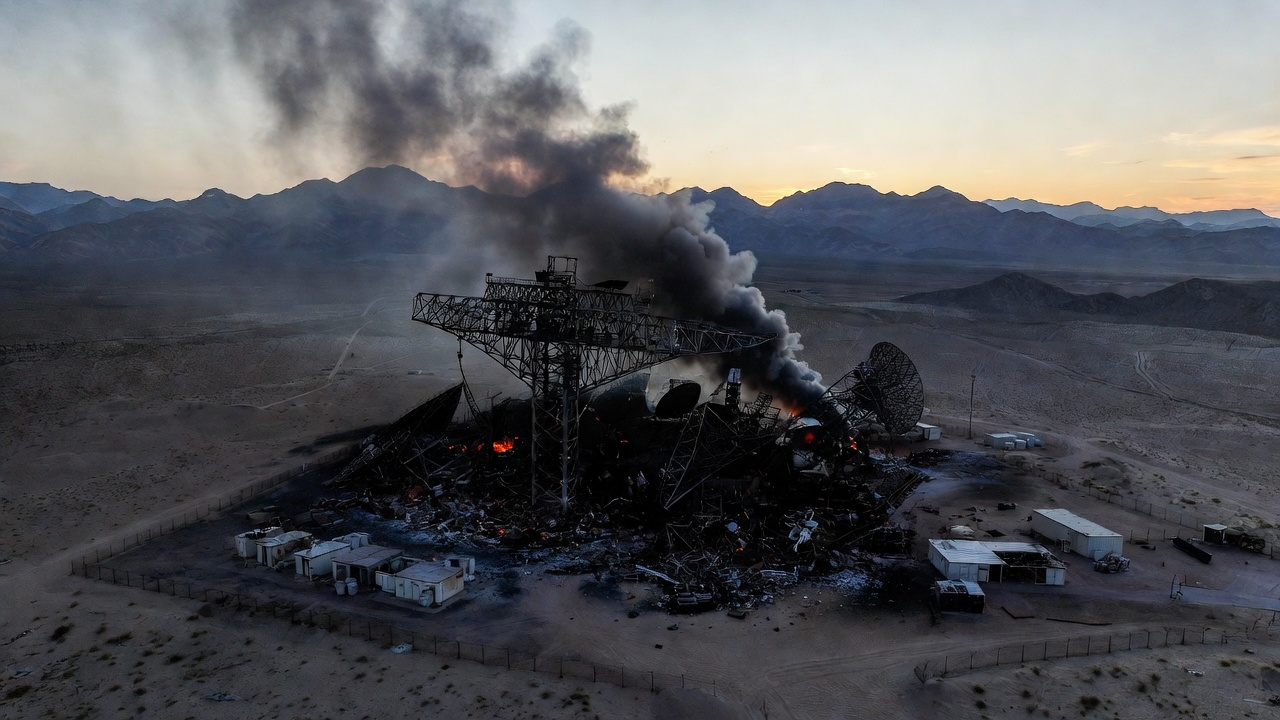 Destroyed AN/TPY-2 installation. Each unit costs $500M–$1B and needs 2–4 years to replace.
The Middle East Air Defense Alliance (MEAD), designed to contain Iran, had been decimated in its first real test. In the palaces of Abu Dhabi and Riyadh, loyalty began to be recalculated in silence.
The Broken Promise to the Emirates
But the true victory of this operation was not military. It was diplomatic.
Washington had sold the United Arab Emirates, Bahrain, Saudi Arabia and their Gulf allies an implicit promise: that the American security umbrella was infallible. That there was a reason they paid billions in arms contracts to Lockheed Martin and Raytheon. That Uncle Sam would always be there, with his aircraft carriers and Patriot systems, to protect them.
The Middle East Air Defense Alliance — the MEAD, conceived specifically to contain the Iranian threat — had been decimated in its first real test. Not by a conventional war. By cruise missiles flying at ground level and by drones costing less than a mid-range car.
In the palaces of Abu Dhabi and Riyadh, the emirs' advisors were reading intelligence reports and calculating in silence. In the Middle East, when it is demonstrated that your bodyguard is blind, loyalty changes sides before dawn.
I didn't know it then, but that early morning in Bahrain was the beginning of the end of the petrodollar.
In 72 hours, Iran destroyed the backbone of US air defense in the Gulf. Warning time before a missile attack fell from 40 minutes to 2 minutes. The American promise to the emirates had blown up without needing to invade a single square meter.
🎬 ACT 3 — Sirens and Scrap Metal · Tel Aviv, March 13, 2026 (night)
The Shield Paradox
I crossed into Israel on March 12, a few hours after saying goodbye to Baba in his Tehran garden. The flight went via Amman — there is no direct route between Iran and Israel — and I arrived at Ben Gurion well into the afternoon. My press credentials were still enough to get me through, though the checkpoints were four times slower than normal. The country smelled of tension: that particular smell of a society living on alert but trying to appear less alarmed than it actually is.
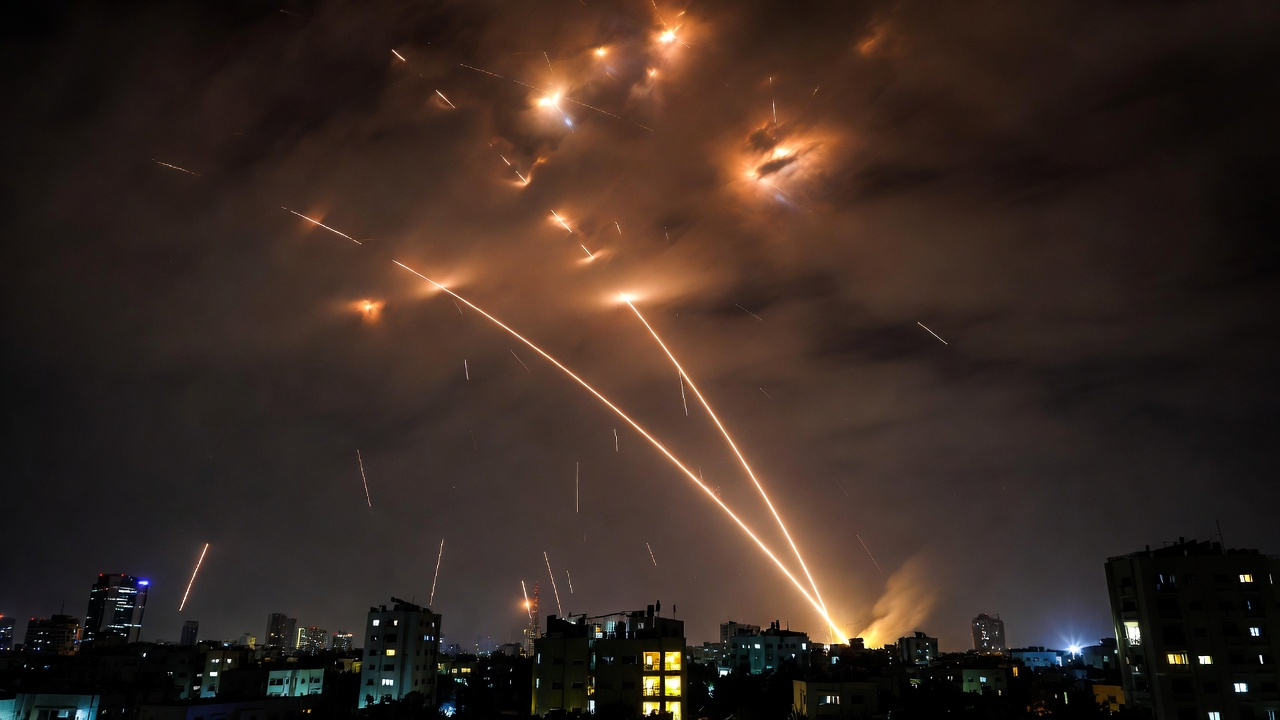 Tel Aviv sky on March 13. Each arc of light: a $50,000-$90,000 interceptor. Each target: a €3,000 drone.
My contact in the Israel Defense Forces — let's call him Yonatan — met me on the terrace of a Tel Aviv hotel. He smoked like a chimney. When I saw his face, I understood that what he had to tell me was serious.
The sirens sounded at 23:40. It was not the kind of siren that makes people calmly walk to shelters. It was the kind that makes dogs howl and pigeons scatter in panic from rooftops. One, two, three flashes of light in the sky. The Iron Dome interceptors tracing their arcs of fire like an artificial northern lights over the city.
Yonatan didn't move from his chair. He lit another cigarette.
«See that expense? Each interceptor the system just launched costs between $50,000 and $90,000. What they fired to activate it cost less than 3,000 each. Do the math.»
— Yonatan, IDF, Tel Aviv, 13 de marzo de 2026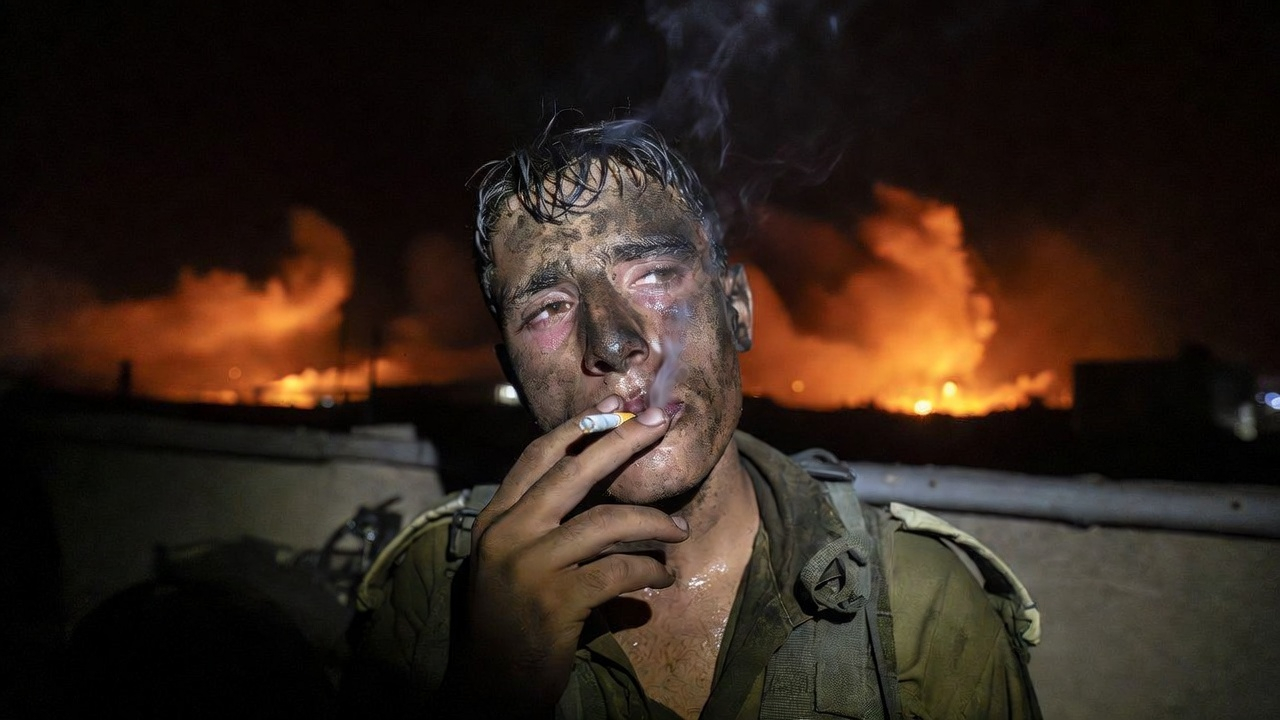 The face of the soldier guarding the world's most expensive shield. An exhausted face the Pentagon doesn't show in its briefings.
The Shield Paradox: A Fluids Problem
The paradox is not new. Military analysts have known it for years. But watching it in real time, with the Tel Aviv sky illuminated by millions of dollars of fuel and high-precision electronic components burning to shoot down plastic and moped engines, had an existential dimension no War College report can capture.
The Iron Dome, David's Sling, THAAD and Patriot are marvels of defense engineering. They are also, in the context of 21st-century asymmetric warfare, the most expensive and brutal demonstration that technological superiority can be, paradoxically, a superpower's Achilles heel.
The mechanism is simple in its saturation logic: you don't need to destroy the defense system from outside. You just need to exhaust it from within. Launch continuous swarms of low-cost projectiles to saturate the interception channels. Burn through its Tamir missile reserves — at $50,000-$90,000 per unit — until the silos are empty.
And now, without the AN/TPY-2 radar network destroyed by the March 9-11 attacks, the equation was even more brutal. Without the system's eyes, the Iron Dome's effectiveness had plummeted to 30%. Not because the interceptors failed. But because without adequate warning — two minutes instead of forty — the system had no time to calculate trajectories and vector the launchers. It fired late, poorly, or not at all.
«What the system doesn't detect in the first two seconds, it doesn't intercept. And now we detect nothing in those first two seconds.»
— Yonatan, IDF, terraza del hotel, Tel AvivThe Price of Scrap Metal
Pentagon analysts and Israeli army spokespeople continued to describe the system as 'largely operational'. Press conferences cited interception rates of 85-90%. The media reproduced it without question.
But the truth Yonatan was telling me was different. The rates were calculated against launched projectiles that the system detected. The problem was that, without the regional early warning network, a growing proportion of projectiles wasn't detected until it was too late to launch an interceptor.
It was perfectly legal and perfectly misleading statistical manipulation.
And the inventories were not infinite. Each night of mass interception exhausted arsenals that would take months to replenish. The manufacturer, Rafael Advanced Defense Systems, had its own supply chain limitations. Raytheon, the American partner, did too.
A radar system associated with THAAD or Patriot costs $500M-$1B. Its supply chain needs 2-4 years to replace a destroyed unit. Iran destroyed multiple stations in 72 hours with low-cost cruise missiles.
Shahed-136: $20,000-$50,000 per unit (CSIS, Reuters, Bloomberg, March 2026). Patriot PAC-3 MSE interceptor: $3-4M per shot (CRS/Congress). Cost ratio: up to 200:1.
I asked Yonatan if the Pentagon was blind to this arithmetic.
«No. They are not blind. They have LUCAS. One-way attack drone, low cost, around $35,000 a unit. They call it the 'American Shahed'. They've deployed hundreds in the region these weeks. It's the most intelligent response they've made: if you can't win at the top of the cost ladder, come down to the enemy's level. The problem is they arrived late. Two years late. And in those two years, the Iranians made two hundred thousand of theirs.»
— Yonatan, IDF, Tel Aviv, 13 de marzo de 2026He lit his third cigarette of the night. The sky had calmed for the moment.
«It's like arriving at a forest fire with a garden hose. The hose works, it's the right tool, but the fire has been burning for three days. I admire the engineers who designed LUCAS. They're late, but they come. The problem is that the theorem doesn't wait.»
— Yonatan, IDFYonatan hung up and kept staring at the Tel Aviv horizon as if he could see the buzzing coming.
«You know what's the worst part, my friend? That tomorrow I'll have to explain to my seven-year-old daughter why daddy can no longer protect her with the Iron Shield he promised her. Only with a hunting rifle and a prayer. What do I tell her? That the most powerful empire in the world has been disarmed by a lawnmower engine?»
— Yonatan, IDF, terraza hotel, Tel Aviv, 13 de marzo de 2026For the first time, I saw tears in the eyes of an IDF officer. It wasn't fear of dying. It was shame at having believed that technology would always win.
I returned to the hotel. It was 01:20. I opened my laptop. I had three options: stay in Tel Aviv and continue with Yonatan, return to Madrid and write what I had, or take a flight to Dubai and be there for what Baba had told me would arrive in less than 24 hours. There was no lengthy deliberation. The story was in Dubai. I booked the 06:15 flight.
Verified Sources — Act 3
CRS / FAS: Patriot System Production Limitations
The shield paradox: the Iron Dome didn't fail. They exhausted it. Firing €3,000 scrap metal to burn $90,000 interceptors. Without the radar network, the system fell from 100% to 30% effectiveness. The world's most expensive technology, defeated by the cheapest arithmetic.
November 2025 — Four months before the events you just read
The timeline jumps from March 13, 2026 back to November 2025, when the journalist visited the drone factory in the Zagros mountains. This context explains what happened in March.🎬 ACT 4 — The Smell of Gasoline Under Stone · Zagros Mountains, Iran. Flashback: November 15, 2025
The Underground Forge and the Ghost Fleet
Convincing Baba to let me see the truth took months of indirect conversations, of post-dinner talks where I planted seeds of questions and he ignored them with poetic elegance. It was my wife Maryam, a macroeconomics analyst at a Tehran think tank, who finally mediated.
«He has been asking since he married me, Baba. Let him see. He is going to write the story anyway.»
— MaryamBaba looked at me over his teacup. He smiled. He nodded. They put a black blindfold on me in the car. We drove for three hours. When they removed it, I was at the mouth of a cave so dark it took me ten seconds to understand what was in front of me.
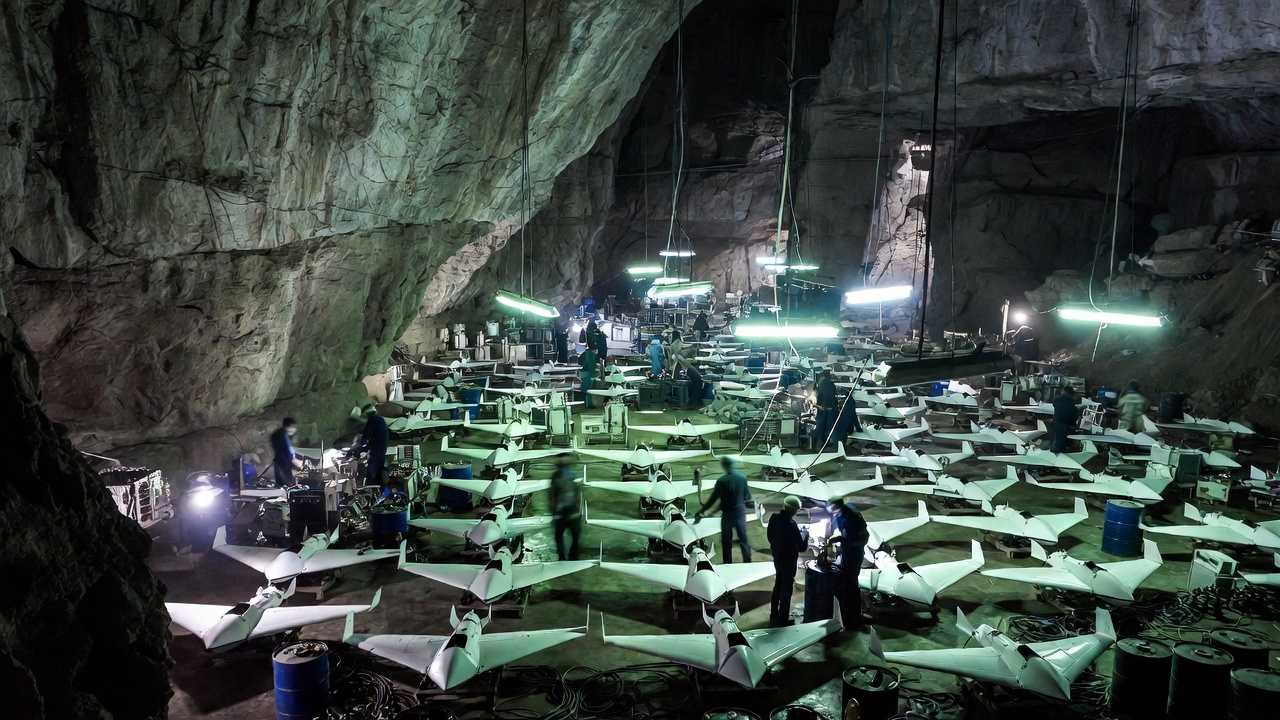
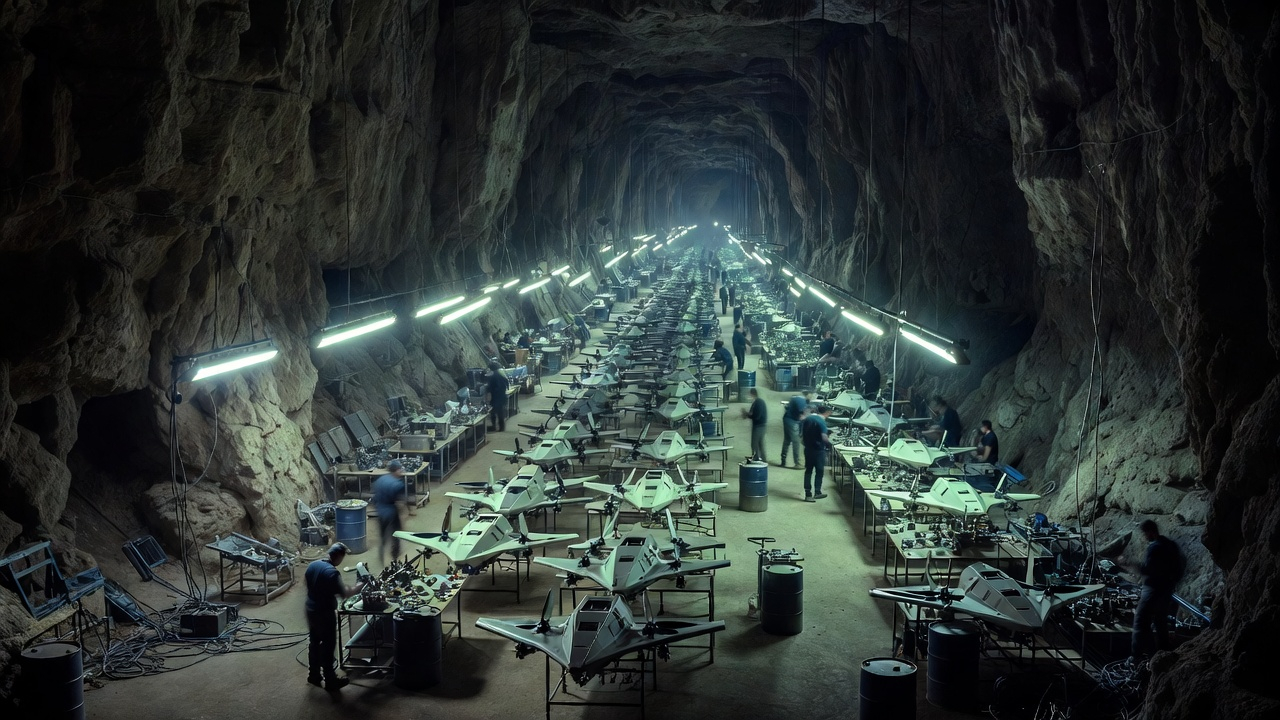 The factory in the Zagros Mountains. What I saw in November 2025: endless rows of triangular drones assembled by technicians in workshop clothes.
On June 22, 2025, Operation 'Midnight Hammer' attacked Fordow, Natanz and Isfahan. Washington celebrated. Iran also moved forward — but not toward where the satellites were looking.
«They did us a favor. They gave us the perfect months of shadow we needed.»
— Baba, semana tras el Martillo de MedianocheIt was not a nuclear installation. There was no enriched uranium. No centrifuges. What there was was an industrial factory of impossible geometry, carved into living rock, at a depth that made useless any bunker-buster missile the US had launched against Fordow. My friend Amir — Maryam's childhood friend, an aeronautical engineer who once dreamed of designing civil aircraft and ended up here — received me with a smile mixing pride and irony.
«You thought you were going to see white rooms and computer screens, didn't you?»
— Amir, ingeniero aeronáutico, ZagrosWhat I saw was the most absurd and most lethal image I have witnessed in fifteen years of journalism: endless rows of triangular drones being assembled by dozens of technicians in normal work clothes, lit by industrial fluorescent tubes, on workbenches that would not have looked out of place in a Toledo machine shop.
And the engines. The damn engines.
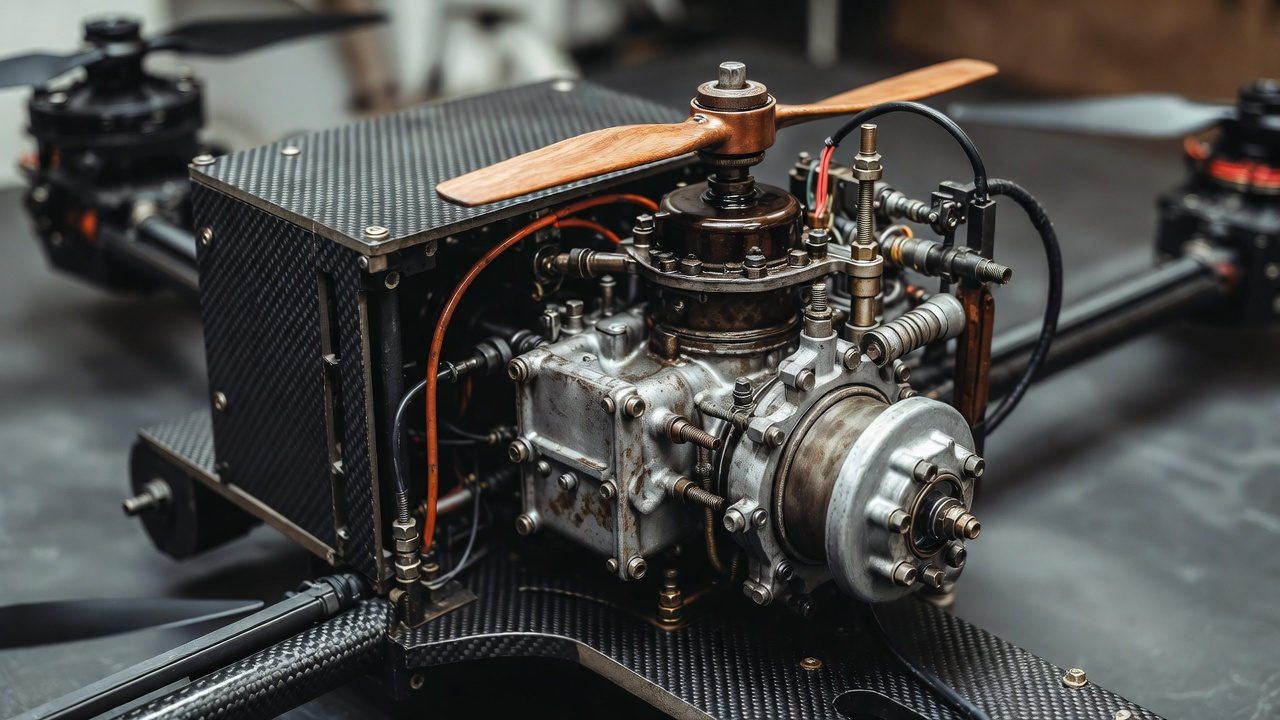 The engine winning the war. German garden manufacturer four-stroke engine. Gasoline refined on Persian soil. Cost: part of the < €3,000 total assembly.
Amir picked up one of the propulsion units and put it in my hands. It was small. It was dirty. It had the markings of a German garden equipment manufacturer.
«Internal combustion. Four-stroke engine. Same principle as your car engine, your lawnmower or a small motorbike. Regular gasoline. Refined right here.»
— Amir, ZagrosI expected lithium, solid-state batteries, cutting-edge electronics. I expected the future. Instead, I held the past in my hands, and the past was flying a thousand kilometers to blow up next-generation radars.
«The West has two obsessions. First: that all future military technology will be electric and digital. Second: that if it's not in space or cyberspace, it's not dangerous. Both mistakes benefit us. We make a thousand of these a day.»
— Amir, ingeniero aeronáutico, Zagros, noviembre 2025A thousand a day. I wrote it in my notebook. I circled it three times with my pen.
The Ghost Fleet: The Invisible Supply Chain
The massive Iranian tankers that have spent years evading Western sanctions by sailing with AIS transponders off didn't return empty from China and India. That is the story Western intelligence services had been slow to understand: the ghost fleet was not just a mechanism for exporting oil and earning foreign currency.
It was the most important supply chain of the war.
In the hidden holds of those steel giants arrived the components: chips from Shenzhen, civilian-manufactured servomotors, fiberglass, carbon fiber, precision gyroscopes — all with civilian certification, all individually legal, all impossible to sanction effectively. At destination, in the Iranian ports of Bandar Abbas and Jask, cargoes officially listed as 'agricultural machinery' or 'spare parts for the fishing industry' found their way to the mountains.
«The paradox is beautiful. The more they sanction us, the more creative we become in sourcing. And the more creative we are, the cheaper the components become because we learn free-market routes.»
— Baba, jardín familiar, TeheránUS intelligence had pegged the cost of Shahed drones at $20,000 per unit. Their own field reports, analyzing drone wreckage recovered in Ukraine, had revised this to $5,000-$10,000. The reality in the Zagros caves was different: in mass production, with free-market components acquired through third countries, the real assembly cost dropped to under €3,000.
Real Shahed assembly cost in mass production: <€3,000
Pentagon estimate: $20,000
Post-Ukraine analysis: $5,000–$10,000
Patriot PAC-3 interceptor: $3–4M
Asymmetry ratio: up to 200:1 — The arithmetic was devastating, and Washington was paying for it in real time.
📊 Cost Estimation — Iranian Mixed Swarm (March 2026)
Real Iranian 2026 tactic: 50% junk drones as decoy/escort to saturate radars, 50% verified drones with warhead in the swarm's core. Weighted average: $1,400 per drone.
🗑️ Table 1 — Scrapyard Junk Drones (Decoys / Escort / Distraction)
No explosive payload. They only make noise, saturate defenses and get shot down. 100% scrapyard parts.🎯 Table 2 — Verified Drones (New Components — The Ones That Actually Hit)
They fly in the swarm's core, shielded by junk drones. They carry a warhead and better avionics. Real Iranian low-cost Shahed-136 version 2026.($500 junk + $1,900 verified) / 2 = $1,400 average per drone
100% realistic with Iranian 2026 war economy. Iran launches thousands this way: decoys first to exhaust Patriot/THAAD missiles, verified drones last for real impact.Verified Sources — Act 4
The War Zone: Iran's Underground Missile Cities
Conflict Armament Research: Dissecting Iranian Drones (COTS components)
U.S. Treasury (OFAC): Sanctions on Iran UAV Component Network
While Washington destroyed concrete in Fordow and Natanz, Iran was manufacturing a thousand drones a day in the mountains nobody watched. Lawnmower engine. Gasoline from Persian soil. Chinese components arrived in ghost fleet tankers. The cheapest war in modern history, built in the darkness of rock.
The timeline returns to March 15, 2026. What you just read in Act 4 is what the journalist witnessed in November 2025 and that makes sense of everything that happens from March 10 onward. The second part of the story now continues.
Official Sources Block — Article I
📊 Macroeconomic Sources
| Source | Data |
|---|---|
| Reserva Federal EE.UU. | Fed Funds Rate: 3.7% (marzo 2026) |
| Banco Central Europeo | Tipo BCE: 2.2% (marzo 2026) |
| Fed / TIPS Market | BEIR: 1Y=2.41%, 5Y=2.61% (pico), 10Y=2.36%, 20Y=2.48% |
| U.S. Treasury / Bloomberg | Bear Steepener: 30Y en 4.91%, spread +13.9 bps en 5 días |
| S&P Global Commodity Insights | Petróleo Brent: $90-$100/barril (marzo 2026) |
🛡️ Military & Geopolitical Sources
| Source | Data |
|---|---|
| CSIS | Regional air defense vulnerability, warning time |
| CSIS Missile Threat | Iranian offensive arsenal: ballistic missiles, cruise missiles & proliferation |
| CRS (Congreso EE.UU.) | Patriot/THAAD costs & production: 2-4 year replacement |
| Reuters | Tower 22 attack, Jordan (2024): drone evades US defenses |
| Reuters | UAE withdraws from US-led naval coalition |
| Reuters (2026) | Iranian attacks on AN/TPY-2 radars and defensive collapse |
| Reuters | IRGC reveals underground missile base in the Gulf |
| The War Zone | Iranian underground missile city: tunnels and advanced weapons |
| The War Zone (2026) | B-2 Spirits pummel Iran's underground missile caves |
| Conflict Armament Research | Iranian drone analysis: civilian COTS components |
| Bloomberg | Iran ghost fleet and military funding |
| U.S. Treasury (OFAC) | Sanctions on Iran drone component acquisition network |
What Comes Next
Maryam called me that afternoon on March 15 from Tehran. 'Take the next flight you can. The emirs are yielding. What comes now is what has consequences for all of us. For the world. For your readers.'
This was only the first move of the Hormuz Theorem. What came next was going to demolish the financial system that had sustained the world for fifty years.
The ecosystem that gives context to this article
The themes in this story are not isolated. The TSC blog has spent months building the analytical framework that makes this scenario possible:
📊 The Deflationary Mirage — BEIR curve at 2.61%, Bear Steepener and why the Fed sang victory too soon.
🤖 Drafted by Uncle Sam — The invisible militarization of the tech economy: how Iran turned absenteeism into a weapon.
💰 The Silent Exit — How capital flees in silence before the media covers the crisis.
⚡ The Thermodynamic Collapse of Hegemony — Why Hormuz is no longer just an oil choke point, but the AI switch of the 21st century.
Read the Full Series Offline
Download the complete Hormuz Theorem EPUB for free — both parts in a single file. Read it on your e-reader, tablet or phone, without ads and offline.
Includes Part I and Part II · EPUB format · Compatible with Kindle, Kobo, Apple Books and moreSee also: